

Open cow slaughter in Kanchanpur and sale of beef spark protests
Kanchanpur (Tripura) Dec 23: Law and order concerns surfaced sharply in Kanchanpur after an alleged incident involving open slaughter of cattle, public sale of beef and an attempted armed assault triggered panic and tension in the area. The incident, which reportedly took place on Monday evening along the Kanchanpur–Jampui road, prompted police intervention and subsequent registration of cases.
According to local accounts, commuters passing through the Brupara naka point noticed meat being sold openly on the roadside. The suspicion that the meat was beef intensified after a severed animal head was reportedly found placed at the spot. The alleged activity immediately raised alarm among local residents, given the sensitive nature of the issue and the public setting in which it occurred.
The situation escalated when a group of local youths objected to the alleged illegal sale. Eyewitnesses claimed that those involved in the activity attempted to intimidate and attack the objectors using iron rods, crowbars and sharp-edged weapons, including machetes.
Following the confrontation, the matter was reported to the police. Personnel from Kanchanpur police station rushed to the location after receiving information. However, by the time officers reached the area, the accused had allegedly fled, leaving the site deserted. No arrests were made at the spot.
Police later confirmed that two written complaints had been lodged in connection with the incident, both naming five individuals as accused. Officer-in-Charge of Kanchanpur police station, Srikanta Rudra Pal, stated that cases have been formally registered and an investigation is currently underway to ascertain the sequence of events and identify violations of law.
Meanwhile, security vigilance has reportedly been stepped up in and around Kanchanpur to prevent any recurrence and to maintain public order. Residents have been urged to remain calm and cooperate with law enforcement as the investigation progresses.
VHP Kanchanpur unit general secretary Narayan Nath claimed that the incident was not accidental but a deliberate act aimed at provoking communal sentiments.
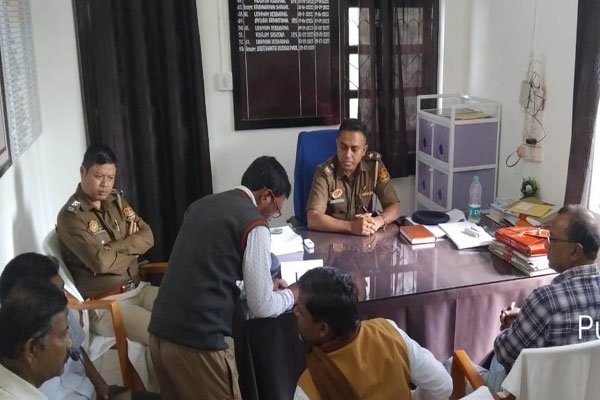
He informed the media that a formal written complaint had been lodged against five individuals. The accused have been identified as Suresh Reang, Rahul Reang and Beliyan Reang from Brupara under Kanchanpur police station; Swapan Reang from Barachhara village under Anandabazar police station; and Bijoy Reang from the Bru resettlement camp in Ambassa.
About Bru rehabilitation
The Bru (also known as Reang) are an indigenous tribal community originally from Mizoram who have undergone one of India’s longest-running internal displacement crises. Following ethnic violence in 1997, approximately 37,000 Bru individuals fled Mizoram and sought refuge in temporary relief camps in North Tripura.
The 2020 Landmark Agreement
A breakthrough occurred on January 16, 2020, when a quadripartite agreement was signed between the Union Government, the state governments of Tripura and Mizoram, and Bru community leaders. This historic pact shifted the strategy from repatriation to permanent resettlement within Tripura.
Key Provisions of the Rehabilitation Package
To ensure a sustainable transition, the government provided a comprehensive financial and social package for approximately 6,900 families:
- Land Ownership: Each family is allotted a residential plot.
- Financial Aid: A fixed deposit of ₹4 lakh per family, plus ₹1.5 lakh for house construction.
- Daily Subsistence: A monthly stipend of ₹5,000 and free rations for a period of two years.
- Political Integration: Inclusion in the electoral rolls of Tripura, granting them full voting rights and permanent residency.
Current Status
The Bru are recognized as a Particularly Vulnerable Tribal Group (PVTG) in Tripura. The rehabilitation process involves the creation of organized “Model Villages” across districts like Dhalai, North Tripura, and South Tripura.
