

South Tripura achieves 100.19% malaria screening coverage under IMEC 2026. Discover how Belonia and remote habitations reached this public health milestone.
Belonia (Tripura) Apr 1: In a notable achievement for public health in South Tripura, the district has successfully breached its intensive malaria screening targets.
The district has achieved a record-breaking 100.19% coverage under the 2026 Intensified Malaria Elimination Campaign (IMEC).
Healthcare workers moved beyond the stats to reach the most remote habitations of the district, identifying just one positive case among the 17,323 individuals tested—a sign that the region’s long-standing battle against the parasite is yielding transformative results.
Grassroots Mobilization Leads the Way
The campaign’s success wasn’t just a matter of numbers but of logistical precision.
According to official data, the district surpassed its initial target of 17,290 individuals.
District Magistrate Mohammad Sajad P. (IAS) attributed the milestone to a surge in community awareness and the relentless “round-the-clock” labor of frontline workers.
The outreach strategy utilized a combination of doorstep screenings and specialized health camps in high-risk zones.
District Malaria Officer Dr. Manish Chowdhury emphasized that the backbone of this achievement was the local network of Community Health Officers (CHOs), ANMs, and ASHA workers who navigated difficult terrain to ensure no household was left behind.
The Health Perspective
With only one positive case detected – now under full clinical supervision – the focus has shifted to maintaining “zero-transmission” status.
Chief Medical Officer Dr. J. M. Das issued a standing advisory to the public:
> The milestone is a shield, not a finish line. Residents must remain vigilant and report any symptoms of fever immediately to local health centers.
“The milestone is a shield, not a finish line. Residents must remain vigilant and report any symptoms of fever immediately to local health centers.”
News Analysis: A Shift in Tripura’s Health Landscape
For decades, the hilly terrains of South Tripura were considered endemic zones for malaria, particularly during the pre-monsoon transition.
Historically, high transmission rates in tribal habitations were a recurring challenge for the State Health Department.
The 2026 IMEC results signify a massive shift from “containment” to “elimination.”
By exceeding 100% of the screening target, South Tripura is demonstrating power surveillance and community participation.
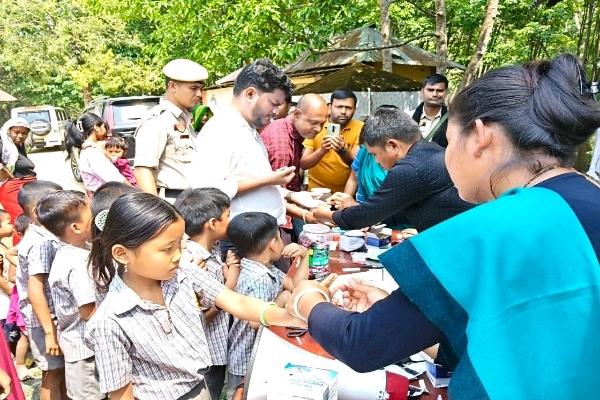
The administration has aptly showed that the integration of local ASHA workers into the surveillance net has bridged the “last-mile” gap that previously allowed the disease to persist in remote pockets.
The cooperation and participation of people has also contributed to the success.
According to officials, even in backward and remote areas, inhabitants joined hands with the administration in eradicating malaria.