

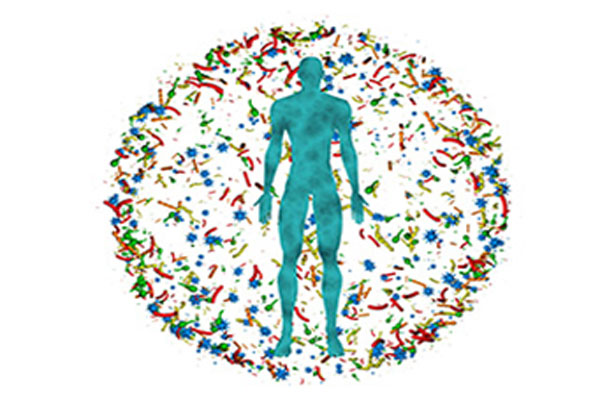
For decades, we’ve walked the Earth under a bit of a biological delusion. We believed we were the masters of our own body—a singular entity composed entirely of human cells. But modern science has pulled back the curtain on a much more crowded and fascinating reality. You aren’t just a person; you are a superorganism.
Inside and on you right now, a staggering 38 trillion microorganisms—bacteria, viruses, fungi, and archaea—are living their lives (collectively ‘human Microbiome’). For a long time, we thought they outnumbered our human cells 10-to-1. New data has corrected that “myth,” showing the ratio is closer to 1.3:1. In terms of sheer numbers, you are actually slightly more “microbe” than you are “human.”
Microbiome, the Forgotten Organ: If you were to weigh this invisible crowd, it would weigh about as much as your brain. Yet, for centuries, we ignored it. We called it the “forgotten organ” because it functions exactly like one. It isn’t just a collection of passive passengers; it is a vital system that regulates our survival.
While our human genome gives us the blueprint for life, our metagenome (the collective genes of our microbes) is 150 times larger. This microbial toolkit allows us to do things our own DNA can’t, like breaking down complex food fibers and synthesizing essential vitamins like K and B12.
A Lifelong Partnership: This partnership doesn’t happen by accident; it is an inheritance. The story begins at birth. As an infant travels through the birth canal, they receive their first “microbial baptism,” a coating of maternal bacteria that jumpstarts their immune system. From there, breast milk acts as a specialized fuel—not just for the baby, but for the specific bacteria the baby needs to thrive.
By age three, your internal ecosystem is largely established, looking much like an adult’s. Throughout your life, this “organ” remains dynamic. You swap microbes with the people you kiss or hugh, the pets you pet, and the soil you garden. You are constantly “tethered” to the world around you through this invisible exchange.
The Gut-Brain Connection: Perhaps the most startling discovery is that your microbiome isn’t confined to your digestion. It is the architect of your health. Over 70% of your immune system lives in your gut, where microbes “train” your immune cells to tell the difference between a friend and a foe. Furthermore, through the vagus-nerve, your gut bacteria are in constant conversation with your brain.
This “Gut-Brain Axis” influences your mood, your behavior, and even your neurological health. When this ecosystem falls out of balance—a state called dysbiosis—the ripples are felt everywhere, from the lungs to the mind, contributing to conditions like asthma, obesity, depression and contributing to conditions like Alzheimer’s, Parkinson’s, multiple sclerosis, and autism.
Reimagining the Self: Understanding the microbiome changes everything. We are not a closed circuit; we are a vibrant, living landscape. We are a holobiont—a host plus a microbiota, co-evolving over millions of years. The next time you look in the mirror, remember that you aren’t just looking at a single individual. You are looking at a beautifully complex community. To care for yourself is to care for them—and in return, they keep the “superorganism” that is you running in harmony.
Imagine for a moment that your body is not a single person, but a vast, varied planet. Just as Earth has its sweltering rainforests, arid deserts, and deep oceans—each hosting a unique cast of inhabitants—so too does the human body.
This is the world of the microbiome, a complex society of bacteria, viruses, and fungi that doesn’t just live on us, but defines us. To understand ourselves as a “superorganism,” we must look at the diverse neighborhoods these microbes call home. They aren’t just scattered randomly; they are specialized residents, perfectly adapted to the “climates” of our different body parts.
The bustling metropolis: The Gut: The “capital city” of your microbial planet is undoubtedly the gastrointestinal tract, specifically the Large Intestine. This is the most densely populated habitat on Earth, housing roughly 70% to 95% of your body’s total microbes. It is a dark, oxygen-free world where heavy hitters like Bacteroides and Bifidobacterium work tirelessly.
Their job? They are the master chemists of the body, fermenting the fibers your own enzymes can’t touch, churning out essential vitamins, and acting as the primary instructors for your immune system. In the Small Intestine, where oxygen levels are slightly higher, a different crew like Lactobacillus takes the lead, thriving in the faster-paced flow of digestion.
The high-traffic gateway: The Mouth: If the gut is the metropolis, the Oral Cavity is the busy international airport. It is the second-largest microbial habitat, home to up to 1,000 different species. Life here is a struggle for “prime real estate.”
Microbes must be masters of adhesion, clinging to hard tooth surfaces or soft tissues while being buffeted by constant waves of saliva. From the Streptococcus on your tongue to the specialized colonizers in your gums, these residents are your first line of defense, initiating digestion and standing guard against outside invaders.
The Great Frontier: The Skin: Your skin is the planet’s outer atmosphere—a protective barrier that changes dramatically depending on the local “weather.” On your face and back, lipophilic (fat-loving) bacteria like Cutibacterium acnes thrive on sebum (The Oily Plains).
In the moist, humid environment of your armpits or groin, Staphylococcus and Corynebacterium are the dominant settlers (The Tropical Rainforests). On your forearms and legs, diversity reigns supreme as hardy Proteobacteria stake their claim (The Dry Deserts).
The Specialized Shield: The Vaginal Microbiome: Unlike the diverse “melting pots” of the gut or mouth, the vaginal microbiome is a masterpiece of biological minimalism. In health, it is one of the least diverse habitats in the body.
It is dominated by a single genus: Lactobacillus. These microbes act as vigilant sentinels, producing lactic acid and hydrogen peroxide to maintain a low-pH, acidic “moat” that protects the host from pathogens. When this delicate balance shifts toward more diverse anaerobic bacteria (dysbiosis), the protective shield weakens, illustrating how sometimes, in the microbial world, less is truly more.
Why the Map Matters: We are not just a collection of human cells; we are a host–microbiome supraorganism. Every niche—from the pH-balanced valleys of the urogenital tract to the oxygen-rich peaks of the respiratory system—plays a role in our survival.
When we view our bodies as a series of interconnected ecosystems, we realize that “health” isn’t just about us—it’s about being a good landlord or host. By nourishing these diverse neighborhoods, we ensure that the trillions of tiny residents who call us “home” can continue the vital work of keeping us alive.
How Modern Food is Quietly Rewriting Our Inner Script? Imagine your gut is a lush, thriving ecosystem. Every species of bacteria plays a specific role, from recycling nutrients to protecting the perimeter. This ecosystem has evolved over millennia to thrive on whole, fibrous foods directly from natura.
But recently, we’ve introduced a series of “uninvited guests”—chemical compounds and ultra-processed ingredients—that are fundamentally changing the landscape of our inner wild ecosystem. We call these foods “convenient,” but to your microbiome, they are a biological disruption or poison. To keep your inner superorganism strong, we need to understand how the modern diet is, quite literally, starving our friends and feeding our foes.
The Detergents in the Garden: Emulsifiers: One of the most concerning additions to the modern pantry is the synthetic emulsifier. Found in everything from creamy ice creams to silky sauces, agents like carboxymethylcellulose (CMC) and polysorbate-80 (P80) are designed to keep oil and water from separating.
However, in the gut, they act like biological detergents. They can thin the protective mucus barrier—the “shield” of your intestinal lining—exposing your immune system to irritation. This leads to chronic inflammation and has been linked by researchers to metabolic syndromes and colitis.
The Trojan Horses: Artificial Sweeteners and Preservatives: We often reach for “sugar-free” options, thinking we’re making a healthy choice, but for the microbiome, the story is different. Artificial sweeteners like sucralose and aspartame can induce dysbiosis, a state of microbial imbalance. They alter the crucial ratio of “good” to “bad” bacteria, sometimes leading to the very glucose intolerance we were trying to avoid.
Meanwhile, common preservatives like sodium benzoate (E211) and potassium sorbate (E202) are brilliant at stopping mold on a shelf, but they don’t stop working once you swallow them. They can inhibit the growth of beneficial Bifidobacterium and Lactobacillus, reducing the overall diversity that is the hallmark of a healthy gut.
Feeding the “Weeds”: Refined Sugars and Trans Fats: Just as a garden can be overtaken by weeds if given the wrong fertilizer, a diet high in refined sugars (glucose and fructose) provides the perfect fuel for harmful bacteria and yeasts like Candida. These “weeds” can quickly crowd out the beneficial microbes that keep our systems in check.
Similarly, ultra-processed foods (UPFs) and fried foods packed with trans fats act as a double-edged sword: first, they starve as these fast-foods lack the fiber (prebiotics) that our good bacteria need to eat and secondly, they Harm by introducing toxins and inflammatory fats that reduce microbial diversity.
Also, from the agriculture field to your food plate, tiny chemical hitchhikers (pesticides) slip into our meals and water. Prolonged exposure of these silent invaders wages a quiet war within us, unsettling the bustling cities of bacteria that call our bodies home and throwing our inner ecosystem into chaos.
Reclaiming the microbiome: The “forgetting” of our microbiome has allowed these additives to slip into our daily lives unnoticed. But the science is clear: our gut health operates on a bidirectional axis with our brain and immune system. When we feed our gut “junk,” we are essentially sending a signal of distress to the rest of our body.
The key to a resilient microbiome isn’t necessarily a “magic pill” or costly and complex supplements—it’s a return to the basics and nature. By limiting ultra-processed foods and avoiding the “detergents” and “Trojan horses” of the chemical food world, we allow our inner rainforest to regrow.
Your microbiome has been your partner since the day you were born. It’s time we started eating habits like we want that partnership to last.
