

Overview:
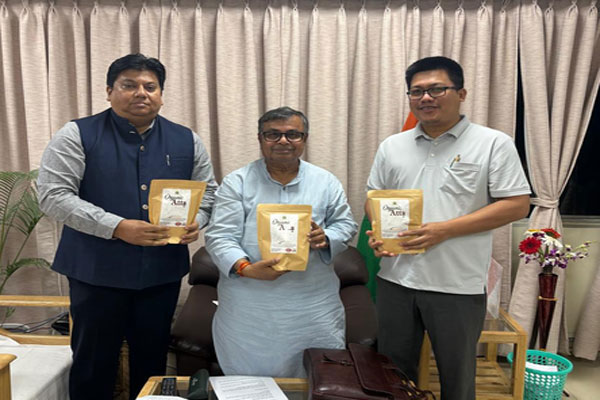
Agartala May 3: Tripura has achieved a historic agricultural breakthrough as organic wheat yields outperformed conventional farming for the first time. Agriculture Minister Ratan Lal Nath announced on Sunday that the state’s maiden organic wheat initiative reached 3.03 metric tons per hectare, signaling a major shift toward sustainable crop diversification and enhanced farmer income across the state.
Organic Wheat in Tripura: Key Highlights
-
Historic First: Organic wheat successfully cultivated for the first time in Tripura under TSOFDA leadership.
-
Yield Breakthrough: Organic production (3.03 MT/ha) significantly exceeded the 7-year conventional average (2.119 MT/ha).
-
Regional Expansion: Cultivation spread across four districts including West Tripura, Khowai, Sepahijala, and Gomati.
-
National Alignment: The state’s organic yield is now approaching the national wheat average of 3.5 MT per hectare.
A New Chapter in Tripura’s Organic Revolution
In a definitive move toward making Tripura an organic hub of Northeast India, the state has recorded a monumental success in organic wheat production. Agriculture and Farmers’ Welfare Minister Ratan Lal Nath confirmed that the initiative, supported by the Tripura State Organic Farming Development Agency (TSOFDA), has proven that sustainable methods can indeed outpace traditional chemical-based farming.
This initiative was a collaborative effort involving various Farmer Producer Companies (FPCs) and pioneering local farmers. The success marks a departure from traditional cereal cycles and introduces wheat as a viable organic alternative for the region’s diverse agro-climatic zones.
Statistical Breakdown: Organic vs. Conventional Yield
The performance data released by the Agriculture Department showcases a sharp upward trajectory for organic methods.
| Metric | Conventional Wheat (2018-2025 Avg) | Organic Wheat (2025-26) |
| Average Yield | 2.119 Metric Tons/Hectare | 3.03 Metric Tons/Hectare |
| Performance Gap | Base Level | +43% Increase |
| National Benchmark | 3.5 Metric Tons/Hectare | Nearing National Avg |
Strategic Clusters and Geographic Reach
The cultivation was not limited to a single pocket but was strategically distributed across various blocks to test soil adaptability. The key clusters involved include:
-
West Tripura: Jirania, Lefunga, Hejamara, and Mandai.
-
Khowai District: Teliamura, Kalyanpur, Belbari, and Tulashikhar.
-
Sepahijala: Jampuijala.
-
Gomati: Ompi.
Minister Nath emphasized that this geographical spread demonstrates the maturity of Tripura’s organic ecosystem. The involvement of local FPCs ensured that technical support reached the grassroots level, providing farmers with the confidence to transition away from conventional seeds.
Future Prospects: Value Addition and Food Security
The state government now looks beyond just harvesting. Plans are underway to expand into organic seed production and value-added products like organic flour (Atta) and health-focused food items.
“This is a historic beginning,” Minister Nath stated, noting that the shift will contribute to climate resilience and nutritional security. By focusing on market-oriented growth, the state aims to increase the per-capita income of farmers while strengthening Tripura’s brand in the national organic market.
People Also Ask (FAQ)
Q1: Which agency is leading the organic wheat project in Tripura? The project is spearheaded by the Tripura State Organic Farming Development Agency (TSOFDA) under the Department of Agriculture and Farmers’ Welfare.
Q2: How does Tripura’s organic wheat yield compare to the national average? Tripura’s organic wheat yield currently stands at 3.03 MT/ha, which is remarkably close to the Indian national average of 3.5 MT/ha.
Q3: What are the primary benefits of this organic shift for Tripura farmers? Farmers benefit from higher yields compared to conventional methods, improved soil health, better market prices for organic produce, and enhanced climate resilience.
