

Mizoram-Centre Infrastructure Synergy
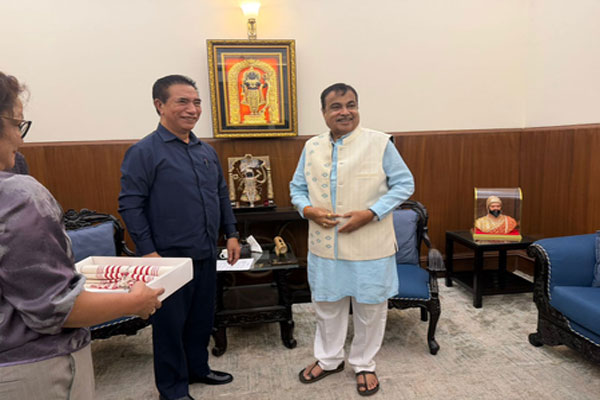
Agartala/New Delhi: In a high-stakes meeting at the national capital, Union Minister for Road Transport and Highways (MoRTH) Nitin Gadkari on Monday night assured Mizoram Chief Minister Lalduhoma of extensive central assistance to modernize the state’s highway network.
The discussions, confirmed by the Chief Minister’s Office (CMO) on Tuesday, centered on fast-tracking major corridors. Besides, discussions focused on elevating state roads to National Highway status, and addressing the logistical challenges of Mizoram’s rugged, hilly terrain.
The commitment marks a pivotal moment for the Zoram People’s Movement (ZPM)-led government as it seeks to solidify its infrastructure roadmap through direct collaboration with the Centre.
The dialogue between New Delhi and Aizawl arrives at a critical juncture in the socio-political evolution of the Northeast. For decades, Mizoram’s development has been hamstrung by its extreme topography and a historical sense of geographical isolation.
In the context of the last 20 years, where Tripura has successfully positioned itself as a “Gateway to Southeast Asia” via the Agartala-Akhaura link and multiple Highways, Mizoram is now aggressively pursuing a similar trajectory.
This infrastructure push is not merely about bitumen and concrete; it is about the “Look East” (now Act East) policy taking physical shape.
Regional Context: Mizoram Highway
For the local reader in Mizoram and neighboring Northeast States like Tripura, these developments are vital. Improved connectivity between Vairengte and the border points reduces the “land-locked” tax that makes essential commodities expensive. Furthermore, the focus on the NH-108/NH-44A corridor directly impacts the economic synergy between Mizoram and Tripura.
Lalduhoma underscored the urgent need for financial support to build the Teirei and Langkaih bridges along the NH-108/NH-44A corridor. Gadkari directed the state to submit revised DPRs in accordance with ministry guidelines, assuring prompt approval thereafter.
Historically, poor road conditions during the monsoon have led to supply chain collapses; the assurance of all-weather concrete roads and new bridges like Teirei and Langkaih suggests a shift toward a more resilient, permanent infrastructure model that has been a long-standing demand of the local Mizo population.
Strategic Corridor Upgrades and Policy Revisions
The meeting meticulously addressed specific arterial routes that form the backbone of Mizoram’s transit system. A primary focus was the elevation of the Aizawl–Thenzawl road to a National Highway. Minister Gadkari confirmed that the Detailed Project Report (DPR) is in the final stages of preparation, signaling a transition from state-level maintenance to federal-standard funding and engineering.
Key project updates discussed include:
-
NH-6 (Mamit–Bairabi Segment): CM Lalduhoma secured an assurance for formal clearance for the upgrade of this segment. The project cost review is underway to ensure the hilly stretch meets the high-load requirements of modern logistics.
-
NH-306A (Vairengte–New Vervek): Approval is contingent on PWD revisions. Gadkari emphasized that the state’s Public Works Department must align the plan with updated MoRTH safety and drainage specifications.
-
NH-502 (Zero Point to Siaha): The conversion to a double-lane road faces a hurdle in land acquisition costs. Gadkari advised the state to optimize land compensation strategies to improve the project’s feasibility before sanctioning.
Beyond roads, the Chief Minister addressed the “forgotten” roads—six stretches that lost prominence after new double-lane routes were built. These roads, currently in a state of neglect, are seeking a one-time improvement package for resurfacing. The Union Minister responded favorably, provided their prior National Highway status is officially verified through MoRTH records.
The “Green Gold” Economy and Border Stability
From a “Big Picture” perspective, the strengthening of Mizoram’s highways is a national security imperative. Mizoram shares a 510 km border with Myanmar and a 318 km border with Bangladesh.
The Vairengte–New Vervek and Siaha stretches are strategically vital for the movement of paramilitary forces and border trade.
By upgrading these routes, the Centre is effectively securing the “Chicken’s Neck” alternative routes, ensuring that even in times of regional instability, Mizoram remains connected to the Indian mainland.
Economically, Mizoram’s “Green Gold”—its vast bamboo and horticultural resources—relies heavily on the Mamit–Bairabi and NH-6 corridors. The 40% rise in bitumen prices, noted by Gadkari, has prompted a strategic shift toward concrete roads.
This transition, facilitated by partnerships with major cement producers, is expected to lower the long-term maintenance burden. This move is particularly relevant to the regional economy as it encourages local cement procurement and provides a durable platform for transporting high-value agricultural exports from Mizoram’s interior districts to markets in Silchar (Assam) and Agartala (Tripura).
The Road Ahead: A 180-Day Execution Window
The next six months will be a period of intensive bureaucratic activity. The state PWD is expected to submit revised DPRs for the Teirei and Langkaih bridges within the next 90 days. If the Ministry adheres to Gadkari’s “prompt approval” promise, we could see tendering for these bridges by Q4 2026.
Simultaneously, the Tourism Conclave discussed with NITI Aayog’s V.K. Paul will likely be scheduled to coincide with the improvement of these road assets, branding Mizoram as an accessible “unexplored” destination.
Analysts observed, the Lalduhoma-Gadkari meeting has successfully moved the needle from “intent” to “process.” While land acquisition costs in the Siaha sector remain a friction point, the overall commitment to concrete-based, high-durability infrastructure suggests that the Centre views Mizoram as a cornerstone of the Act East policy.