

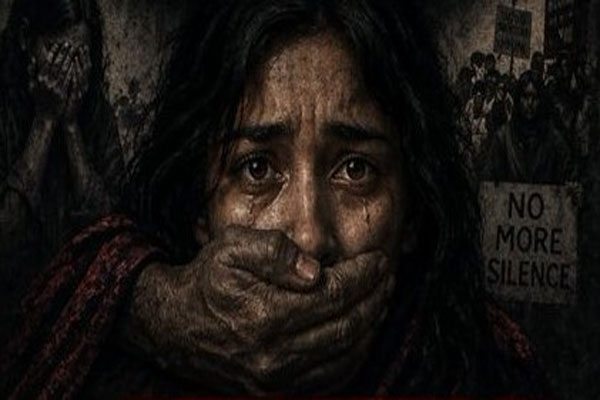
Pakistan is facing increasing international criticism over rising violence against women, exploitation of domestic workers and weak human rights protections. Reports by rights organisations and activists have highlighted poor law enforcement, gender inequality and labour abuses affecting millions of women and children across the country.
Quick Glance
- Millions of domestic workers in Pakistan reportedly remain without adequate legal protection.
- Women and girls continue to face honour killings, forced marriages and workplace exploitation.
- Pakistan ranked last in the Global Gender Gap Index amid rising human rights concerns.
- Rights groups urged global powers and the European Union to pressure Pakistan for reforms.
Pakistan Faces Criticism Over Domestic Workers’ Exploitation
Islamabad: Fresh reports have intensified scrutiny on Pakistan’s handling of labour rights and women’s safety. Human rights organisations, labour activists and international observers have raised concerns over the condition of domestic workers and vulnerable women across the country.
A report published by The Express Tribune revealed that millions of domestic workers continue to face exploitation, poor wages and unsafe working conditions. Most workers reportedly belong to economically weaker sections. Women and children form the majority of the workforce in the informal domestic labour sector.
Despite the passage of the Domestic Workers Act in Punjab in 2019, implementation remains weak. As a result, workers still lack meaningful legal protection and social security benefits.
Activists alleged that authorities failed to properly regulate the sector. Consequently, millions of workers remain exposed to abuse, wage discrimination and exploitation.
Punjab Records Highest Number of Domestic Workers
The report highlighted alarming statistics from different divisions of Punjab province. Lahore division reportedly has the largest domestic worker population, crossing four million workers.
Other major regions also recorded significant numbers.
| Division | Estimated Domestic Workers |
|---|---|
| Lahore | More than 4 million |
| Rawalpindi | 1.6 million |
| Faisalabad | 1.4 million |
| Gujranwala | 1.2 million |
| Multan | 700,000 |
| Sargodha | 500,000 |
| Sahiwal | Around 200,000 |
| DG Khan | Around 200,000 |
The report stated that girls make up a substantial portion of child labour in domestic work. Poverty, lack of education and weak monitoring systems continue to push children into unsafe employment conditions.
Rights Activists Demand Stronger Labour Reforms
Rights campaigners demanded immediate reforms to protect workers. Social activist Syeda Farah Hashmi called for strict enforcement of the Rs 40,000 minimum wage for domestic workers.
She also urged the government to create a dedicated welfare fund for workers employed in households. According to activists, many female workers continue to work without contracts, healthcare support or maternity protection.
The report further pointed out contradictions within the Domestic Workers Act. While Pakistan’s Constitution discourages child labour, the law allows domestic employment from the age of 15 years. Additionally, the legislation provides only six weeks of maternity leave, which remains significantly lower than protections available under other labour laws.
Civil society activist Amna Malik criticised the lack of enforcement despite Pakistan ratifying the International Labour Organization’s Convention 189. She said undocumented employment systems and cash-based wage payments continue to expose workers to abuse.
Several domestic workers also expressed frustration over ineffective NGO campaigns. They alleged that many awareness drives remained symbolic and failed to improve their daily realities.
Women workers complained about salary deductions during leave periods and the absence of medical assistance. They demanded financial support and social security protection from the government.
Meanwhile, Shahnaz Ajmal, President of the Women Domestic Workers Union in Punjab, highlighted gender-based wage inequality. She also demanded social security cards for workers employed in domestic households.
Punjab Labour Welfare Director General Syeda Kulsume Hai reportedly admitted that gaps exist in the law. She acknowledged that authorities drafted the legislation in haste.
Women Continue to Face Violence and Structural Inequality
Another report released by Genocide Watch painted a grim picture of Pakistan’s broader human rights situation.
The report stated that women continue to suffer the harshest consequences of structural inequality in Pakistan. Gender-based violence remains widespread across urban and rural areas alike.
Cases involving acid attacks, rape, domestic violence, trafficking, forced conversion and child marriage continue to rise. Rights groups warned that weak enforcement and social pressure often prevent victims from seeking justice.
The report noted that at least 405 honour killing cases were officially recorded in 2024. However, activists believe the actual number could be much higher because many incidents remain unreported.
Additionally, Pakistan documented more than 2,000 domestic violence complaints and nearly 5,000 rape cases during 2024. Rights groups described the figures as deeply alarming.
Child Marriage and Reproductive Rights Raise Fresh Concerns
A 2025 United Nations assessment reportedly found that two out of every three Pakistani women lack reproductive autonomy. Many women continue to face pressure regarding reproductive health decisions.
The report also referred to a Lahore High Court ruling that recognised marriages after puberty as valid under Islamic law. Rights activists fear the ruling may further worsen child marriage practices in the country.
Millions of girls in Pakistan reportedly marry before turning 18 years old. Experts warned that child marriage continues to disrupt education, health and economic opportunities for girls.
Pakistan also ranked last in the World Economic Forum’s Global Gender Gap Index. The country continues to struggle with a severe education crisis.
Reports suggest that more than 21 million children remain out of school because of poverty, child labour, discrimination and social pressures.
Religious Minorities and Journalists Also Under Pressure
The Genocide Watch report also highlighted concerns regarding religious minorities in Pakistan. Communities such as Ahmadis, Christians and Hindus reportedly continue to face discrimination, violence and social exclusion.
The report linked many of these challenges to controversial blasphemy laws and weak legal safeguards.
Journalists, academics and human rights defenders also face increasing censorship, arrests, threats and violence. Rights groups claimed that shrinking civic space continues to weaken democratic freedoms in the country.
The organisation urged the European Union and global powers to pressure Pakistan to improve women’s rights, religious freedom and freedom of expression.
It also called for emergency protection measures for journalists, activists and vulnerable minority communities facing immediate threats.
People Also Ask
Why are domestic workers in Pakistan vulnerable?
Most domestic workers reportedly work in the informal sector without contracts, social security or labour protection laws.
What are the major human rights concerns in Pakistan?
Rights groups highlighted gender violence, honour killings, child marriage, religious discrimination and suppression of free expression.
Why is Pakistan criticised over women’s rights?
Pakistan faces criticism due to rising violence against women, weak enforcement of laws and poor rankings in global gender equality indicators.