

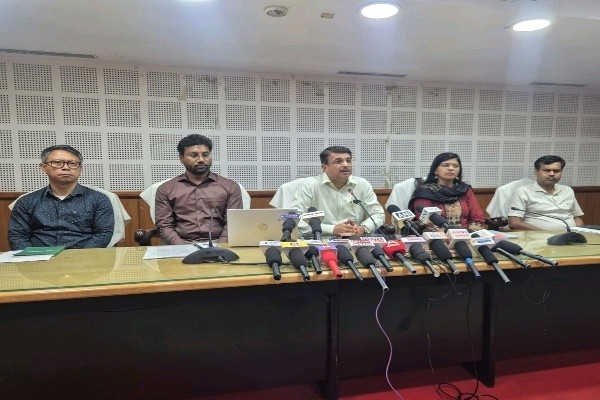
Tripura has become the first state in India to complete all Priority Areas under Deregulation Reforms – Phase-I and Phase-II – of the national compliance reduction initiative led by the Cabinet Secretariat.
The reforms focus on Ease of Doing Business, digital governance, investor confidence, and faster approvals across multiple sectors.
Quick Glance
- Tripura completed all 51 Priority Areas under Deregulation Phase-I and II
- State secured “Top Achiever” status in BRAP 2024 with 94% reform approval
- Government introduced major reforms in land use, labour laws, tourism, and digital governance
- Tripura attracted proposed investments worth ₹35,140 crore through 394 MoUs
Tripura Emerges as National Leader in Deregulation Reforms
Agartala: The Government of Tripura has achieved a historic administrative milestone. The state became the first in India to complete all Priority Areas under Deregulation Phase-I and Phase-II of the national Compliance Reduction and Dereulation initiative.
The Cabinet Secretariat of the Government of India leads this nationwide reform programme. The initiative aims to reduce compliance burdens, simplify governance systems, and create a business-friendly environment.
According to the Department of Industries and Commerce, Tripura completed all 51 reform areas under both phases. Officials described the achievement as a major step toward technology-driven governance and investor-friendly administration.
The reforms strengthened Tripura’s position in the national Ease of Doing Business (EoDB) rankings improving transparency, accountability, and digital service delivery.
Tripura Earns ‘Top Achiever’ Status in BRAP 2024
Tripura recorded impressive progress under the Business Reform Action Plan (BRAP) framework of the Department for Promotion of Industry and Internal Trade (DPIIT).
The state secured approval for 408 out of 434 reform points in BRAP 2024 allowing Tripura to receive the prestigious “Top Achiever” recognition.
The approval rate increased sharply over the last two years.
| BRAP Year | Approval Rate |
|---|---|
| 2022 | 66% |
| 2024 | 94% |
Officials credited the success to coordinated governance, institutional reforms, and policy innovation.
Phase-I Reforms Simplified Governance Systems
The government launched Deregulation Phase-I in February 2025. The reforms covered departments such as Revenue, Urban Development, Industries, Labour, Environment, Fire Services, Pollution Control Board, and Digital Governance.
The administration focused on reducing outdated procedures and improving service delivery.
One of the biggest reforms came in land governance. The government reduced land-use categories from more than 100 to just 10. Flexible zoning and mixed land-use systems were also introduced.
These changes are likely to accelerate industrial growth and infrastructure expansion in Tripura.
The government also established a GIS-based Industrial Land Bank integrated with the India Industrial Land Bank platform.
Construction approvals became faster after integrating AutoDCR with the SWAAGAT Single Window Portal. Authorities also introduced third-party certification and risk-based approval systems.
Labour and Environmental Rules Received Major Changes
Tripura introduced several labour reforms under the deregulation drive.
Women can now work night shifts with safety safeguards. The government also increased the retrenchment and closure threshold to 300 workers.
Compliance procedures under the Shops and Establishments Act became simpler and faster.
Environmental reforms focused heavily on self-certification systems. Automatic renewal systems for Consent to Establish (CTE) and Consent to Operate (CTO) reduced delays.
The government also expanded White Category industries from 41 to 130 categories. This move is expected to encourage low-risk industrial activities in the state.
Digital Governance Became a Key Reform Pillar
Digital governance remained central to Tripura’s reform strategy.
The SWAAGAT platform now covers 72 services and 14 inspections. Citizens and businesses can access approvals and services through a unified digital system.
The government also implemented legal reforms through the Tripura Jan Vishwas Act, 2025.
Under this law:
- Six Acts were repealed
- Four Acts were amended
- Minor offences were decriminalized
Officials said these reforms reduced regulatory complexities significantly.
Phase-II Expanded Reforms Across Social Sectors
Tripura launched Deregulation Phase-II in January 2026. The second phase expanded reforms to sectors such as Tourism, Health, Education, Labour, and Environment.
The government introduced self-certification-based Change of Land Use (CLU) approvals in areas aligned with Master Plans and environmental guidelines.
The administration also created the Single Window Approval Agency (SWAAT). This reduced overlapping No Objection Certificates (NOCs) and automated approvals for low-risk projects.
Businesses can now begin operations through self-declaration mechanisms in selected sectors. Some categories also received inspection exemptions for up to three years.
Officials believe these changes will improve entrepreneurship and attract fresh investment proposals.
Tourism, Health and Education Sectors Benefit
The social sector reforms focused on citizen convenience and service efficiency.
In the education sector, the government rationalized minimum land and endowment requirements for new institutions.
In healthcare, medical professionals can now obtain interstate registration through a single nodal system.
Tourism reforms simplified homestay regulations. Multiple NOC requirements were removed. Online self-renewal systems were also introduced.
The government expects these measures to strengthen local tourism entrepreneurship in Tripura and the North East region.
National Institutions Partnered With Tripura
Tripura collaborated with several reputed national institutions to strengthen the deregulation process.
The government partnered with National Law University Tripura to review state laws and simplify regulatory systems.
The Indian Institute of Management Calcutta (IIM-C) will conduct a ground-level impact assessment of Phase-I reforms.
Officials said these partnerships will help evaluate policy outcomes and improve governance efficiency further.
Reforms Trigger Strong Investment Momentum
The Ease of Doing Business reforms have already started generating investment interest.
Tripura signed 394 Memorandums of Understanding (MoUs) over the past few years.
| Investment Indicator | Figures |
|---|---|
| Total MoUs Signed | 394 |
| Proposed Investment | ₹35,140 crore |
| Grounded Projects | 94 |
| Grounded Investment Value | ₹5,352 crore |
The projects cover sectors such as healthcare, tourism, logistics, and infrastructure.
Officials believe the reforms will continue to improve investor confidence and reduce compliance costs in the coming years.
People Also Ask
Why is Tripura’s deregulation reform significant?
Tripura became the first Indian state to complete all Priority Areas under Deregulation Phase-I and II, making it a national leader in Ease of Doing Business reforms.
What is BRAP 2024?
BRAP stands for Business Reform Action Plan. It is a reform evaluation framework managed by DPIIT to assess states on Ease of Doing Business initiatives.
How much investment did Tripura attract through reforms?
Tripura attracted proposed investments worth ₹35,140 crore through 394 MoUs. Around ₹5,352 crore worth of projects have already been grounded.
