

Quick Glance
- Experimental grape cultivation in Kailashahar’s Chantail area shows promising results.
- Krishi Vigyan Kendra (KVK), NABARD, and Pune’s National Research Centre for Grapes are jointly supporting the project.
- Horticulture scientist Dr. Ratan Das is leading the research initiative in Unakoti district.
- Scientists believe successful grape farming in Tripura could transform agriculture in Northeast India.
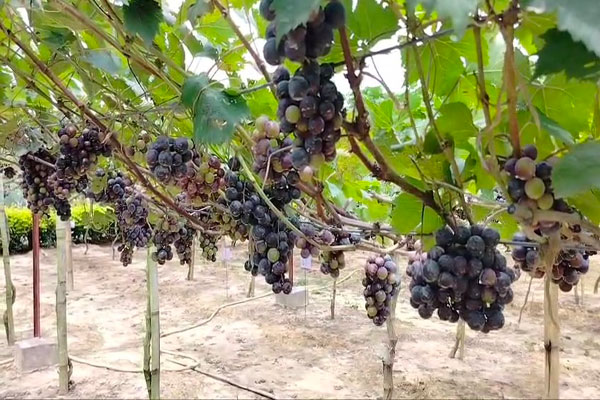
Agartala: A research-based grape cultivation project in Kailashahar, Unakoti district, has opened new possibilities for Tripura’s agriculture sector. Led by horticulture scientist Dr. Ratan Das, the initiative aims to test the suitability of Tripura’s soil and climate for grape farming with support from KVK, NABARD, and the National Research Centre for Grapes, Pune.
Tripura Experiments with Grape Cultivation in Kailashahar
Tripura may soon add grapes to its growing list of successful fruit crops. A research-oriented grape cultivation project in Kailashahar under Unakoti district has already attracted the attention of farmers and agricultural researchers across the state.
For decades, Tripura has remained popular for fruits like pineapple, orange, lemon, and dragon fruit. However, the latest experiment at the Krishi Vigyan Kendra (KVK) in the Chantail area indicates that grape cultivation may also become commercially viable in the state.
The project has been launched with scientific support from the National Research Centre for Grapes in Pune and financial assistance from NABARD. Horticulture scientist and Principal Investigator (Grapes), Dr. Ratan Das, is leading the initiative.
According to Dr. Das, the main objective is to scientifically examine whether Tripura’s humid climate and soil conditions can support quality grape production. Initial observations have produced encouraging results.
Researchers are currently monitoring plant growth, adaptability, disease resistance, and fruit quality. Early signs suggest that several grape varieties are adjusting well to the local environment.
A Two-Decade-Old Experiment Inspired the New Research
The present initiative has its roots in an experiment conducted nearly 20 years ago.
Dr. Ratan Das revealed that in 2002, then Assistant Director Pratap Chandra Das had initiated experimental grape cultivation in the orchard zone of Chantail village. At that time, the grape plants showed healthy growth and good fruiting capacity. However, the fruits failed to develop the expected sweetness.
Agricultural experts later identified several possible reasons behind the limitation. These included unsuitable grape varieties, inadequate climate-specific techniques, and lack of advanced scientific management.
Despite the shortcomings, the earlier experiment laid the foundation for the current research project.
After studying the old findings, researchers redesigned the initiative using modern agricultural technology and improved saplings. Scientists now believe that with better management and suitable varieties, grape farming in Tripura may become successful.
Modern Technology Boosts Research Efforts
In 2024, researchers established an experimental grape cultivation plot near the KVK office in Kailashahar.
The National Research Centre for Grapes in Pune supplied improved grape saplings and technical guidance. NABARD extended infrastructural and financial support to strengthen the project.
Researchers are now closely studying multiple factors, including:
| Research Focus | Purpose |
|---|---|
| Climate Adaptation | To test survival in humid weather |
| Disease Resistance | To identify resilient grape varieties |
| Fruit Quality | To improve sweetness and texture |
| Yield Potential | To assess commercial viability |
Experts generally consider dry climates in Maharashtra, Karnataka, and other South Indian states ideal for grape cultivation. Therefore, successful grape farming in humid Tripura would become a major agricultural breakthrough.
Agricultural scientists believe the project could eventually open a new direction for horticulture across Northeast India.
Farmers Show Growing Interest in Grape Farming
The research project has already become a major discussion point among local farmers.
Many cultivators from Unakoti district regularly visit the KVK campus to inspect the grape plantation. Several young farmers have also shown interest in adopting grape cultivation if the project succeeds commercially.
Dr. Das compared the situation with the earlier skepticism surrounding improved mango cultivation in Tripura. He pointed out that many farmers now successfully cultivate advanced mango varieties using scientific farming methods.
He believes grape cultivation can follow a similar path.
According to him, diversification has become essential for the future of agriculture. Dependence on traditional crops alone may not provide sustainable income growth for farmers.
Since grapes have high market demand and comparatively better pricing, they could emerge as a profitable alternative crop in Tripura.
Commercial Expansion Plans May Follow Successful Research
If the research achieves full success, authorities may expand grape cultivation commercially in the coming years.
The Krishi Vigyan Kendra may also introduce farmer training programmes, demonstration plots, improved sapling distribution, and technical support systems.
Experts say successful grape cultivation could create fresh opportunities in:
- Fruit processing industries
- Cold storage infrastructure
- Agricultural marketing networks
- Rural entrepreneurship
Local farmers believe successful grape farming in Unakoti district could trigger a new agricultural revolution in the region. The project may especially create employment opportunities for rural youth and encourage agri-based entrepreneurship.
News Analysis
The grape cultivation experiment in Kailashahar reflects Tripura’s broader push toward agricultural diversification and high-value horticulture. Traditionally, grape cultivation remained confined to dry regions of western and southern India. Therefore, the attempt to grow grapes successfully in a humid northeastern state carries strategic importance.
The project also highlights the growing role of scientific farming in Tripura. Instead of relying on conventional trial-and-error methods, researchers are using climate-specific analysis, improved saplings, and institutional collaboration.
Another important aspect is farmer engagement. The increasing interest among local cultivators suggests that innovative crops can reshape rural economies if research support and market connectivity remain strong.
If successful, the initiative may not only boost farmers’ income but also establish “Tripura Grapes” as a unique agricultural identity in India’s horticulture map.
People Also Ask
Can grapes grow successfully in Tripura’s climate?
Researchers believe improved grape varieties and scientific management may help grapes adapt successfully to Tripura’s humid climate.
Who is leading the grape cultivation project in Kailashahar?
Horticulture scientist and Principal Investigator Dr. Ratan Das is leading the research initiative.
Which organizations are supporting the project?
The project is supported by the National Research Centre for Grapes, Pune, NABARD, and Krishi Vigyan Kendra (KVK).