

Summary: What is happening today?
The Election Commission is scheduled to hear the Trinamool Congress rebel faction led by Ritabrata Banerjee over its claim to the party’s name and election symbol.
Why is it important?
The outcome could influence which faction is eventually recognised as the legitimate Trinamool Congress for electoral purposes.
What happens next?
After hearing both rival factions, the ECI is expected to review documentary evidence, legal submissions and organisational records before deciding its next course of action. A final decision is unlikely to be announced immediately after today’s hearing.
Today’s ECI hearing is only the beginning
Agartala: The Election Commission of India (ECI) is set to hear the majority faction of the Trinamool Congress (TMC) legislative party on Thursday in a closely watched dispute over the party’s name and election symbol. While political attention is focused on the hearing itself, the bigger question is what follows once the Commission begins examining the competing claims.
The hearing marks an important stage in an internal battle that has drawn both constitutional and legal attention. With rival groups claiming to represent the “real” Trinamool Congress, the Commission’s eventual decision could have significant implications for the party’s identity and future electoral prospects in West Bengal.
Enewstime Editors’ Desk in Agartala views today’s development, after analysing the IANS inputs, as just the beginning of a long battle.
A delegation led by expelled Trinamool MLA Ritabrata Banerjee is scheduled to appear before the full bench of the Election Commission in New Delhi on Thursday. The rebel faction is expected to argue that it enjoys the support of a majority of Trinamool legislators in the West Bengal Assembly and therefore has a stronger claim over the party’s official name and election symbol.
According to our sources, the Commission is also expected to hear the rival faction that continues to back Chief Minister Mamata Banerjee and party leader Abhishek Banerjee at a later stage, giving both sides an opportunity to present their arguments before any decision is taken.
Political observers note that hearings of this nature are generally the start of a detailed adjudication process rather than the final step.
Will the Election Commission announce a decision today?
A final decision immediately after Thursday’s hearing appears unlikely.
In disputes involving recognised political parties, the Election Commission typically follows a structured process. It hears both sides, examines documentary evidence, studies written submissions and may seek additional records or clarifications before arriving at a conclusion.
If the Commission feels that further examination is required, it can schedule additional hearings before reserving its final order.
As a result, today’s proceedings are expected to focus primarily on hearing the initial submissions of the rebel faction rather than delivering a verdict.
What is the rebel faction expected to argue?
According to people familiar with the preparations, the Ritabrata Banerjee-led camp plans to base its arguments largely on legislative strength and electoral statistics.
The group claims that it currently has the support of 60 MLAs in the 80-member Trinamool Congress legislative party in the West Bengal Assembly.
The rebel leaders are also expected to refer to provisions of the Election Symbols (Reservation and Allotment) Order, 1968, while presenting their case before the Commission.
Based on voting figures from the previous Assembly election, the faction believes its claimed legislative strength reflects electoral support that comfortably exceeds the minimum threshold often cited in discussions relating to recognised regional political parties.
However, whether these arguments alone will be sufficient remains a matter for the Election Commission to determine after hearing both sides.
What issues could the Commission examine?
Apart from legislative numbers, the Commission may examine a range of factors while considering the dispute.
These could include documentary evidence submitted by both factions, organisational control within the party, internal constitutional provisions, membership records and other relevant materials placed before the Commission during the proceedings.
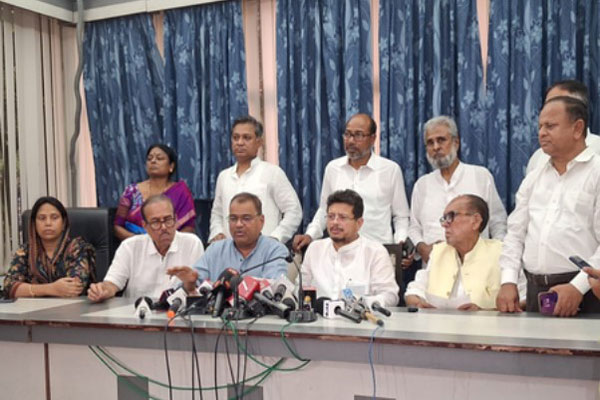
The Commission’s assessment is expected to be based on the evidence presented during the adjudication process rather than political claims made outside the hearings.
What are the possible next steps?
Once both factions have been heard, several scenarios could emerge.
Further hearings
The Commission may ask both sides to file additional documents or affidavits and schedule further hearings before taking a final view.
Reserved order
After completing hearings, the Commission may reserve its decision and issue a detailed order at a later date following examination of all submissions.
Decision on party identity
Once the adjudication process is complete, the Commission could determine which faction has the stronger legal claim to the recognised party name and election symbol.
If the available material is found to be insufficient for an immediate determination, the Commission may adopt other measures permitted under election laws until the dispute is resolved.
Parallel legal proceedings continue
The dispute is also being examined by the Calcutta High Court, where related legal proceedings are underway.
Although the High Court and the Election Commission exercise different constitutional powers, developments in either forum could shape the broader trajectory of the dispute. Any eventual order passed by the Commission could also become the subject of further judicial scrutiny if challenged by either side.
Why the hearing matters
The dispute goes beyond internal party politics.
Recognition by the Election Commission determines which faction, if any, can officially use the recognised party name and election symbol in future elections. It also has implications for organisational legitimacy, political messaging and electoral strategy.
Election symbols continue to play a crucial role in India’s electoral process, making disputes over their ownership politically significant, particularly for established regional parties.
What to watch after today’s proceedings
While today’s hearing is expected to provide the first formal opportunity for the rebel faction to present its case, it is unlikely to conclude the matter.
The Commission is expected to continue the adjudication process by hearing the rival faction, examining documentary evidence and considering legal submissions before arriving at any final decision.
For political observers, the key developments to watch in the coming days will be whether the Commission seeks additional evidence, schedules more hearings or indicates the timeline for its eventual order.
With both constitutional and judicial processes now in motion, the contest over the Trinamool Congress’s identity appears set to remain one of the most closely watched political developments in West Bengal.
