

Death toll rises to 148 after a US-Israeli joint strike on Iran’s girls’ school in Hormozgan province, as CENTCOM confirms ongoing military operations and regional tensions escalate.
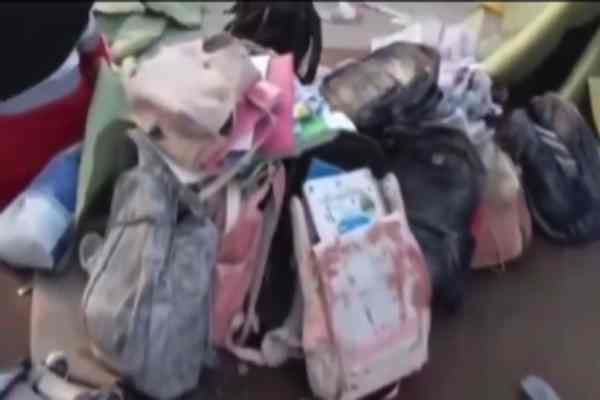
Tehran, March 1: The death toll from a joint US-Israeli airstrike on a girls’ primary school in Iran’s Hormozgan province has risen to 148. Local media reported the updated figures on Sunday.
In addition, 95 people were injured in the attack. The semi-official Tasnim News Agency quoted local prosecutor Ebrahim Taheri as saying that most of the victims were students. Teachers, school staff and several parents were also among those killed.
Meanwhile, Xinhua, citing Tasnim, reported that the strike caused severe civilian casualties, especially among young pupils.
Earlier on Saturday morning, the United States and Israel launched coordinated strikes on Tehran and other key cities. These included Tabriz, Qom, Isfahan, Kermanshah and Karaj.
Soon after, Iran retaliated with missile and drone attacks targeting Israel and US military bases across the region.
Notably, the strikes on Tehran reportedly killed Iran’s Supreme Leader Ali Khamenei. Defence Council Secretary Ali Shamkhani and Islamic Revolutionary Guard Corps commander Mohammad Pakpour were also reported dead.
At the same time, the United States Central Command (CENTCOM) confirmed that military operations are still ongoing.
In a post on X, the command said it is carrying out “swift and decisive action” as directed.
Earlier in the day, CENTCOM stated that no US casualties had been reported. It also said no US Navy ship was hit.
According to the statement, damage to American installations was minimal and did not affect operations.
Furthermore, US Secretary of Defense Pete Hegseth described the campaign, named Operation Epic Fury, as one of the most precise and complex air operations ever conducted.
He said Iran’s missile systems and naval forces would be targeted. He also reiterated that Iran would not be allowed to develop nuclear weapons.
Finally, former CENTCOM chief Kenneth F. McKenzie Jr. said the next 72 to 96 hours would be crucial. He noted that this period would determine whether Iran can continue large-scale retaliatory missile strikes against US bases and its regional allies. (With IANS inputs)
