

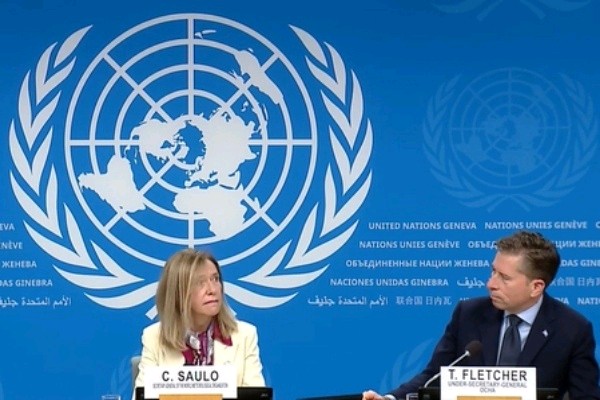
UN Under-Secretary-General Tom Fletcher and World Meteorological Organisation chief Celeste Saulo warned in Geneva that El Nino could intensify extreme weather across Asia, Africa, Latin America and the Pacific, disrupt economic activity and worsen displacement, prompting calls for urgent international action.
Key Takeaways:
- The UN has identified the next two weeks as a critical period for strengthening preparations against El Nino-related disasters.
- Asia and the Pacific face potential threats from extreme heat, droughts, floods and cyclones, with additional pressure on agriculture and water supplies.
- India has supported disaster preparedness through UN-backed initiatives in seven Pacific Island countries and joint Quad humanitarian programmes.
The United Nations has issued a stark warning about the potential consequences of El Nino. The climate phenomenon could cause severe weather disruptions across several regions and trigger economic shocks worldwide.
UN Under-Secretary-General Tom Fletcher described the approaching El Nino as an exceptionally powerful threat. He warned that its effects could extend far beyond the countries directly exposed to extreme weather.
Speaking at a news conference in Geneva on Wednesday, Fletcher called for urgent international action. He identified the next two weeks as a critical window for governments and humanitarian agencies to strengthen their preparations.
UN Warns of Severe Weather Across Multiple Regions
Fletcher said El Nino could bring extreme heat, droughts and floods to Latin America, eastern and southern Africa, Asia and the Pacific.
He stressed that the consequences would not remain confined to the regions directly affected. Disruptions could spread through the global economy and intensify existing humanitarian challenges.
The UN official warned that the phenomenon could trigger economic shocks and increase conflict, displacement and migration. These risks make early preparation essential, particularly in vulnerable countries.
Fletcher urged governments across Asia and the Pacific to prepare for droughts, floods and cyclones. He said authorities must use the available time to protect communities before the damage occurs.
UN Calls for Urgent International Mobilisation
Fletcher called for a wider international mobilisation to address the looming threat. He proposed coordinated action involving governments, civil society organisations, academic institutions and businesses.
The initiative would bring together expertise, resources and humanitarian support to strengthen disaster preparedness and response.
Fletcher also said he was contacting countries with established disaster-response capabilities. These countries form part of the UN’s coordinated emergency network.
He has asked them to place their response resources on immediate standby. The move would help mobilise assistance when affected countries need support.
Fletcher warned that ignoring the available scientific forecasts would represent a serious failure. He said the international community must not waste the opportunity to protect people at risk.
He stressed that experts had already issued warnings about the approaching crisis. Governments must translate those forecasts into timely action rather than wait for the damage to occur.
El Nino Could Reach Unprecedented Strength
World Meteorological Organisation chief Celeste Saulo also warned about the potential severity of the climate phenomenon.
She said El Nino was expected to reach its peak towards the end of 2026. However, its effects could continue long after the peak.
Saulo cautioned that the phenomenon could reach unprecedented strength. Its intensity could even exceed the monitoring charts that experts have used over the past four decades.
Her warning highlights the need for sustained preparedness rather than measures limited to the period when El Nino reaches its peak.
The potential duration and severity of its effects could complicate disaster management. Governments may need to prepare for prolonged pressure on communities, essential resources and local economies.
Southeast Asia Faces Heat and Water-Supply Risks
Saulo highlighted the potential consequences for Southeast Asia. She warned that rising temperatures and declining rainfall could increase people’s exposure to extreme heat.
These conditions could also place additional pressure on agriculture and water supplies. Farmers and communities that depend on reliable rainfall could face growing challenges if the predicted conditions develop.
Saulo also pointed to increasing wildfire and smoke hazards. She noted that the region was already experiencing these risks.
The combination of extreme heat, rainfall deficits and wildfires could create additional difficulties for disaster management. The warning underscores the importance of preparing for several interconnected threats rather than treating each hazard separately.
India Supports Regional Disaster Preparedness
India has taken on an international role in weather-disaster forecasting and relief efforts.
The India–UN Development Partnership Fund has supported projects focused on early warning systems and disaster risk reduction in seven Pacific Island countries.
These initiatives aim to strengthen preparedness and help vulnerable countries manage disaster risks.
India also works with its Quad partners — the United States, Japan and Australia — through Humanitarian Assistance and Disaster Relief programmes across the Indo-Pacific.
These arrangements provide a framework for regional cooperation on humanitarian assistance and disaster response.
However, Fletcher and Saulo did not identify specific countries that could face the greatest risks during the upcoming El Nino event. Their warnings focused on the wider regional and global implications.
WMO Forecast Points to Continued High Temperatures
A WMO bulletin issued last week also highlighted the likelihood of elevated temperatures across South Asia.
The bulletin said maximum and minimum temperatures would likely remain at normal or above-normal levels across most of the southern part of the region for the rest of 2026.
The forecast adds to concerns about heat exposure and pressure on water resources as authorities prepare for the possible effects of El Nino.
The UN’s central message is clear: governments and international partners must act before the predicted hazards cause widespread harm. The next two weeks could prove crucial in strengthening preparedness, mobilising emergency resources and protecting vulnerable communities. (Edited by Enewstime Desk)