

TMC Fortress: The Big Collapse
Agartala, May 6: With the fall of the Trinamool Congress (TMC), the political landscape of West Bengal has undergone a seismic shift. For decades, this eastern state stood as a defiant fortress against central authority.
However, 2026 Assembly poll results crushed the walls of the TMC Fortress after a 10-year-long defiance. For observers in Agartala, these shifts are more than just neighbourly news.
The political health of Kolkata often dictates the rhythm of the political strategies of both ruling and opposition parties in Tripura.
Looking Back: A Legacy of Defiance Under Strain
West Bengal’s political history is defined by its resistance to New Delhi. At least for the last 10 years, Mamata Banerjee-led TMC government protected its turf with fierce regional pride. Leaders often argued internally but always presented a united front against external challenges. This “political family” dynamic made the state almost impenetrable for outside parties.
However, the current routing that the TMC faced in the polls, stems from within. Public confidence has eroded as internal discord replaces the once-unified front. This decline did not happen overnight. According to many, it started after TMC’s victory in 2021 Assembly polls with a big mandate. Over the years, the erosion accelerated which finally crushed the Trinamool Congress (TMC).
The Rise of Dual Power Centers
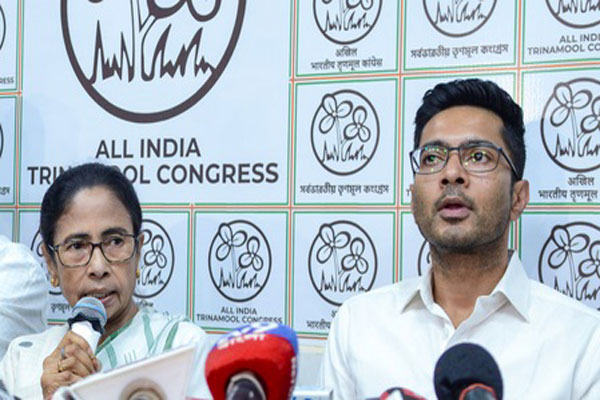
The most visible sign of the West Bengal political crisis is the emergence of two distinct power centers. Traditionally, Chief Minister Mamata Banerjee held absolute control from her Kalighat residence.
Now, a second influential hub has emerged at the party’s Camac Street office. This office is synonymous with Abhishek Banerjee, the party’s National General Secretary.
This dual structure creates visible friction. During the recent RG Kar protest movement, the divide became obvious. While the Kalighat faction favored a cautious administrative approach, Abhishek Banerjee took to social media.
He publicly demanded swift action against those attacking protestors. This intervention forced a stronger response from the administration, highlighting the internal tug-of-war.
The Exodus of Key Architects
The weakening of the TMC’s organizational framework is a major factor in this shift. In the past, Mukul Roy acted as the party’s master strategist. He managed the internal machinery while Mamata Banerjee remained the public face. However, the rise of Abhishek Banerjee and his reliance on external consultants changed the game.

Senior leaders began to feel sidelined. This led to a series of high-profile departures that boosted the BJP’s presence in the region:
-
Suvendu Adhikari: A hero of the Nandigram movement, Adhikari joined the BJP and famously defeated Mamata Banerjee in the 2021 Assembly elections.
-
Saumitra Khan: He defected to the BJP after alleging that decision-making had become too centralized.
-
Mukul Roy: Before his passing last year, the founding member had also moved to the BJP, dealing a massive blow to the TMC’s strategic planning.
Quick Glance & FAQ
| Key Figure | Role/Status | Impact on Crisis |
| Mamata Banerjee | Chief Minister | Facing pressure from internal factions and public protests. |
| Abhishek Banerjee | General Secretary | Leading the Camac Street power center with a new leadership style. |
| Suvendu Adhikari | LoP (BJP) | Successfully challenged the TMC stronghold in Nandigram. |
| Mukul Roy | Former Strategist | His departure and recent death left a void in party organization. |
Q: What triggered the current dissatisfaction in West Bengal? A: A combination of internal party conflicts, allegations of corruption, and perceived administrative stagnation has fueled public discontent.
Q: How does the “dual power center” affect governance? A: It often leads to conflicting messages from the party and the government, as seen during the RG Kar protests.
