

Assam 2026: The Perils of Opposition Coalition
Agartala/Guwahati, Dec 2: The political temperature in Assam steadily rises in anticipation of the 2026 Assembly elections.
The Congress party’s ambitious drive to forge a formidable opposition alliance seems facing significant internal challenges.
Leaders are dealing with complex equations particularly regarding sensitive issues of seat-sharing and consolidating votes in demographically diverse regions.
While senior Congress leaders are actively engaging with like-minded parties to revive a state-level ‘INDIA’ framework, the path to a truly unified front against the entrenched BJP appears fraught with complex negotiations.
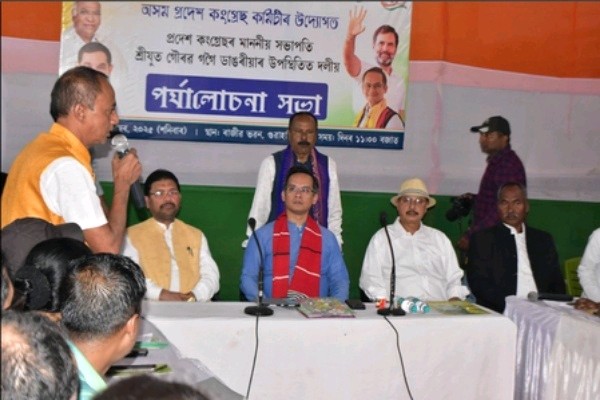
Lok Sabha MPs Gaurav Gogoi, Pradyut Bordoloi and other Congress leaders have consistently articulated that only a “collective, coordinated Opposition” can effectively counter the BJP’s well-oiled political machinery.
However, translating this rhetoric into a practical, agreed-upon electoral strategy where all parties feel adequately represented is proving to be the most critical challenge.
Despite a renewed push for collaboration, private admissions from within opposition ranks underscore the inherent difficulties.
“Forging a stable alliance will require compromises from all sides,” a senior opposition leader said. He highlighted the “competing regional priorities and ideological mismatches” that must be reconciled.
This stark reality casts a shadow over the Congress’ aspiration for a “broad democratic front.”
A critical sticking point in ongoing strategy sessions revolves around the contentious issue of seat-sharing, especially in Assam’s minority-dominated belts.
The Congress, while extending outreach to parties like the CPIM, CPI, and various other smaller ethnic-based entities, is reportedly “treading cautiously” on this matter.
The delicate balance aims at maximizing anti-BJP votes while simultaneously accommodating the electoral aspirations of each potential partner.
The fear of splitting crucial minority, tribal, and labour-population clusters remains a paramount concern for alliance architects.
The ruling BJP-led alliance has historically enjoyed a robust organizational advantage across the state, making the opposition’s ability to project a united and cohesive front not just desirable, but essential for any credible challenge.
The coming months are therefore deemed crucial by senior Congress figures for finalizing the contours of this proposed alliance, as the state moves closer to the 2026 polls and the BJP signals aggressive preparations.
The question remains whether the necessity of unity can overcome the inevitable friction arising from local political realities and the arithmetic of electoral distribution.
