

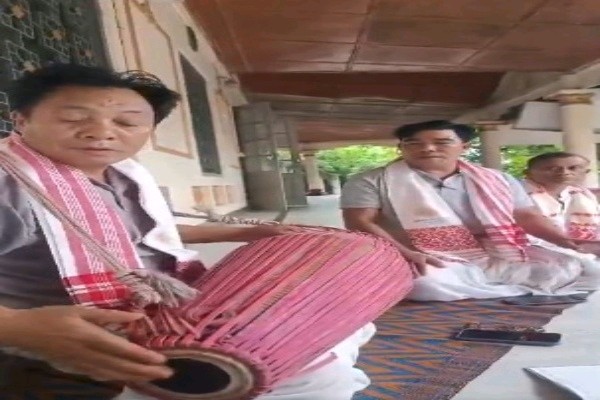
Himanta Biswa Sarma on Tuesday highlighted the centuries-old spiritual and cultural relationship between Assam and Manipur. Speaking from Sri Sri Batadrava Than, he said the shared Vaishnavite traditions inspired by Srimanta Sankardev continue to strengthen Northeast India’s cultural identity.
Quick Glance
- Himanta Biswa Sarma highlighted the historical Vaishnavite connection between Assam and Manipur.
- The Assam CM shared a devotional video from Sri Sri Batadrava Than in Nagaon.
- Traditional “Khol” and “Pung” instruments symbolised Northeast cultural unity.
- Sankardev’s Bhakti movement deeply influenced Manipuri religious traditions.
Assam CM Highlights Centuries-Old Cultural Connection
Guwahati/Agartala: Assam Chief Minister Himanta Biswa Sarma on Tuesday said Assam and Manipur continue to remain spiritually connected through centuries-old Vaishnavite traditions. He stressed that the cultural bond between the two Northeastern states reflects a shared civilisational heritage built on devotion, art and social harmony.
The Chief Minister posted a video message on X from Sri Sri Batadrava Than, one of Assam’s most revered Vaishnavite centres. The historic site in Nagaon district is widely known as the birthplace of Srimanta Sankardev, the saint-scholar who transformed Assam’s socio-religious landscape through the Bhakti movement.
Sarma said the rhythmic sounds of Assam’s “Khol” and Manipur’s “Pung” drums represented the spiritual unity of the Northeast. According to him, these traditions continue to connect communities across state boundaries even today.
The shared video featured devotional performances and percussion presentations by artists from both Assam and Manipur. The programme showcased the region’s enduring cultural ties through music and religious expression.
Why Sankardev’s Legacy Still Matters in Northeast India
Srimanta Sankardev introduced neo-Vaishnavism in Assam during the 15th and 16th centuries. His teachings promoted devotion to Lord Krishna along with equality, compassion and inclusiveness.
Historians believe his reformist movement influenced large parts of Northeast India over time. Manipur, in particular, gradually adopted several aspects of Vaishnavite philosophy and devotional practices.
The spiritual influence became stronger during the 18th century under the patronage of Meitei rulers in Manipur. Royal support helped Vaishnavism grow into an integral part of Manipuri society and culture.
Experts note that Manipuri traditions later absorbed many features of Assam’s Satra culture, including devotional music, dramatic performances and religious rituals.
Khol and Pung Continue to Symbolise Shared Heritage
Traditional musical instruments from Assam and Manipur still play an important role in Vaishnavite rituals and cultural performances.
Assam’s “Khol” is a terracotta percussion instrument widely used in Sattriya dance and devotional music traditions. Meanwhile, Manipur’s “Pung” remains central to Manipuri classical dance and religious ceremonies.
Cultural scholars often describe these instruments as symbols of the shared spiritual roots of the Northeast. Their use in temple rituals and cultural festivals keeps the centuries-old traditions alive for younger generations.
Cultural Exchanges Strengthen Regional Harmony
Over the years, Assam and Manipur have continued to deepen ties through religious gatherings, cultural festivals and artistic collaborations. These exchanges have helped preserve the common heritage shaped by Vaishnavism.
Observers say such interactions also strengthen regional harmony in the Northeast. Cultural organisations and state institutions have increasingly focused on preserving traditional art forms and historical religious sites linked to Sankardev’s teachings.
The Assam Chief Minister’s latest remarks come at a time when regional cultural identity and heritage conservation remain important themes across Northeast India.
Historical and Cultural Snapshot
| Aspect | Details |
|---|---|
| Key Spiritual Figure | Srimanta Sankardev |
| Historic Location | Sri Sri Batadrava Than |
| District | Nagaon, Assam |
| Shared Tradition | Neo-Vaishnavism |
| Key Instruments | Khol and Pung |
| Cultural Elements | Devotional music, dance and Satra culture |
People Also Ask
Why are Assam and Manipur culturally connected?
Both states share strong Vaishnavite traditions influenced by Srimanta Sankardev’s teachings and centuries of religious interaction.
What is Sri Sri Batadrava Than known for?
Sri Sri Batadrava Than is the birthplace of Srimanta Sankardev and a major centre of Vaishnavite culture in Assam.
What is the importance of Khol and Pung?
Khol and Pung are traditional percussion instruments used in Assamese and Manipuri devotional music and dance performances. (Edited)