

Bangladesh AHC Closure in Agartala, TMP threatens to block reopening
Agartala Dec 23: The indefinite suspension of visa and consular services at the Bangladesh Assistant High Commission (AHC) in Agartala has turned Tripura into a focal point of a widening diplomatic and political standoff, highlighting how India’s Northeast is increasingly emerging as a sensitive pressure zone in regional geopolitics.
The shutdown, announced on Monday citing “unavoidable circumstances”, comes amid mounting protests, sharp political statements and allegations of attacks on minorities in Bangladesh—developments that have placed the border state of Tripura at the centre of an issue extending far beyond local politics.
The Tipra Motha Party (TMP), an ally of the ruling BJP in Tripura, has taken a firm stand, warning that the Agartala mission should not be allowed to reopen unless alleged atrocities against minorities in Bangladesh are halted. TMP chief Pradyot Bikram Manikya Debbarma reiterated this position through a video message, underlining how regional political forces are now exerting influence on diplomatic spaces.
While the Bangladesh Assistant High Commission in Guwahati continues to function normally, the closure of the Agartala mission has underscored the unique sensitivity of Tripura, which shares an 856-km-long border with Bangladesh and maintains close people-to-people, trade and cultural ties with the neighbouring country.
Political analysts note that Agartala’s location and historical connections make it particularly vulnerable to cross-border tensions. The situation has been further inflamed by alleged remarks made by Bangladeshi leaders concerning India’s Northeastern region, triggering protests by youth organisations and political groups in Tripura.
The Youth Tipra Federation (YTF), the youth wing of the TMP, has accused certain Bangladeshi leaders of making “anti-India” statements and encouraging hostility, claims that have resonated strongly in a region long sensitive about territorial integrity and national security. Allegations that slogans critical of India were raised during protests outside the Indian High Commission in Bangladesh have further heightened tensions.
Adding to the complexity, several organisations and political parties in Tripura have condemned the reported lynching of a Hindu garment worker in Bangladesh’s Mymensingh district, accusing the interim government there of failing to safeguard religious minorities. These allegations have transformed what began as political protest into a broader human rights-driven mobilisation.
The episode has also revived historical narratives, with references to Tripura’s princely past and the 1971 Liberation War surfacing in public discourse, reflecting how unresolved memories continue to shape present-day diplomacy in the borderlands.
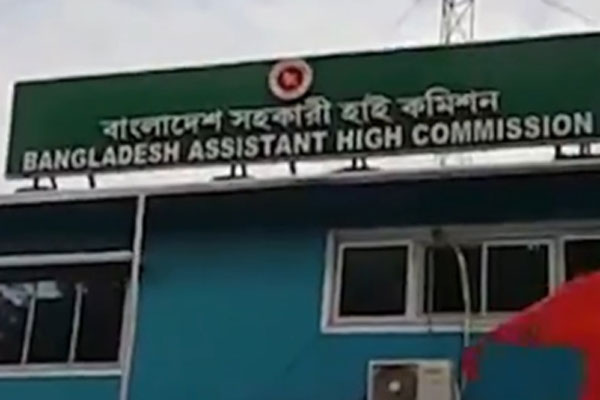
Security agencies, meanwhile, have moved swiftly to prevent any escalation on the ground. Senior police officials confirmed that security in and around the Bangladesh AHC in Agartala has been significantly reinforced, with additional deployments of the Central Reserve Police Force (CRPF) and Tripura State Rifles to protect diplomatic staff and installations.
Observers say the developments in Agartala illustrate a larger trend: the Northeast is no longer merely a peripheral theatre in India’s foreign relations, but an active and influential arena where diplomacy, domestic politics and regional sentiment intersect.
As the situation unfolds, the closure of the Agartala mission serves as a reminder that in border states like Tripura, local unrest can quickly assume national and international dimensions, placing the Northeast squarely at the heart of India–Bangladesh engagement.