

Battle of Gangasagar: The Moment That Defined Albert Ekka Brigade
Agartala, Jan 1: The Albert Ekka Brigade, a formation etched into India’s military history for its exceptional gallantry during the 1971 India–Pakistan War, reaffirmed its enduring legacy as it marked its 56th Raising Day in Agartala, drawing attention to both its heroic past and the strategic importance of the Tripura sector.
The brigade, which was actively deployed from the Tripura front during the 1971 conflict, is remembered for its decisive contribution to Operation Cactus Lily—one of the key military campaigns that paved the way for India’s victory and the liberation of Bangladesh. Its recent relocation to the Agartala Military Station has added contemporary relevance to this legacy, reconnecting the unit with the very region from where it was launched into battle more than five decades ago.
Defence analyst Manas Paul said the 1971 conflict unfolded through two major military campaigns—Operation Cactus Lily and Operation Nut Cracker—in which the 57 Mountain Division played an active role with critical firepower support.
According to Paul, both operations advanced from Agartala towards Dhaka, ultimately leading to the historic surrender of Pakistani forces on December 16, 1971. He recalled legendary figures of the war, including Lt Gen Jagjit Singh Aurora, Maj Gen (Retd) Ian Cardozo, Lt Arun Khetrapal and Lance Naik Albert Ekka.
He added that the nine-month-long conflict concluded on December 16, 1971 with the capitulation of Pakistani troops, paving the way for the emergence of Bangladesh as an independent nation.
Battle of Gangasagar
Military historians and defence officials regard the Battle of Gangasagar as a defining moment in the eastern theatre of the war. The brigade’s actions in this sector not only ensured the security of Tripura but also enabled Indian forces to push westward towards Dhaka, contributing decisively to the collapse of Pakistani defences in East Pakistan.
Among all formations that fought in the 1971 war, the Albert Ekka Brigade holds a singular distinction: it earned the only Param Vir Chakra awarded during the conflict. The honour was bestowed posthumously on Lance Naik Albert Ekka of the 14 Guards, whose extraordinary courage during the Battle of Gangasagar near the Tripura border altered the course of the engagement. By assaulting and neutralising a heavily fortified enemy position under intense fire, he eliminated a major threat that could have endangered Agartala, sacrificing his life in the process.
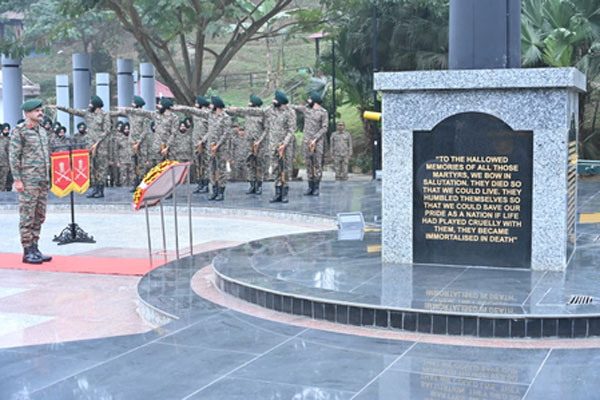
Beyond the Param Vir Chakra, the brigade’s record is marked by multiple high-level gallantry awards earned in both wartime and peacetime operations, underscoring its reputation as a combat-hardened and disciplined formation. Its history of valour has made it a benchmark within the Indian Army for operational excellence and battlefield leadership.
IANS reported, The strategic significance of Tripura, particularly Agartala, has grown steadily over the years due to its proximity to Bangladesh and its role as a key logistical and operational hub in the Northeast. Defence analysts note that the brigade’s presence in Agartala strengthens India’s forward military posture in the region while also serving as a powerful reminder of the area’s decisive role in the 1971 war.
As the Albert Ekka Brigade continues its journey from its historic roots in the 1971 war to its present-day deployment in the Northeast, its legacy of courage and strategic relevance remains firmly intact—symbolising both the sacrifices of the past and the preparedness of the Indian Army for future challenges.