

Handmade Quilt: From Cultural Comfort to Economic Casualty in Tripura
Agartala Jan 2: Long before the term “gig economy” entered popular vocabulary, seasonal quilt-making offered migrant workers from Bihar a stable winter income in Tripura.
But that informal safety net is rapidly collapsing – thanks to technology and convenience-driven consumption.
Traveling down the memory lane, one may recall how quilt making was linked with Tripura’s winter culture.
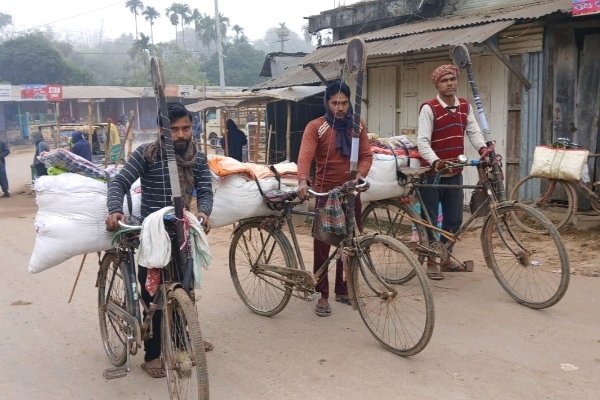
The rhythmic twang of the bowstring and the fluttering of cotton fibres once echoed through neighbourhoods across the state was essential for comfort during winter.
But, winter canvas of urban and rural Tripura has changed so much that the sight of quilt makers at work has become rare.
Once a vital source of income for Dhunias (quilt makers) and local artisans, quilt-making has witnessed a sharp decline with the rise of affordable, machine-made blankets.
For older generations, cotton quilts symbolise warmth, memory, and cultural identity.
However, convenience and maintenance costs drive purchasing decisions of most of the young buyers.
Lightweight blankets and mattresses align better with fast-moving, urban lifestyles.
This shift has had direct economic consequences for artisans who once were integral part of winter culture of Tripura.
With no digital integration, branding, or youth participation, the traditional quilt trade has failed to compete with organised manufacturing – consequently, the handmade quilts have been pushed to the margins of the winter market.
The shift is strikingly obvious at the ground level – where over a hundred artisans once operated in Kalyanpur under the Khowai District of Tripura, only a handful remain in this profession today.
At present, only three or four artisans remain active in Kalyanpur, compared to more than a hundred earlier, said local sources.
Veteran artisan Nepal Pal of Kalyanpur market said demand for cotton quilts started declining gradually after the year 2000.
Over the last two and a half decades, domestic and imported blankets have dominated the market. While fall in demand hit them hard, increasing prices of raw materials have further deepened the crisis.
According to one of the migrant cotton quilt artisans, making a standard medium-sized quilt now costs between Rs 800 and Rs 1,000, while larger quilts cost up to Rs 1,500.
Meanwhile, factory-made blankets are easily available at similar prices, leading consumers to choose machine-produced options.
Recalling past, quilt makers said that earnings from the three winter months once sustained families throughout the year.
“Today, the number of orders has fallen so drastically that surviving has become a challenge,” he said.
But for many households, the cotton quilt remains more than a winter accessory; it symbolizes an enduring element of winter tradition in Tripura.
“No blanket – regardless of price – can replicate the comfort of a handmade quilt”, said one of elderly person of Kalyanpur.
The shrinking demand for handmade quilt reflects a broader economic transition – where heritage skills lose relevance unless aligned with modern consumer expectations and sustainable income models.