

Varanasi, Mar 10: Strengthening the seed economy could create new opportunities for farmers in Tripura.
The ICAR–Indian Institute of Vegetable Research (IIVR) in Varanasi has expressed readiness to support the state in developing local vegetable seed production.
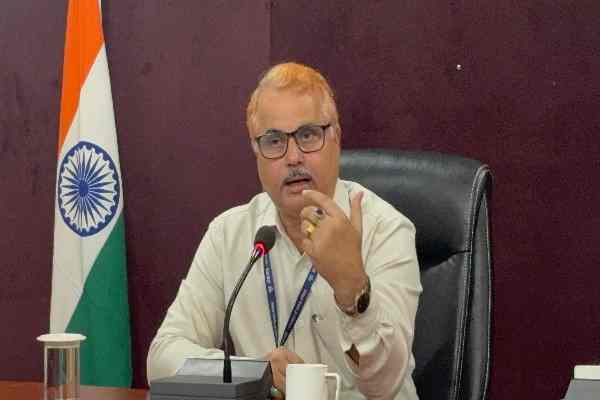
Speaking to visiting journalists from Tripura on Tuesday, ICAR-IIVR Varanasi Director Rajesh Kumar said the institute is willing to work with the Tripura government to strengthen seed production capacity.
He said farmers in the state could produce quality vegetable seeds locally with proper training and technical guidance.
According to him, such steps could create a sustainable seed economy in rural areas. At the same time, they could reduce Tripura’s dependence on seeds supplied from other states.
Dr Kumar shared these views during an interaction with journalists in Varanasi.
He said the institute can provide training programmes, technology support and quality seeds if the state government shows interest.
He further explained that IIVR already has the necessary technology.
Meanwhile, Tripura has a strong farming community capable of adopting modern seed production practices.
Dr Kumar also pointed out that Tripura has strong agricultural potential among northeastern states. In fact, the state records the highest vegetable productivity in the region.
However, overall vegetable production still remains below the national average. As a result, Tripura often depends on supplies from other parts of the country.
He therefore advised farmers to move beyond traditional paddy cultivation.
Instead, they should adopt diversified farming, especially vegetable cultivation, which offers better economic returns.
Vegetable farming, he said, can generate income in a relatively short time. Moreover, it often produces higher yields than several traditional crops.
Increased vegetable production could therefore raise farmers’ incomes and strengthen the state’s agricultural economy.
Dr Kumar also highlighted the idea of a seed-based rural economy. He suggested that Tripura could begin by producing seeds of selected vegetables.
Farmers could grow these crops specifically for seed production and sell them in the market.
He also noted that the Centre’s focus on the Act East Policy could help Tripura expand its seed sector and access wider markets.
However, he acknowledged that the shortage of quality seeds remains a major challenge across the region. To address this issue, ICAR-IIVR Varanasi is ready to provide logistics support if the state government places bulk orders for vegetable seeds.
Another option, he said, is to train farmers in seed production. This approach would allow certified seeds to be produced locally and supplied to farmers on time.
Apart from seed production, the institute has also shown interest in collaborating with Tripura on innovative crops developed through grafting techniques.
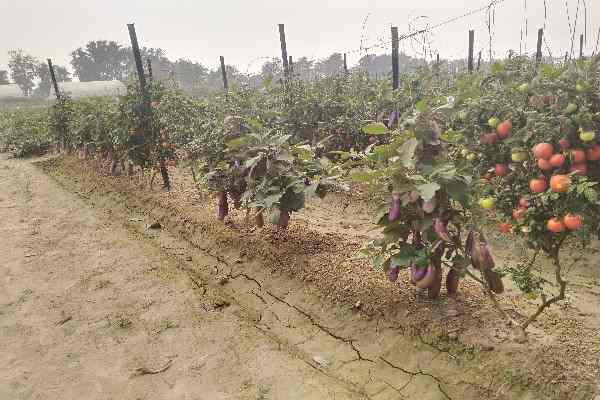
These include Pomato, a plant that produces both potatoes and tomatoes, and Brimato, which yields brinjals and tomatoes from a single plant.
Dr Kumar said these grafting technologies are still under experimental stages. So far, farmers from Tripura have not approached the institute for training.
However, he assured that IIVR will provide full technical support if such proposals come from the state.
He also mentioned the institute’s kitchen garden initiative. Under this programme, households receive seed packets containing ten varieties of vegetables.
The initiative aims to encourage families to grow vegetables at home and meet their nutritional needs.
Under the North Eastern Hill (NEH) Component Programme of the Government of India, IIVR already conducts training programmes for farmers from northeastern states.
Dr Kumar said farmers from Tripura can visit the institute in Varanasi for specialised training in modern vegetable cultivation and seed production.
The interaction took place during a media tour organised by the Press Information Bureau. The tour covered Lucknow, Ayodhya and Varanasi in Uttar Pradesh.
Journalists from Tripura participated in the programme and interacted with the ICAR-IIVR Varanasi scientists during their visit.