

Indian Origin Scripts Essential for Cultural Preservation: Amit Shah in Agartala
Agartala Feb 20: Union Home Minister Amit Shah said on Friday that the preservation of a community’s ethnic and cultural soul is inextricably linked to using an Indian origin script, not by using foreign script.
Speaking at the Joint Regional Official Language Conference (Rajbhasha Sammelan) held in Agartala, Shah championed the Nagari script for dialects and tongues that currently lack a formalized writing system. He suggested that embracing Nagari would not only fortify linguistic legacies but also offer a standardized path for future development.
The Kokborok Script Debate
The Minister made the comment at a pivotal moment for Tripura, where a heated debate persists over the official script for Kokborok, the state’s secondary major language. While the ruling BJP has indicated a preference for Bengali or Devanagari, groups like the Tipra Motha, IPFT, and various tribal organizations have remained steadfast in their demand for the Roman script.
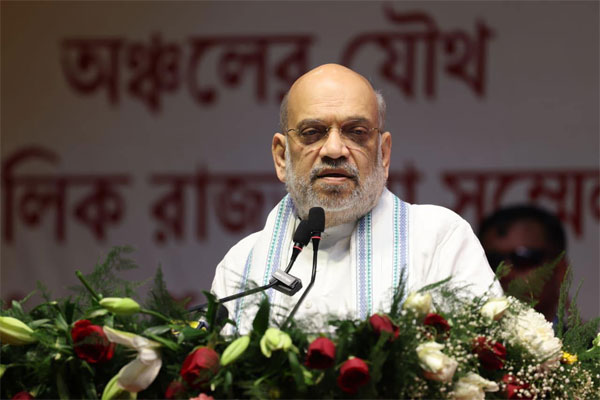
Addressing this differences, Shah called for a spirit of unity and understanding. He cautioned against letting the choice of a script fracture society and pointed out that many Northeast dialects have already successfully integrated Nagari, thereby solidifying their cultural standing.
Identity and Indigenous Roots
The Home Minister highlighted the long-standing efforts of Northeastern tribal communities to shield their heritage from erasure. However, he raised a critical question: how can a foreign-derived script truly safeguard a native identity?
- Unity over Conflict: Shah appealed for a collective consensus to ensure that language remains a tool for social harmony rather than a trigger for unrest.
- The Purpose of Language: He reminded the audience that linguistics should serve as a bridge for cultural advancement, not a wall of division.
Education and the Role of Parents
Beyond official policy, Shah placed a heavy emphasis on the domestic sphere. He urged parents to prioritize literacy in their native tongues at home, warning that a failure to do so could sever the younger generation’s link to their history and literature.
“Children must remain fluent in their mother tongue to avoid becoming strangers to their own roots,” he noted, regardless of which language is used for their formal schooling.
Hindi and Regional Languages: A “Sibling” Relationship
Addressing recurring concerns regarding the perceived imposition of Hindi, the Home Minister labeled such narratives as false. He clarified that Hindi and India’s regional languages are not competitors but are like siblings raised in the same cultural ecosystem. He maintained that Hindi thrives alongside languages like Tamil, Telugu, and Bengali, forming a collaborative rather than a combative linguistic framework for the country.
