

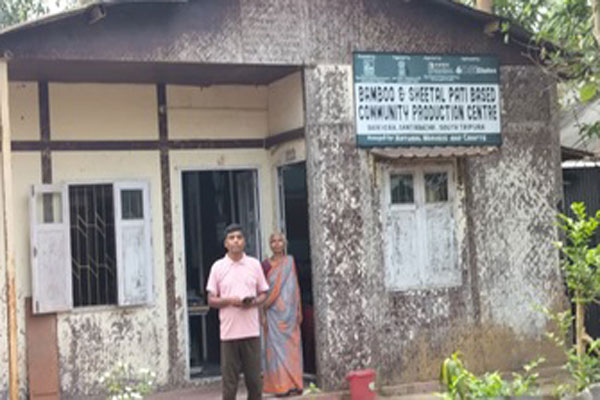
Prime Minister Narendra Modi lauds Tripura bamboo revolution in Mann Ki Baat highlighting how policy reforms turned traditional crafts into a tech-driven global industry.
Agartala, April 26: Prime Minister Narendra Modi sparked a new wave of pride across Tripura during his 133rd Mann Ki Baat episode on Sunday. He lauded the state’s remarkable transition from traditional bamboo weaving to a high-tech industrial force.
By highlighting local artisans from Gomati and South Tripura, the Prime Minister showcased how a simple change in legal definitions has turned a “burden” into a multi-million-rupee economy for the Northeast.
From ‘Economic Liability’ to Global Asset
For decades, colonial-era laws stifled the potential of the Northeast. By classifying bamboo as a tree, the government made it illegal to cut or transport it without complex permits. Prime Minister Modi noted that this “economic liability” ended in 2017. The policy shift allowed residents to treat bamboo as a grass, opening the floodgates for commercial innovation.
In Agartala and rural pockets of Tripura, this change has empowered women particularly. “Our mothers and sisters are the biggest beneficiaries,” the Prime Minister remarked. He emphasized that what was once a tool for survival is now a medium for entrepreneurship.
Tripura Bamboo revolution: Spotlight on State Artisans
The Prime Minister specifically named two Tripura-based innovators: Bijoy Sutradhar from Gomati and Pradeep Chakraborty from South Tripura. These individuals did not just stick to old methods. Instead, they integrated modern technology with ancient craftsmanship.
By adopting new machinery, they have increased their production volume. They now supply high-quality eco-friendly goods to major Indian metros like Delhi and Mumbai. This technology-driven approach serves as a blueprint for the “Atmanirbhar” (Self-Reliant) India movement.
He further encouraged artisans to expand their horizons beyond domestic markets and tap into global opportunities, describing Tripura’s bamboo industry as a reflection of India’s cultural legacy as well as its push towards self-reliance. “Tripura’s bamboo craft is not only a reflection of our tradition but also a path to sustainable livelihood. It deserves global recognition,” Modi said.
A Regional Success Story
While Tripura led the narrative, the Prime Minister also touched upon successes in neighboring states:
- Nagaland: SHGs in Dimapur are adding value to bamboo food products.
- Mizoram: Groups in Mamit district are mastering advanced bamboo tissue culture.
- Sikkim: The Lagastal Bamboo Enterprise Team is producing premium incense sticks and interior décor.
The Prime Minister emphasized that these examples represent only a fraction of the broader success achieved by the bamboo sector across the country. “I have cited just a few examples here. The list of success stories of the bamboo sector in the country is quite long. I’ll urge all of you to positively purchase one bamboo product or the other from the Northeast. You can even present it as a gift. Your efforts will encourage those who toil hard to make bamboo products.”
News Analysis: The 2017 Policy Pivot
The significance of the 2017 amendment to the Indian Forest Act cannot be overstated. For nearly 90 years, bamboo was legally a “tree,” despite being botanically a grass. This meant a farmer in Tripura could grow bamboo on his own land but could not transport it to a market without a “Transit Pass” from the Forest Department.
By declassifying it, the Modi government effectively “decriminalized” the bamboo trade. This historical correction is the foundation upon which Tripura’s bamboo growers and artisans are thriving.
PM Modi’s remarks have elicited a positive response in Tripura, where both officials and artisans view the recognition as a significant morale booster as well as a potential catalyst for economic growth.
The state government has already been pursuing initiatives to promote bamboo-based industries, and the Prime Minister’s endorsement is expected to further accelerate efforts aimed at boosting exports and strengthening rural employment.
Frequently Asked Questions (FAQ)
Q1: Why is bamboo called ‘Green Gold’ in Tripura? It is called Green Gold because of its high economic value and its ability to provide sustainable livelihoods to thousands of rural families.
Q2: How did the 2017 law change help Tripura? It removed the requirement for transit permits. This allowed artisans to move raw materials and finished goods freely across state lines.
Q3: Which districts in Tripura were mentioned by PM Modi? The Prime Minister specifically mentioned Gomati and South Tripura districts.