

Reservation a Bridge to Equality, Not a Threat to Merit: Animesh
Agartala Dec 22: Tripura Minister Animesh Debbarma on Saturday strongly defended India’s reservation policy, describing it as a constitutional necessity rooted in equality of opportunity and a vital instrument for strengthening democracy.
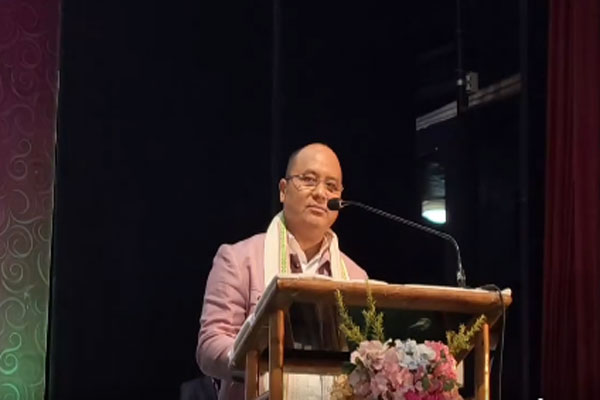
Speaking at the 4th Annual Invitational Debate organized by the Advocate Dilip Sarkar Memorial Foundation at Agartala Town Hall on December 21, the Minister asserted the policy was never meant to undermine merit but to correct centuries of structural discrimination and inherited disadvantage.
The debate, centered on the motion “Reservation compromises quality and merit,” evoked huge interests among the young generations of different strata of society.
A Remedy for Structural Injustice
Debbarma opened his address by revisiting the Philosophical and Constitutional basis of the reservation system. He clarified that the Indian Constitution envisions “equality of opportunity” as a proactive measure, distinct from a mere passive “equality before the law.”
Reservation was never intended as a temporary fix but as an extraordinary remedy for extraordinary circumstances, he said. He highlighted that marginalized communities, including SCs, STs, Adivasis, and Dalits, have faced systemic and structural discrimination for centuries.
“Discrimination in India, he noted, was not accidental or isolated but deeply systemic and embedded in social structures, necessitating constitutional safeguards to ensure fairness”, he said.
Redefining “Merit” and Inclusion
A central theme of the Minister’s speech was the debunking of the perceived conflict between reservation and merit. Debbarma argued that merit cannot exist in a vacuum; it is heavily influenced by the social and economic ecosystems in which an individual is raised.
Representation: Reservation has been instrumental in bringing voices from the Northeast and other marginalized pockets into the halls of governance, education, and professional sectors.
The Privilege Gap: He pointed out that without equal opportunity, what is often celebrated as “merit” is frequently just the result of accumulated social privilege.
Nation Building: By fostering a more inclusive society, reservation ultimately strengthens the democratic fabric of the nation by ensuring diverse representation in public life.
The Path to Reform and Unity
While advocating for the continuity of the policy, Debbarma also called for responsible evolution. He acknowledged that as society changes, so must the implementation of these benefits.
He emphasized three key areas for future reform:
- Targeted Benefits: Ensuring that the most disadvantaged individuals within marginalized groups are the primary beneficiaries.
- Regular Review: Implementation must be reviewed with sensitivity and responsibility to maintain its effectiveness.
- Social Cohesion: Debbarma urged for empathy and dialogue between communities to prevent reservation from becoming a source of conflict between communities.
Concluding his speech, Minister Animesh Debbarma envisioned reservation as a bridge toward a just and equitable India. He noted that the ultimate goal of such measures is to create a society so balanced and fair that such interventions eventually become unnecessary.