

Kanchanpur (Tripura), April 4: Moving beyond the high-decibel political rheotics, Tipra Motha Party (TMP) chairman Pradyot Kishore Manikya Debbarma has reframed on Saturday his campaign for upcoming TTAADC elections as a moral obligation to the next generation.
Addressing a poll rally in the Dasda-Kanchanpur sector this today, Debbarma suggested the electorate to view their ballot not as a political tool, but as a protective shield for their children’s future.
By placing “Gen Next” at the heart of his speech, Debbarma has signaled a shift from abstract slogans like demand to capture Chittagong, Cox’s Bazar to be included in Greater Tipraland to tangible legacy-building.
He cautioned parents against the temptation of short-term incentives, arguing that the security and self-governance of the indigenous community depend entirely on the foundation laid today.
A Blueprint for the Hills: Targeted Poll Promises
The Kanchanpur rally acted as a launchpad for a region-specific development agenda.
Acknowledging that this northern pocket has historically lagged behind, Debbarma committed to a roadmap designed to reverse decades of marginalization:
Eradicating Water Scarcity: Labeling the lack of safe drinking water a “crisis of dignity,” he guaranteed that a Motha-led council would prioritize the installation of modern filtration and distribution networks across the hilly terrain.
Better Funding : To bypass bureaucratic bottlenecks, he promised to facilitate the direct flow of additional development funds specifically into the Kanchanpur subdivision to kickstart stalled projects.
Educational Sovereignty: Addressing the crumbling school buildings in tribal belts, the party leader pledged to modernize infrastructure so that students can access quality education within their own communities.
Road Connectivity: He highlighted the urgent need to overhaul the dilapidated connectivity networks that currently hinder local commerce and medical emergencies.
News Analysis: The Strategy of Human-Centric Regionalism
>Editorial insight: In the landscape of Tripura’s politics, the 2026 TTAADC polls represent a critical junction. Historically, regional parties have struggled to maintain momentum after initial surges. By pivoting the narrative toward the “welfare of children” and specific infrastructure goals like water and schools, Debbarma is attempting to build a “resilient” voter base.
> This approach serves a dual purpose: it grounds the high-level “Greater Tipraland” sentiment in everyday reality and creates a protective emotional barrier against the campaign machinery of national parties.
Experts see it as a move from identity politics to “survival politics,” emphasizing that local autonomy is the only way to ensure the youth aren’t left behind.
Unity as the Only Path Forward
Central to his address was the concept of Thansa—the collective unity of the Tiprasa people.
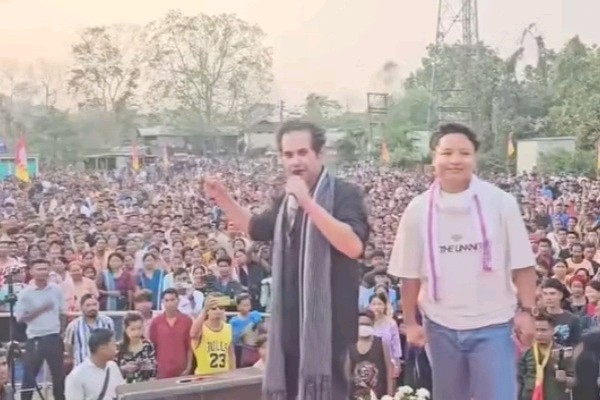
Debbarma framed the election as a personal contest of trust between himself and Chief Minister Dr Manik Saha, asking voters to decide which leadership truly understands the pulse of the hills.
Reiterating his party’s decision to contest the polls independently, he made it clear that TMP’s strength lies in its refusal to dilute its regional agenda for the sake of an alliance.
For the residents of Kanchanpur, the message was unmistakable: the upcoming election is a test of community endurance and a collective investment in the generations yet to come.