

CM Dr Manik Saha announces a Rs 10 crore boost for Agartala Municipal Corporation to tackle mosquito breeding and upgrade urban sanitation in Tripura’s capital.
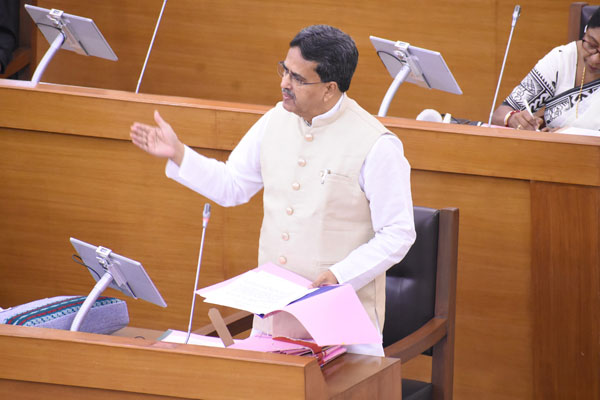
Agartala Mar 20: Residents of Agartala, long plagued by the seasonal surge of mosquito-borne health risks, may witness a more aggressive sanitation drive in the city area. Chief Minister Prof. (Dr.) Manik Saha announced in the State Assembly today that the Tripura government has earmarked a dedicated fund of Rs 10 crore for the Agartala Municipal Corporation (AMC) to intensify its fight against the “mosquito menace” over the current and upcoming financial years.
Addressing the Assembly on the sixth day of the ongoing Budget session, the Chief Minister stated that the government is actively working to keep the capital city clean and reduce mosquito breeding. He noted that drains under the Agartala Municipal Corporation (AMC) are cleaned regularly and kept under continuous surveillance.
Dr. Saha explained that stagnant water, especially after the rainy and dry seasons, remains a major cause behind the rise in mosquito population. He said that although most drains in Agartala have already been covered, certain areas still face challenges where covering drains is not feasible. He added that mosquito control remains a complex issue, as even major cities struggle with similar problems.
Despite the challenges, the government has intensified measures such as routine cleaning of drains, roads, markets, and urban local bodies to minimize mosquito breeding grounds.
A Multi-Pronged Attack on Breeding Grounds
The Chief Minister acknowledged the geographic hurdles Agartala faces, noting that stagnant water in drains post-monsoon remains a primary culprit. While a significant portion of the city’s drainage network has been covered, Dr. Saha admitted that certain “unfeasible” pockets continue to pose challenges.
To counter this, the government is deploying a mix of technology and biology:
- Biological Warfare: The release of Gambusia (mosquitofish) into small canals to naturally consume larvae.
- Chemical Intervention: Regular fogging for adult mosquitoes and machine-led spraying of larvicides in high-risk zones like hospitals and markets.
- Strict Oversight: A newly constituted Public Health Standing Committee within the AMC will now monitor ward-level performance.
Highlighting financial support, the Chief Minister informed that the state government has allocated Rs 10 crore to the Agartala Municipal Corporation during the financial years 2024–25 and 2025–26. The fund is being utilized specifically for sanitation drives and mosquito control initiatives across the city.
Dr. Saha informed that the Health Department has been distributing mosquito nets and conducting awareness campaigns to educate people about the dangers of stagnant water. Leaflets are also being circulated to encourage residents to maintain cleanliness in their surroundings.
The Chief Minister emphasized that community participation remains crucial in the fight against mosquito-borne diseases and urged citizens to actively contribute by keeping their surroundings clean.
News Analysis: Beyond the Fogging Machines
The struggle with urban drainage in Agartala is a legacy issue tied to the city’s saucer-shaped topography, which makes water stagnation almost inevitable during the transition between the rainy and dry seasons.
Historically, mosquito control in the capital was often criticized as being “event-based”—ramping up only during Dengue or Malaria outbreaks. By allocating a multi-year budget and involving ward-level sanitary inspectors in a “surveillance” role, the state is attempting to institutionalize cleanliness rather than treating it as an emergency response.
This move signals a realization that Agartala’s “Smart City” aspirations cannot be realized without first solving basic public health hygiene.
Community at the Core
Despite the government’s technical intervention, the CM placed a heavy emphasis on civic duty. He noted that the Health Department is currently distributing leaflets and mosquito nets while conducting door-to-door awareness campaigns.
“The government can clean the drains and spray the chemicals, but the fight is won in the backyards of our citizens,” Dr. Saha stated, urging residents to ensure no stagnant water remains in containers or flower pots around their homes.