

Quick Glance
- Northeast India features in cultural diplomacy as PM Modi gifted Assam’s famous Muga silk stole and Manipur-inspired Shirui Lily stole to Giorgia Meloni
- The gifts showcased Northeast India’s weaving traditions, biodiversity, and indigenous culture
- India and Italy elevated bilateral ties to a Special Strategic Partnership during the visit
- The diplomatic gesture highlighted cultural diplomacy as a tool for strengthening global relations
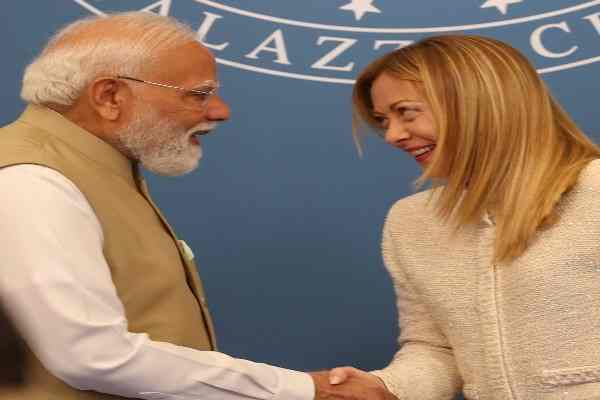
Agartala/Guwahati: Prime Minister Narendra Modi highlighted Northeast India’s cultural richness during his Italy visit by gifting Assam’s Muga silk and Manipur-inspired Shirui Lily stoles to Italian Prime Minister Giorgia Meloni. The gesture blended diplomacy with heritage, sustainability, and indigenous craftsmanship.
Northeast India Becomes India’s Cultural Ambassador
Prime Minister Narendra Modi’s recent Italy visit carried a strong diplomatic message. However, beyond economic discussions and strategic agreements, India also presented its cultural identity to the world through symbolic gifts from Northeast India.
By choosing Assam’s Muga silk and Manipur’s Shirui Lily-inspired stole for Italian Prime Minister Giorgia Meloni, India projected the region’s artistic excellence onto the international stage. The gesture reflected a broader shift in India’s diplomatic outreach where culture, heritage, and indigenous traditions now play a central role.
The gifts highlighted how Northeast India is steadily emerging as a powerful symbol of India’s soft power diplomacy.
Assam’s Muga Silk Carries Legacy Across Continents
Among the gifts, Assam’s Muga silk stole stood out as a symbol of heritage and sustainability. Popularly known as the “Golden Silk,” Muga silk remains one of the world’s rarest natural fibres.
Produced mainly in the Brahmaputra Valley, the fabric is admired for its natural golden shine and exceptional durability. Unlike industrial textiles, artisans create Muga silk without artificial dyes. As a result, the weaving tradition reflects both luxury and environmental sustainability.
For generations, Assamese weavers have preserved the craft despite changing market trends. Families often pass down Muga silk garments as heirlooms because the fabric lasts for decades while becoming more lustrous over time.
The choice of Muga silk also carried diplomatic symbolism. Italy has a long-standing reputation for luxury textiles and refined fashion craftsmanship. Therefore, gifting Assam’s iconic silk created a subtle cultural connection between two regions known for artistic excellence.
Shirui Lily Connects Manipur and Italy Through Symbolism
The second gift drew inspiration from Manipur’s rare Shirui Lily flower. Found only in the Shirui Kashong hills of Ukhrul district, the flower blooms briefly each year and holds immense cultural significance for local communities.
For the Tangkhul Naga community, the Shirui Lily symbolises purity, identity, and harmony with nature. Its delicate pinkish-white petals make it one of India’s most unique floral treasures.
The stole transformed this natural beauty into wearable art. Through the design, India showcased Manipur’s biodiversity alongside its indigenous artistic traditions.
Interestingly, the lily also carries strong cultural meaning in Italy. Across Renaissance art and European traditions, lilies represent grace, purity, and nobility. This shared symbolism created an emotional and cultural bridge between India and Italy.
The diplomatic gesture therefore moved beyond protocol. It created a narrative of shared heritage and cultural understanding.
Cultural Diplomacy Gains Importance in India’s Foreign Policy
India has increasingly used cultural diplomacy to strengthen international partnerships. Instead of relying only on ceremonial gifts, the country now presents handcrafted items that reflect regional identities and traditional craftsmanship.
This strategy supports multiple goals simultaneously. It promotes India’s soft power globally while also giving visibility to local artisans and indigenous communities.
In this case, Assam and Manipur became global representatives of India’s cultural diversity. Their handloom traditions, ecological treasures, and indigenous stories reached international audiences through high-level diplomacy.
The move also reflects a changing national narrative around Northeast India. For decades, the region remained on the margins of mainstream discussions despite its immense cultural richness. Today, however, the Northeast is steadily becoming an important pillar of India’s global cultural identity.
India and Italy Deepen Strategic Partnership
The cultural exchange took place during a significant diplomatic visit. India and Italy upgraded their bilateral relationship to a Special Strategic Partnership during PM Modi’s visit.
Both countries also discussed expanding cooperation in trade, connectivity, agriculture, healthcare mobility, and financial crime prevention.
The two nations aim to increase bilateral trade to 20 billion Euros by 2029. Discussions also advanced cooperation on the India-Middle East-Europe Economic Corridor (IMEC), a major connectivity initiative linking Asia and Europe.
| Key Diplomatic Highlights | Details |
|---|---|
| Partnership Status | Special Strategic Partnership |
| Trade Target | 20 Billion Euros by 2029 |
| Major Focus Areas | Trade, healthcare, agriculture, connectivity |
| Cultural Gifts | Muga Silk, Shirui Lily Stole, Marble Inlay Box |
Marble Inlay Craft Reflects Shared Artistic Heritage
PM Modi also gifted Italian President Sergio Mattarella a handcrafted Marble Inlay Work Box.
The artwork represented Agra’s famous Pacchikari craft, also known as Pietra Dura. Historians believe the art form originated in Florence before flourishing in India during the Mughal era.

Craftsmen created the decorative box using semi-precious stones embedded into polished marble surfaces. The intricate floral patterns reflected centuries of artistic exchange between India and Italy.
Inside the box were recordings of legendary Indian classical musicians Pandit Bhimsen Joshi and M. S. Subbulakshmi, adding another cultural dimension to the diplomatic gesture.
Northeast India’s Identity Reaches Global Platforms
The international attention surrounding these gifts signals a larger transformation. Northeast India is no longer viewed only through geography or strategic importance. Instead, the region is increasingly recognised for its civilisation, creativity, biodiversity, and indigenous wisdom.
From Assam’s golden silk to Manipur’s rare floral heritage, the Northeast is steadily becoming part of India’s global narrative.
As India expands its diplomatic engagement worldwide, cultural storytelling is emerging as a powerful tool. This time, the stories came woven in silk and inspired by flowers blooming in the hills of Northeast India.
People Also Ask (FAQ)
Q. Why is Assam’s Muga silk famous?
Muga silk is famous for its natural golden shine, durability, and eco-friendly production process. It is one of the rarest natural silks in the world.
Q. What is special about the Shirui Lily?
The Shirui Lily grows only in Manipur’s Shirui Kashong hills and symbolises purity, cultural identity, and natural beauty.
Q. Why did PM Modi gift Northeast Indian items in Italy?
The gifts highlighted India’s cultural diversity and promoted Northeast India’s heritage as part of India’s global cultural diplomacy. (With IANS Inputs)
