

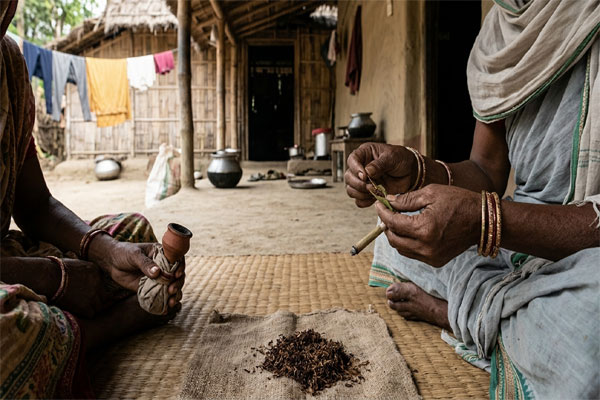
Nearly one in every two women in Tripura consumes tobacco, according to NFHS-6 (2023-24), making it one of the state’s most alarming public health concerns. The latest survey also highlights rising diabetes, increasing hypertension among men, growing obesity among women, and alcohol consumption levels that remain well above national averages.
Quick Glance
- 47.7% of women in Tripura use tobacco, nearly six times the national average.
- More than half of adult men in the state also consume tobacco.
- Diabetes prevalence has increased sharply, especially among men.
- Rising obesity among women and hypertension among men signal growing lifestyle-related health risks.
Alarming Tobacco Use Among Men & Women in Tripura
Agartala: The latest National Family Health Survey (NFHS-6) presents a concerning picture of tobacco consumption in Tripura, particularly among women.
While the state has achieved notable progress in women’s empowerment, financial inclusion, menstrual hygiene, and reduction in gender-based violence, tobacco use continues to remain deeply entrenched across communities.
Among women aged 15 years and above, 47.7 percent reported using tobacco in some form. Although this marks a slight decline from 50.5 percent recorded in NFHS-5, the figure remains extraordinarily high when compared to the national average of just 8.4 percent.
This means tobacco use among women in Tripura is nearly six times higher than the all-India average.
Tobacco Consumption Remains a Major Public Health Threat
The concern extends beyond women.
NFHS-6 shows that 52.1 percent of adult men in Tripura also consume tobacco. While this represents an improvement from 57.2 percent in NFHS-5, the prevalence remains significantly higher than the national average of 36.3 percent.
| Tobacco Use | NFHS-5 | NFHS-6 | India NFHS-6 |
|---|---|---|---|
| Women | 50.5% | 47.7% | 8.4% |
| Men | 57.2% | 52.1% | 36.3% |
Health experts warn that such widespread tobacco use increases the risk of several serious diseases, including oral cancer, lung cancer, chronic respiratory illnesses, heart disease, and stroke.
The findings suggest that tobacco control remains one of the most urgent public health priorities for Tripura.
Rising Diabetes Adds to Health Concerns
Alongside high tobacco consumption, NFHS-6 reveals a growing diabetes burden in the state.
Among women aged 15 years and above, the proportion with high blood sugar levels or taking medication for diabetes increased from 17.7 percent in NFHS-5 to 19.6 percent in NFHS-6.
The increase among men is even more striking.
| Indicator | NFHS-5 | NFHS-6 | India NFHS-6 |
|---|---|---|---|
| Men with high blood sugar or on medication | 19.3% | 25.1% | 20.9% |
| Women with high blood sugar or on medication | 17.7% | 19.6% | 17.8% |
The latest figures indicate that one in four adult men in Tripura now has elevated blood sugar levels or is receiving treatment for diabetes.
Urban populations continue to report higher prevalence rates, reflecting changing lifestyles, reduced physical activity, and dietary transitions.
Hypertension Increasing Among Men
The survey also points to a steady rise in hypertension among men.
The percentage of men with elevated blood pressure or taking medication increased from 22.7 percent in NFHS-5 to 24.5 percent in NFHS-6. This is higher than the national average of 22.1 percent.
| Indicator | NFHS-5 | NFHS-6 | India NFHS-6 |
| Men with elevated blood pressure | 22.7% | 24.5% | 22.1% |
The combination of diabetes and hypertension significantly raises the risk of cardiovascular diseases, kidney disorders, and stroke.
Obesity Among Women Continues to Rise
NFHS-6 also highlights changing nutritional patterns among women in Tripura.
The proportion of overweight or obese women increased from 21.6 percent in NFHS-5 to 26.2 percent in NFHS-6.
Although this remains below the national average of 30.7 percent, the upward trend is noteworthy.
Obesity is a major risk factor for diabetes, hypertension, and heart disease. Therefore, the increase reflects a broader shift toward lifestyle-related health challenges.
Alcohol Consumption Remains Above National Average
The survey records a modest decline in alcohol consumption. However, Tripura continues to report significantly higher rates than the national average.
Among women, alcohol consumption stands at 6.0 percent compared to 1.1 percent nationally. Among men, the figure is 29.5 percent against the national average of 18.9 percent.
Health specialists note that the combined use of tobacco and alcohol can substantially increase the risk of cancer and other chronic illnesses.
Undernutrition Still Exists Alongside Obesity
Despite rising obesity levels, undernutrition remains a challenge in Tripura.
Around 17.9 percent of women and 18.5 percent of men continue to have a Body Mass Index below the normal range.
This coexistence of undernutrition and obesity reflects a complex nutritional landscape that requires targeted interventions for different population groups.
Tripura Faces a Double Burden of Disease
The NFHS-6 findings suggest that Tripura is experiencing a significant epidemiological transition.
The state now faces multiple health challenges simultaneously:
- Extremely high tobacco consumption among women and men.
- Rising diabetes prevalence.
- Increasing hypertension among men.
- Growing obesity among women.
- Continued alcohol consumption above national averages.
- Persistent undernutrition among sections of the population.
These trends indicate a growing burden of non-communicable diseases that could place additional pressure on the state’s healthcare system in the coming years.
Stronger Tobacco Control and Preventive Healthcare Needed
The survey underscores the need for stronger tobacco control measures, particularly among women.
Public health experts recommend expanding awareness campaigns, strengthening cessation programmes, and increasing community-level interventions. At the same time, regular screening for diabetes and hypertension can help detect diseases early and reduce long-term complications.
As Tripura continues to improve several social indicators, addressing tobacco use and lifestyle-related diseases will be essential for protecting public health and reducing future healthcare costs.