

Agartala, Mar 30: In the rugged, green folds of Tripura’s interior, the flicker of kerosene lamps and darkness at night is fast becoming a memory of the past.
While Prime Minister Narendra Modi’s praise for Tripura in his 132nd Mann Ki Baat on Sunday has put the state in the national spotlight, the underlying data reveals a massive decentralized energy revolution.
New figures released by the state’s Power Minister Ratan Lal Nath following the PM’s address show that Tripura is now generating 47 MW of solar power, with a strategic roadmap to generate 70 MW through the solarization of 2,000 government buildings.
Illuminating the Last Mile: The Rise of Micro-Grids
For years, many hamlets in Tripura’s hilly interior faced chronic electricity shortages. According to the Prime Minister, the introduction of solar mini-grids has fundamentally altered the social fabric of these villages.
The Prime Minister highlighted how solar mini-grids in Tripura transformed the lives of the Indigenous people living in the remote hill areas. Their homes illuminated houses are fast emerging out of the Kerosene era.
The ‘Reang’ Transformation
The Prime Minister specifically noted the impact on the Reang (Bru) tribe. For these communities, the change isn’t just about “green energy”—it’s about the end of “kerosene eras.”
- 347 hamlets in formerly “dark zones” are now powered by 274 dedicated Solar Micro Grids.
- 12,100 households now have 24/7 access to LED lighting and mobile charging, independent of the main state grid (TSECL).
Breaking the “Kerosene Era”
For the Reang (Bru) tribe, the transition is more than a policy metric; it is a fundamental shift in the rhythm of daily life. The impact is most visible in the education and safety of the Reang community.
“Children are now able to study after dusk, and connectivity is no longer a luxury,” the Prime Minister noted, highlighting how decentralized energy has bridged the gap between the hills and the plains.
Economic Independence via PM-Surya Ghar
The State Government is taking benefits of the PM-Surya Ghar Muft Bijli Yojana and turning urban and semi-urban consumers into earners.
- Registration Milestone: 18,642 households have signed up.
- Direct Earning: Of the 2,753 successfully connected homes, a significant portion has begun selling surplus power back to the grid.
- Revenue Model: For many families, this has effectively turned their rooftops into a monthly “passive income” source, a point emphasized by Power Minister Ratan Lal Nath in his post-broadcast briefing.
Irrigating 40,000 Kani of Farmland
The solar mission is also hitting the fields. Through the PM-KUSUM scheme, 7,951 solar pumps are now operational.
This has allowed the state to bring an additional 40,000 Kani of agricultural land under reliable irrigation, reducing the farmer’s dependence on expensive diesel sets and erratic monsoon cycles.
News Analysis: A Decades-Long Leap
Historically, Tripura’s hilly terrain posed a nightmare for conventional electrification. For decades, the cost of dragging heavy transmission lines over steep ridges meant that many indigenous hamlets remained “off-map” for the state power utility.
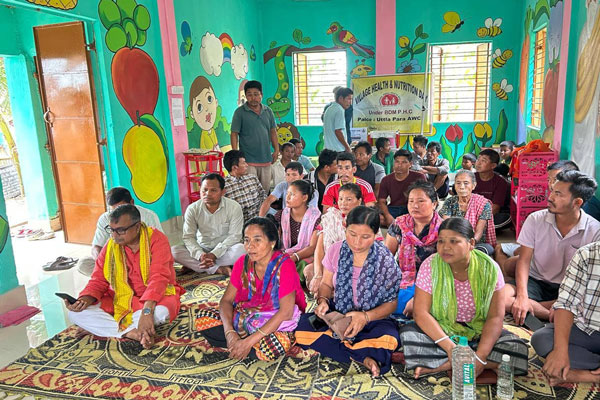
Frequent rains and inclement weather pose stumbling blocks in ensuring a stable power supply in these areas. This current shift toward decentralized micro-grids represents a departure from the 20th-century model of massive, centralized power plants.
Experts of the Power sector commented, Tripura is bypassing the traditional infrastructure hurdles that once kept its tribal heartlands in the dark by empowering the “last mile” first. This step is positioning Tripura as a national leader in localized energy sovereignty.