

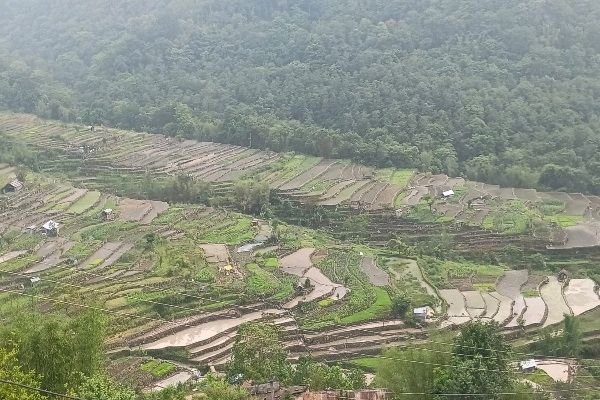
This article highlights indigenous Zabo System and Khonoma Village conservation model of Nagaland. These community-led water management, biodiversity conservation, sustainable agriculture, and climate resilient models demonstrates how traditional ecological knowledge can support modern environmental governance and sustainable rural development in Northeast India.
Lessons from the Zabo System and Khonoma Village
Kohima: Climate change has emerged as one of the greatest challenges of the 21st century, affecting ecosystems, biodiversity, water resources, agriculture, and livelihoods across the globe. While modern environmental management approaches continue to evolve, indigenous communities have long practiced sustainable resource management systems that offer valuable lessons for climate resilience and environmental conservation. In Nagaland, a state located in the biodiversity-rich Eastern Himalayan region of India, traditional ecological knowledge has played a crucial role in maintaining harmony between humans and nature.
Among the many indigenous environmental management practices of Nagaland, the Zabo System of Phek District and the conservation model of Khonoma Village stand out as remarkable examples of community-led environmental stewardship. These practices demonstrate how traditional wisdom can contribute significantly to climate change adaptation, biodiversity conservation, water management, and sustainable rural development.
Case -1 : The Zabo System:
An Indigenous Integrated Resource Management Practice
The term “Zabo” literally means “impounding water” in the local Chakhesang dialect. Originating in Kikruma and neighboring villages of Phek District, the Zabo system is an indigenous method of integrated land, water, forest, and livestock management developed over centuries.
The system is based on a carefully planned landscape arrangement.
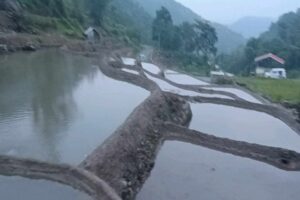
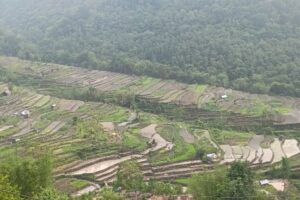
Forests are protected on hilltops to capture rainfall and maintain watershed functions. Water from these forests is collected in ponds and reservoirs situated downslope. Livestock sheds are located below the water harvesting structures, allowing nutrient-rich organic matter to flow into agricultural fields. Paddy fields are situated at the lowest elevation, receiving both irrigation water and natural fertilizers.
Environmental and Climate Benefits of the Zabo System
- Water Conservation and Climate Resilience
- Rainwater harvesting ensures water availability during dry periods.
- Reduces vulnerability to irregular rainfall patterns caused by climate change.
- Enhances groundwater recharge and local water security.
- Soil Conservation
- Controls soil erosion on steep hill slopes.
- Maintains soil fertility through organic nutrient recycling.
- Reduces sedimentation in downstream areas.
- Sustainable Agriculture
- Promotes low-input and organic farming practices.
- Enhances agricultural productivity while minimizing environmental degradation.
- Carbon Sequestration
- Conserved forests act as carbon sinks, helping mitigate greenhouse gas emissions.
- Forest protection contributes to biodiversity conservation and ecosystem stability.
- Integrated Ecosystem Management
- Demonstrates a circular economy approach where waste from one component becomes a resource for another.
The Zabo system is increasingly recognized as an example of a Nature-based Solution (NbS) and a model for climate adaptation in mountainous regions.
Case -2 : Khonoma Village: India’s First Green Village
Located approximately 20 kilometers from Kohima, Khonoma Village is internationally known for its pioneering community-based conservation initiatives. In the late twentieth century, concerns over declining wildlife populations and environmental degradation prompted village leaders and local institutions to take collective action.
One of the landmark achievements was the establishment of the Khonoma Nature Conservation and Tragopan Sanctuary (KNCTS) in 1998. The sanctuary was created through community consensus and covers a substantial area of forest dedicated to biodiversity conservation.
Environmental and Climate Contributions of Khonoma
1. Community-Based Biodiversity Conservation : Khonoma successfully banned hunting in large conservation areas, leading to the recovery of several wildlife species, including the rare Blyth’s Tragopan, the state bird of Nagaland. The conservation initiative has strengthened ecosystem health and ecological balance.
2. Forest Protection and Carbon Storage : The village’s conservation efforts have helped preserve extensive forest cover. Healthy forests absorb atmospheric carbon dioxide, making them important natural tools for climate change mitigation.
3. Sustainable Land Management : Khonoma promotes:
- Terrace cultivation,
- Alder-based agroforestry,
- Organic farming practices,
- Soil and water conservation measures.
These practices reduce land degradation while improving agricultural sustainability.
4. Ecotourism and Green Livelihoods : The village has developed a successful model of eco-tourism that generates income while encouraging environmental protection. Visitors are attracted by its rich biodiversity, traditional Angami culture, and conservation success stories.
5. Strengthening Community Governance : Khonoma demonstrates how strong local institutions and collective action can effectively manage common natural resources. Community participation has been central to the village’s environmental achievements.
Lessons for Climate Change Adaptation and Environmental Governance
The experiences of the Zabo system and Khonoma Village offer important lessons for policymakers, researchers, and development practitioners:
- Indigenous knowledge systems provide practical and sustainable solutions to environmental challenges.
- Community participation is critical for successful environmental governance.
- Forest conservation and watershed management enhance climate resilience.
- Traditional practices can complement modern climate adaptation strategies.
- Local institutions can play a central role in biodiversity conservation and sustainable resource management.
These models align closely with global frameworks such as the United Nations Sustainable Development Goals (SDGs), particularly SDG 6 (Clean Water and Sanitation), SDG 13 (Climate Action), SDG 15 (Life on Land), and SDG 16 (Strong Institutions).
Conclusion :
Nagaland’s Zabo System and Khonoma Village represent outstanding examples of indigenous environmental management that have successfully addressed ecological challenges long before climate change became a global concern. Through sustainable water harvesting, forest conservation, biodiversity protection, and community-led governance, these practices offer valuable insights for climate-resilient development.
As governments and institutions worldwide search for effective responses to climate change, the traditional ecological wisdom embedded in Nagaland’s cultural heritage demonstrates that local communities can be powerful custodians of environmental sustainability. Recognizing, documenting, and scaling such indigenous practices can contribute significantly to building a greener, more resilient future for both rural communities and the planet.
*Prof. Jayanta Choudhury, HoD, Department of Rural Development and Planning, Nagaland University
