

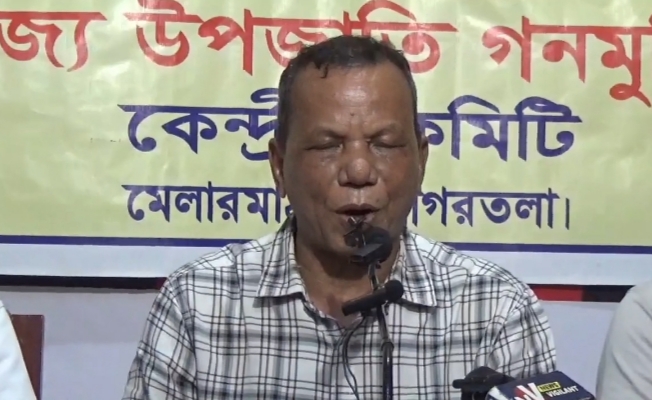
Gana Mukti Parishad (GMP) has called for an expansion of MGNREGA and other labour-intensive projects in Tripura, citing a worsening employment crisis among jhum cultivators and poor tribal families.
GMP leader Radha Charan Debbarma raised the issue after a two-day Central Committee meeting held in Agartala.
Quick Glance
- GMP demands expansion of MGNREGA to address rural unemployment in Tripura.
- Radha Charan Debbarma highlights distress among jhum cultivators and tribal families.
- Border residents allegedly crossing into Bangladesh in search of work.
- Party urges agriculture and horticulture departments to create additional employment opportunities.
GMP Raises Alarm Over Rural Employment ‘Crisis’
Agartala: The Gana Mukti Parishad (GMP) has expressed serious concern over the growing employment crisis in Tripura’s tribal and rural regions. The organization has urged the state government to expand MGNREGA projects and launch additional employment-generating initiatives to support vulnerable communities.
Speaking after a two-day meeting of the party’s Central Committee in Agartala, GMP leader Radha Charan Debbarma said thousands of tribal families are struggling to find work. According to him, the situation has become particularly difficult for households dependent on jhum cultivation.
Debbarma said the current level of employment generation remains insufficient to meet the growing demand in remote villages and tribal areas.
Jhum Cultivators Face Multiple Challenges
The GMP leader attributed the crisis to several factors. He said irregular rainfall has affected agricultural activities across many parts of Tripura. At the same time, farmers are facing shortages of essential agricultural inputs, including seeds and fertilizers.
As a result, many jhum cultivators have been unable to carry out cultivation activities effectively this season. The decline in farming activities has reduced income opportunities for families that depend primarily on jhum agriculture.
According to Debbarma, the impact is most severe in tribal-dominated regions where jhum cultivation remains the principal source of livelihood.
Border Areas Witness Economic Distress
The party leader claimed that the employment crisis has become particularly visible in border areas such as Gandacherra and Bandarima. He alleged that many residents are crossing into neighbouring Bangladesh in search of temporary work.
According to Debbarma, some tribal workers are reportedly working in agricultural fields across the border to earn daily wages. He further claimed that residents from certain border villages have also started collecting snails in Bangladesh to supplement their income.
These developments, he said, indicate the level of economic hardship faced by many poor tribal households.
GMP Demands Expansion of MGNREGA
While acknowledging that MGNREGA works are currently underway in some areas, Debbarma argued that the existing projects are inadequate.
The party has demanded immediate expansion of the Mahatma Gandhi National Rural Employment Guarantee Act (MGNREGA) programme across rural and tribal regions. GMP believes that increasing the number of workdays and approving additional projects could provide much-needed relief to affected families.
The organization has also urged the government to ensure timely implementation of employment schemes during the lean agricultural season.
Agriculture and Horticulture Can Generate Jobs
Besides MGNREGA, GMP has identified agriculture and horticulture as key sectors capable of generating employment in rural Tripura.
Debbarma said various line departments should launch labour-intensive projects to create work opportunities for unemployed villagers. He stressed that horticulture development programmes, plantation activities, and agricultural support initiatives could help reduce economic distress in tribal regions.
According to the party, a coordinated approach involving multiple government departments would help improve rural livelihoods and reduce dependence on migration for employment.
Central Committee Reviews Organizational Activities
Apart from discussing employment issues, the Central Committee reviewed the organization’s activities following the recent ADC elections. The meeting also adopted several resolutions aimed at strengthening the party’s grassroots network across Tripura.
However, employment generation and the livelihood challenges facing tribal communities remained the central focus of the discussions.
People Also Ask
Why is GMP demanding expansion of MGNREGA in Tripura?
GMP says rural and tribal communities are facing a severe employment shortage, making additional MGNREGA work essential for livelihood support.
How are jhum cultivators affected in Tripura?
According to GMP, irregular rainfall and shortages of seeds and fertilizers have disrupted jhum cultivation, reducing income opportunities.
What additional measures has GMP proposed?
The organization has called for more agriculture and horticulture-based projects alongside expanded MGNREGA implementation to create employment in tribal areas.
