

Chief Minister Prof. Dr Manik Saha has directed all government departments and district administrations to complete monsoon preparedness well in advance, drawing lessons from the devastating flood that hit Tripura in 2024. He stressed that early planning, coordinated action, and public awareness can significantly reduce disaster-related losses.
Agartala: Nearly two years after one of the worst flood disasters in recent history of the State, the government has shifted its focus from emergency response to preventive planning. Chief Minister Prof. Dr Manik Saha on Saturday said the experience of the 2024 floods should serve as the foundation for a stronger and more coordinated disaster management strategy ahead of the current monsoon season.
| You may also like: Medical Associations Partner with GB Hosp, AGMC to Conduct Fast-Track Surgical Camps |
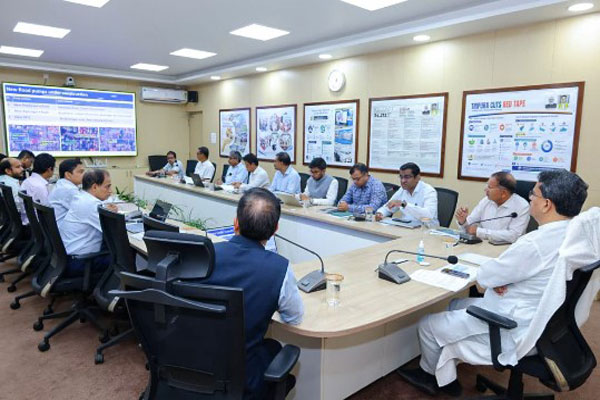
Chairing a high-level review meeting at the War Room of the Tripura Institution for Transformation (TIFT), the Chief Minister asked every government department, district administration and concerned agency to complete preparedness before heavy rainfall intensifies across the state.
He said advance planning remains the most effective and economical way to minimise damage during natural disasters.
2024 Flood Experience Becomes Blueprint
Dr Saha said Tripura successfully managed the 2024 flood crisis because government departments, security agencies, local administrations and volunteers worked together under challenging conditions.
He said that collective experience must now translate into a better institutional response.
“Every department should prepare in advance. Better planning and coordination will help reduce losses if flood-like situations arise again,” he said during the meeting.
The Chief Minister stressed that disaster management should not begin after rivers overflow or urban areas become submerged. Instead, authorities must identify flood-prone locations, vulnerable communities and waterlogging hotspots before the monsoon reaches its peak.
Focus on Early Warning and Public Awareness
Dr. Saha instructed district administrations to strengthen early warning systems across the state.
He asked officials to inform residents about possible risks through extensive awareness campaigns and timely public announcements.
According to him, people living in vulnerable areas should receive alerts well before floodwaters rise so they have enough time to shift to safer locations.
He also directed the concerned departments to maintain close coordination with local administrations to ensure that information reaches every community without delay.
Preparedness at Relief Shelters
The Chief Minister reviewed the state’s disaster response infrastructure and asked officials to keep rescue equipment ready for immediate deployment.
He directed authorities to ensure that every relief shelter remains fully equipped with essential facilities.
These include adequate food, safe drinking water, electricity, sanitation, communication facilities and other basic services required during emergencies.
He also ordered regular reviews of district-level stocks of food grains, fuel, emergency equipment and other disaster-response materials to avoid shortages during prolonged emergencies.
Protection Beyond Rescue Operations
Dr. Saha said disaster management extends beyond rescue and relief.
He instructed security agencies to protect both evacuees and their unattended homes during floods.
He called for continuous patrolling and enhanced surveillance in vulnerable areas to prevent theft and other criminal activities when residents move to relief camps.
The Chief Minister also directed officials to prioritise children, senior citizens, persons with illnesses and other vulnerable groups while planning evacuation and relief operations.
He further instructed departments to include livestock protection in disaster planning by ensuring shelter and food arrangements for animals affected by floods.
Drainage, River Monitoring and Medical Readiness
Urban flooding also figured prominently during the review meeting.
The Chief Minister directed the Urban Development Department and civic authorities to intensify cleaning of drains and sewerage networks before heavy rainfall.
He also instructed officials to monitor rivers and embankments round the clock throughout the monsoon season.
The state will continue operating disaster control rooms on a 24-hour basis to ensure faster response during emergencies.
Dr. Saha further directed the Health Department to maintain sufficient stocks of emergency medicines and medical supplies. These include halogen tablets, bleaching powder, paracetamol, antibiotics and anti-snake venom, which become critical during flood-related emergencies.
Building a More Resilient Tripura
The review meeting reflected the government’s growing emphasis on disaster resilience rather than post-disaster recovery.
Officials discussed measures to improve coordination among departments and strengthen preparedness at every administrative level.
| Related news: Tripura Floods 2024: Inspiring tales of Courage and Compassion Amidst Nature’s Wrath |
Chief Secretary J.K. Sinha, Urban Development Secretary Milind Ramteke, Agartala Municipal Corporation Mayor Dipak Majumder and senior officials from various departments attended the meeting.
With weather experts predicting active monsoon conditions in the region, the state government hopes that lessons learned from the devastating 2024 floods will help minimise risks this year. By investing in advance planning, stronger coordination and faster public communication, Tripura aims to build a more resilient disaster management system capable of protecting lives, property and essential infrastructure before the next major flood strikes.
