

A leading minority rights organisation in Bangladesh has raised concerns over increasing communal violence and extortion targeting Hindus. The Bangladesh Hindu Buddhist Christian Unity Council urged authorities to act swiftly after threats emerged against a temple in Gaibandha and construction of a major Lord Ram statue was suspended amid controversy.
Quick Glance
- Bangladesh minority rights group warns of growing communal violence and extortion.
- Threats against Radha-Gobinda Temple in Gaibandha spark concern over social harmony.
- Construction of a proposed giant Lord Ram statue has been halted by authorities.
- Exiled writer Taslima Nasreen criticises opposition to the temple project and calls for equal religious freedom.
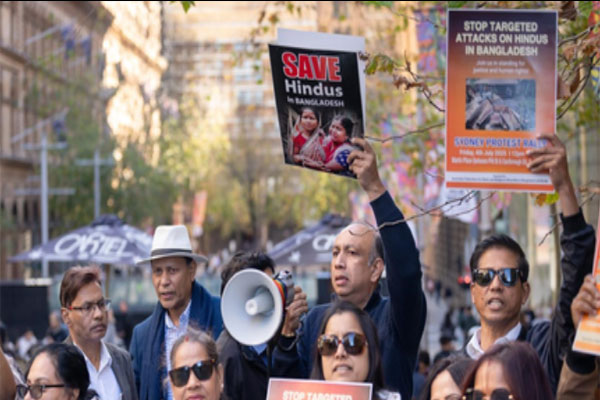
Agartala/Dhaka: Communal harmony has once again come under scrutiny in Bangladesh. A prominent minority rights organisation has expressed deep concern over a series of incidents involving communal unrest and extortion that reportedly target members of the Hindu community.
The Bangladesh Hindu Buddhist Christian Unity Council, a major platform representing religious minorities, stated that recent developments pose a challenge to social cohesion and religious coexistence in the country.
The organisation specifically highlighted threats directed at the Radha-Gobinda Temple located in Gaibandha district. According to the council, a group has been attempting to create pressure for the demolition of the temple.
Leaders of the organisation warned that such actions could damage communal relations and increase mistrust among different communities.
Council Urges Government to Take Immediate Action
During a central committee meeting in Dhaka on Friday, members of the council called upon the government to intervene without delay.
The organisation appealed to administrative authorities, political leaders and civil society groups to work collectively to prevent further escalation of tensions.
Council members stressed that preserving communal harmony remains essential for maintaining social stability. They also demanded strong legal measures against individuals involved in spreading communal hatred and provoking unrest.
According to the organisation, those responsible for encouraging violence or religious hostility should face strict punishment under the law.
Controversy Surrounds Lord Ram Statue Project
The issue gained further attention after reports emerged that authorities had suspended construction of a proposed Lord Ram statue at the Sri Sri Radha Govinda and Kali Temple in Palashbari Upazila of Gaibandha.
The project had attracted attention because it was expected to become the world’s largest statue dedicated to Lord Ram.
Temple adviser Shyamal Kumar Mahant announced the suspension during a press conference held at the temple premises on Thursday evening.
The decision has generated widespread debate across social and religious circles.
Critics of the suspension allege that the move followed pressure from Islamist groups that opposed the project. However, authorities have not publicly confirmed such claims.
Taslima Nasreen Questions Opposition to Hindu Religious Project
Exiled Bangladeshi author and human rights activist Taslima Nasreen strongly criticised the threats and hostile rhetoric surrounding the temple project.
She argued that religious freedom should apply equally to all communities regardless of their demographic strength.
In a post on social media platform X, Nasreen questioned why opposition had emerged against a single Hindu religious project when Bangladesh is home to hundreds of thousands of mosques and continues to witness the construction of new ones.
She stated that equal rights and protections should be available to minority communities if the principle of religious freedom is to remain meaningful.
Nasreen also condemned any suggestion of demolishing places of worship based on ideological or religious disagreements.
According to her, disputes related to faith should be resolved through legal and democratic processes rather than intimidation or violence.
Growing Concerns Over Minority Rights in Bangladesh
The latest controversy has revived discussions about the protection of minority communities in Bangladesh.
Human rights advocates have repeatedly raised concerns about attacks on religious minorities, incidents of extortion and occasional outbreaks of communal violence in different parts of the country.
Observers believe that effective intervention by authorities and community leaders will be crucial to maintaining peace and preventing further tensions.
The developments in Gaibandha have therefore become a significant test of Bangladesh’s commitment to religious tolerance and communal harmony.
Key Entities
| Entity Type | Name |
|---|---|
| Organisation | Bangladesh Hindu Buddhist Christian Unity Council |
| Location | Gaibandha District |
| Location | Palashbari Upazila |
| Temple | Sri Sri Radha Govinda and Kali Temple |
| Person | Shyamal Kumar Mahant |
| Person | Taslima Nasreen |
| Country | Bangladesh |
People Also Ask (FAQ)
Why is the Bangladesh Hindu Buddhist Christian Unity Council concerned?
The organisation is concerned about rising incidents of communal violence, extortion and threats targeting the Hindu minority community in Bangladesh.
What is the controversy surrounding the Lord Ram statue?
Authorities reportedly suspended construction of a proposed Lord Ram statue at a temple in Gaibandha, leading to criticism and allegations of pressure from groups opposing the project.
What did Taslima Nasreen say about the issue?
Taslima Nasreen criticised threats against the temple project and argued that religious freedom should be equally protected for minority communities. (Edited)