

“When society considers the customs created by itself to be greater than human beings, the human soul becomes imprisoned.”
— Rabindranath Tagore
This thought of Rabindranath Tagore remains equally relevant even today.
Custom refers to certain socially accepted rules, rituals, practices, and codes of conduct that people in a society have followed for generations. Customs preserve and transmit practices and ideas originating thousands of years ago. The English word tradition is derived from the Latin words tradere or traditio, meaning to carry forward, transmit, and preserve safely.
Anthropologists believe that customs emerge to fulfil certain social purposes. The needs of a particular period, as well as political and cultural factors, are among the major determinants of customs. Consequently, anthropology and biology have accorded recognition and importance to customs. However, social customs have a profound influence on women’s lives. Some customs provide women with protection and dignity, while many harmful practices deprive women of their rights and create inequality.
Sarat Chandra Chattopadhyay wrote in his novels Charitraheen and Palli Samaj:
“Society keeps no account of how many hundreds of women’s lives are crushed every day under the burden of social customs.”
He further observed:
“What we worship as traditional social rules are often nothing more than the privileges of the powerful and the chains imposed upon the weak.”
Customary Law
Customary law refers to the unwritten rules and traditions that have existed for a long period within a particular society or tribal community. These rules function as the legal foundation of that society and are transmitted orally from one generation to another. Customary law plays an effective role in matters relating to marriage, inheritance, property, land use, family relationships, social offences, and dispute resolution.
Throughout the Indian subcontinent and the world, the relationship between customary law and women’s rights is highly complex, and in most cases customary laws tend to be discriminatory against women. However, there are exceptions. Certain customary laws also operate in favour of women, such as the matrilineal customs of the Khasi tribe of Meghalaya.
The customary law of the Reang community of Tripura has largely developed within a patriarchal structure. These unwritten laws regulate marriage, social behaviour, and rural governance and deeply influence the everyday lives and family roles of Reang women. On the one hand, these customs have preserved the Reang community’s ethnic unity and unique cultural traditions, such as the Hojagiri dance; on the other hand, they have created limitations on women’s participation in politics and their rights to inherit property.
The Reang Community
The Reang or Bru community is one of the ancient and important tribal communities of Northeast India. In Tripura, they constitute the second-largest tribal group. Apart from Tripura, members of the community also live in Mizoram and Assam.
The Reang community is particularly known for its distinctive traditions, language, and culture. Locally and in terms of identity, the Reangs are also known as Bru. Their mother tongue is called Kau Bru, which belongs to the Tibeto-Burman language family. They are primarily descendants of the Indo-Mongoloid population.
Traditionally, the Reangs have been agriculturists. In the past, they primarily practised jhum or shifting cultivation; at present, many have adopted modern agriculture and other occupations.
Reang women wear a distinctive traditional dress. The special garment worn around the body from the waist to the ankles is known as Rignai. The people of the Reang community are highly skilled in handicrafts and bamboo and cane work.
One of the greatest attractions of Reang culture is the famous Hojagiri dance. It is primarily a folk dance performed by women. The dance depicts the worship of nature and various stages of jhum cultivation. Reang women have played a central role in preserving the cultural identity and heritage of the community.
Marriage Customs among the Reangs
Monogamy is generally practised in Reang society, although polygamy is permitted under certain circumstances.
One of the most distinctive features of Reang marriage customs is the practice known as “Chamoy Kami” or “Jamai Khata.” According to this custom, after marriage the groom is required to stay at the bride’s parental home for approximately one to three years and assist the bride’s family in agricultural activities. Only after successfully completing this period does the groom acquire the right to take his wife to his own home.
Reang customary law strictly regulates family structure and marital fidelity.
Endogamy
To maintain ethnic identity and purity, marriage traditionally takes place within the community. However, some changes in this practice can be observed in the modern period.
Garia Puja is the principal festival of the Reang people and is celebrated at the beginning of the Bengali month of Baisakh. The deity Garia is worshipped for a good harvest and peace and prosperity.
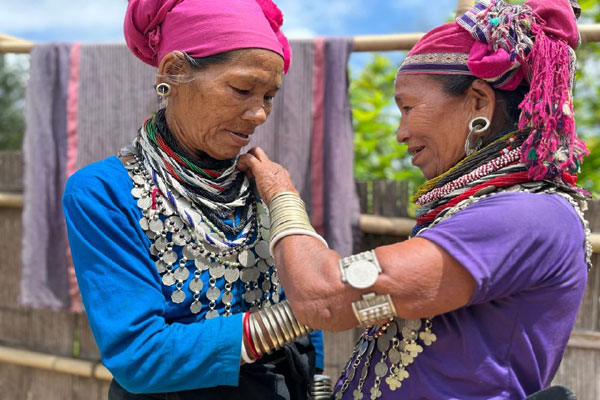
The Reang community is recognised as the only Particularly Vulnerable Tribal Group (PVTG) in Tripura and is the second-largest Scheduled Tribe in the state in terms of population. Their language, culture, religious beliefs, social organisation, and customary laws play an important role in shaping their distinct ethnic identity.
Although customary law has played an important role in maintaining social cohesion and cultural heritage in Reang society, certain limitations remain regarding women’s rights, inheritance of property, and participation in decision-making. Therefore, customary law is particularly important when analysing the social position and cultural identity of Reang women.
Customary law is a social legal system that develops on the basis of long-established customs, traditions, beliefs, and practices rather than a written constitution or statutory provisions. In indigenous societies, such laws existed even before the formal laws of the state and have traditionally been used as a major mechanism for governing society.
Areas Governed by Reang Customary Law
Customary law in Reang society regulates the following matters:
- Marriage and divorce
- Inheritance
- Family relationships
- Land and jhum cultivation
- Social discipline
- Religious rituals
- Dispute resolution
- Village administration and leadership
The principal objective of this system is not punishment but the maintenance of social harmony and community unity.
Traditional Governance System
The Reang community has a well-organised customary administrative system. The head of a village is generally known as the Chaudhury. For the supervision of several villages, higher-level leadership such as the Moyal Chaudhury may also exist.
These customary institutions adjudicate matters relating to marriage, family disputes, land-related problems, and violations of social norms.
The judicial system of the village council generally operates through consensus. Special importance is given to the opinions of elders, and the primary objective of the judicial process is the peaceful resolution of disputes and maintenance of social harmony.
Customary Marriage Practices
Marriage is a social and cultural institution in Reang society. Certain customary rules are followed in marriage. The major characteristics include:
- Marriage within the same lineage or between close relatives is generally prohibited.
- The consent of both families is considered important.
- A practice of bride price exists as a gesture of respect towards the bride’s family.
- Social recognition of marriage is provided in the presence of community leaders and elders.
- Widow remarriage is socially accepted.
- The village council plays an important role in mediating cases of divorce.
Although these customs help maintain social stability, women’s opportunities for independent decision-making remain limited in many cases.
Inheritance and Property Rights
Reang society is primarily patrilineal. Lineage and inheritance of property are largely organised through the male line.
Under customary law, sons inherit ancestral immovable property. Daughters generally do not receive an equal share of ancestral land.
In many cases, daughters may inherit their mother’s personal belongings. When disputes arise concerning family property, the village council makes the decision.
This inheritance system limits the economic empowerment of women and reduces their control over property.
Nevertheless, Reang women are among the principal pillars of the community’s economic, social, and cultural life. They participate in jhum cultivation, collect forest resources, weave traditional clothing through textile crafts, manage households, and teach children their mother tongue and culture.
Thus, although the customary law of the Reang community plays an important role in maintaining social cohesion and preserving cultural heritage, certain limitations are visible in relation to women.
Limitations of Customary Law for Reang Women
1. Gender Inequality in Inheritance
Discrimination can be observed in the customary inheritance system. According to prevailing practices, inheritance of ancestral immovable property is primarily restricted to sons. Daughters generally do not receive equal rights over ancestral land. However, their rights over their mother’s personal belongings are recognised.
2. Limited Representation in Customary Justice
Women’s representation in the customary judicial system is limited. In village councils and judicial systems led by the Chaudhury, decision-making power has traditionally remained concentrated in the hands of men. Consequently, women are often deprived of opportunities to participate directly in judicial processes.
3. Restrictions on Decision-Making
The patriarchal social structure creates limitations on women’s participation in family and social decision-making. Although women make significant contributions to economic activities, their participation in formal leadership remains comparatively low.
Positive Effects of Customary Law on Reang Women
Customary law has also had several positive effects on women in the Reang community.
For example, it helps maintain family and community unity and socially recognises widow remarriage. It gives recognition and dignity to women’s cultural roles. It ensures women’s important position in preserving traditional weaving, language, folk music, and religious practices.
Women’s role in protecting the cultural identity of the community has been recognised from generation to generation. In particular, the traditional clothing woven by Reang women and the Hojagiri dance have become important symbols of Reang identity.
Therefore, Reang women are not merely members of their families; they are also regarded as principal custodians of the community’s cultural heritage.
Modern Transformation
At present, significant changes are taking place in Reang society due to modern education, government development programmes, self-help groups, and growing awareness of women’s rights.
Articles 14, 15 and 21 of the Constitution of India guarantee equality, non-discrimination, and the right to live with dignity for all citizens. As a result, opportunities for education, employment, and social participation among Reang women are gradually increasing.
Today, many Reang women are pursuing higher education, joining government and private employment, becoming economically self-reliant through self-help groups, and participating in social leadership.
However, customary law continues to exert significant influence over family and marriage-related matters. Thus, both state law and customary law continue to operate in parallel in contemporary Reang society.
Recent research indicates that in various Reang villages of Tripura, Chaudhury and Moyal Chaudhury continue to play important roles in resolving social disputes, regulating marriage, maintaining social control, and conducting cultural ceremonies.
Research also indicates that although women are extremely important in the economic and cultural spheres, most positions of customary leadership continue to be occupied by men. However, among the younger generation, women’s participation is gradually increasing as a result of the spread of education and greater interaction with government institutions.
Theoretical Perspectives
From a sociological perspective, customary law in the Reang community can be explained through three theoretical frameworks.
Bronislaw Malinowski
Bronislaw Malinowski believed that law in indigenous societies develops primarily on the basis of social obligations and mutual cooperation. The judicial system of Reang society similarly gives priority to restoring social harmony.
A. R. Radcliffe-Brown
According to Structural Functionalism, associated with A. R. Radcliffe-Brown, customary law maintains social stability and social cohesion. Customary law in Reang society clearly performs this function.
Legal Pluralism
According to the theory of Legal Pluralism, state law and customary law can operate simultaneously within the same society. Reang society provides an important example of this phenomenon.
Conclusion
The customary law of the Reang (Bru) community constitutes one of the foundations of its social organisation, cultural heritage, and ethnic identity. For generations, this system has played an important role in regulating marriage, inheritance, land management, family relationships, and social discipline.
However, certain forms of inequality continue to exist in the areas of inheritance, property rights, and participation in decision-making.
If customary law can be preserved while bringing it into harmony with the fundamental rights guaranteed by the Constitution, gender equality, and human rights, both the cultural heritage of the Reang community and the empowerment of women can be strengthened further.
Finally, any discussion of women’s empowerment would remain incomplete without referring to Rabindranath Tagore’s poem “Sabala.” The poem serves as a powerful call for awakening the consciousness of dignity and rights among neglected women at every level of society.
“Why, O Creator,
should woman not be given
the right to conquer her own destiny?
Why should I bow my head
and wait at the roadside,
weary and patient,
for the fulfilment of hope
through the days shaped by fate?
Why should I merely look upon the void?
Why should I not discover for myself
the path of fulfilment…?”
References
- Das, Manoshi (2012). Tripura Tribes: A Status Analysis. Tribal Research and Cultural Institute, Government of Tripura.
- Das, Manoshi & Chakraborty, S. (2009). “The Socio-economic Status of Reang Tribe of Tripura: An Empirical Study.” In G. K. Bera, B. K. Medhi, R. P. Athparia and K. Jose SVD (Eds.), Tribal Development in Tripura (pp. 63–78). EBH Publishers (India), Guwahati.
- Banerjee, S., & Reang, L. (2025). “Traditional Self-Governing Institution: A Historical Case Study on the Customary Law and Practices of the Reang Community of Tripura.” RGU Journal of Social Science and Research, 1(3), 20–34.
- Kilikdar, B. K. (1998). Customary Laws and Practices: Riangs of Tripura. Tribal Research & Cultural Institute, Government of Tripura.
- Fernandes, W., Pereira, M., & Vizalenu, K. (2008). Customary Laws in North East India: Impact on Women.
- National Commission for Women. (2005). Tribal Customary Law and Women’s Status.
- Census of India. (2011). Primary Census Abstract: Scheduled Tribes.
- Reang, L. (2021/2024). History of the Reang (Bru). Eastern Book House.
- Roy Burman, B. K. (2002). Tribes of India. Mittal Publication.
- Giddens, Anthony. (2003). Runaway World: How Globalization Is Reshaping Our Lives. Taylor & Francis.
- Congar, Yves. (2008). The Meaning of Tradition. Ignatius Press.
