

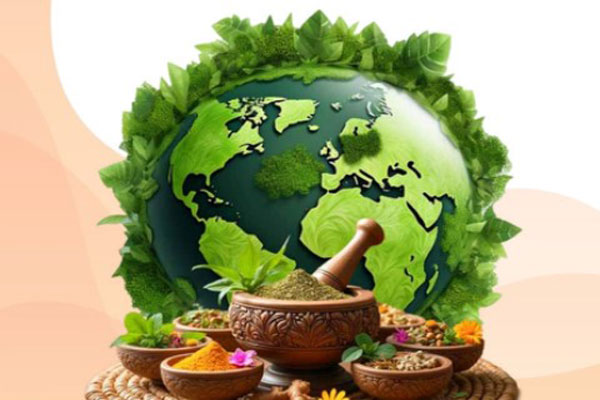
As NITI Aayog shifts focus from exporting herbal products to developing skilled practitioners, the new Government Ayurvedic Medical College in Gomati district of Tripura could help create internationally trained Ayurveda professionals while expanding higher education opportunities in the Northeast.
Agartala: As Tripura nears the launch of its first Government Ayurvedic Medical College, the state’s investment in Ayurvedic education is gaining significance beyond regional healthcare. The proposed institution comes at a time when NITI Aayog has identified skilled Ayurveda professionals—not just herbal products—as the driving force behind India’s ambition to establish Ayurveda as a globally accepted healthcare system.
The government’s policy think tank released its Strategic Roadmap for Making Ayurveda Global on July 3, 2026, arguing that India’s future leadership in traditional medicine will depend on producing internationally competent practitioners, researchers and educators capable of serving healthcare systems across the world.
For Tripura, which is preparing to begin the Bachelor of Ayurvedic Medicine and Surgery (BAMS) programme with an intake of 60 students, the timing aligns closely with the national vision of strengthening the country’s human resource base in Ayurveda.
Part of India’s growing network of Ayurveda colleges
The Health and Family Welfare Department is converting the Chandrapur Integrated AYUSH Hospital into a temporary campus while construction of the permanent campus at Tepania in Gomati district progresses.
Health Secretary Kiran Gitte, who recently reviewed preparations at both locations, said classrooms, hostels and essential academic infrastructure are being developed so that the first batch can begin studies without waiting for the permanent campus to be completed.
While the immediate objective is to provide Ayurveda education within Tripura, the larger implication extends much further. The institution will add to India’s growing network of Ayurveda colleges that could eventually supply professionals for international healthcare systems.
Building human capital, not just healthcare infrastructure
NITI Aayog’s roadmap marks a shift in India’s Ayurveda strategy. Instead of focusing primarily on exports of herbal medicines and wellness products, the report calls for greater investment in trained professionals who can practise, teach and conduct research globally.
According to the report, India currently has more than 355,000 qualified Ayurveda practitioners, but around 95 per cent continue to work within the country. This limited international presence remains one of the biggest obstacles to Ayurveda’s global expansion.
The establishment of new institutions such as Tripura Government Ayurvedic Medical College therefore serves a dual purpose. It expands access to higher education within the state while contributing to the national pool of qualified professionals.
Creating opportunities closer to home
Until now, students from Tripura interested in pursuing BAMS often had to seek admission outside the state.
The new government medical college is expected to change that by allowing aspiring Ayurveda doctors to complete their education closer to home.
Officials have already initiated administrative preparations, including recruitment of the principal and faculty members. Admissions will begin after the declaration of NEET-UG results in accordance with national guidelines.
Besides reducing educational migration, the college is expected to generate new employment opportunities for teachers, researchers, healthcare professionals and support staff as academic activities expand.
Global demand may create new career pathways
NITI Aayog believes changing healthcare priorities worldwide have created favourable conditions for Ayurveda.
Many countries are increasingly promoting preventive healthcare, holistic wellness and integrative treatment approaches. Ayurveda’s emphasis on lifestyle management and long-term well-being fits well within these evolving healthcare models.
However, the report notes that sustained international growth will require a larger workforce capable of meeting global standards.
Graduates from institutions like the proposed Tripura Government Ayurvedic Medical College could eventually benefit if India succeeds in developing internationally recognised licensing systems, standardised curricula and stronger regulatory cooperation with foreign countries.
Modern campus planned at Tepania
The Tripura government is developing the permanent campus at Tepania with an estimated investment of around Rs 70 crore.
The proposed complex will include academic buildings, a teaching hospital, research facilities, student hostels and residential quarters for faculty members.
Officials selected Tepania after evaluating multiple sites, citing its proximity to the national highway and better accessibility for students, faculty, patients and visitors.
The Public Works Department, National AYUSH Mission and the Health Department are jointly preparing the infrastructure plan.
Strengthening Northeast India’s AYUSH ecosystem
Tripura is also planning a government homeopathic medical college, indicating a broader push to expand AYUSH education across the state.
Together, these institutions could strengthen Tripura’s position as an emerging centre for traditional medicine education in the Northeast.
| Also Read: Congress MLA Up Against Ban on GB Hospital Doctors’ Private Practice |
For students, the expansion means greater access to professional education. For the state, it creates opportunities to build academic expertise, healthcare services and research capacity.
| More Tripura related News: Solar-Powered Cold Chamber Boost for Gandatwisa Mango Growers |
Viewed alongside NITI Aayog’s latest roadmap, the significance of Tripura’s first Government Ayurvedic Medical College extends beyond its initial intake of 60 students. It represents an investment in human capital that could eventually connect the state’s graduates with a wider global healthcare ecosystem.
As India seeks to make Ayurveda more visible and acceptable internationally, institutions like the one coming up in Gomati district may play an increasingly important role in producing the professionals needed to carry that vision beyond the country’s borders.
