

The Congress MLA Birjit Sinha has intensified opposition to the State Government’s decision to ban private practice by AGMC and GB Hospital doctors, arguing that the state’s healthcare infrastructure falls far short of the AIIMS model the government aims to emulate. The party says shortages of manpower, inadequate facilities, and rising patient pressure must be addressed before implementing such sweeping healthcare reforms.
Agartala: The Tripura government’s ambitious plan to transform its premier healthcare institutions into AIIMS-like facilities has triggered an intense political debate, with the Congress questioning whether the state’s existing medical infrastructure can support such a transition. As opposition to the ban on private practice by doctors of Agartala Government Medical College (AGMC) and Govind Ballabh Pant (GB Pant) Hospital gathers momentum, the Congress has sharpened its attack by arguing that the government has prioritised policy over preparedness.
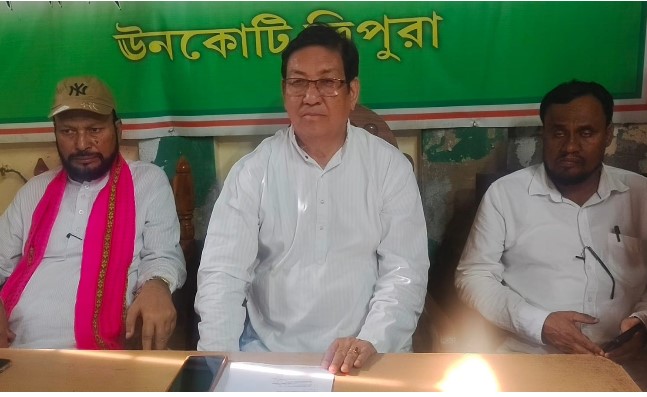
Leader of the Congress Legislature Party and Tripura State President of the All India Panchayat Parishad, MLA Birjit Sinha, on Thursday described the government’s decision as “unrealistic” and said the move ignores the present condition of the state’s healthcare system. Addressing a press conference at Kailashahar District Congress Bhavan, he asserted that the government cannot replicate the functioning of the All India Institute of Medical Sciences (AIIMS) merely by prohibiting private practice.
AIIMS Model vs Ground Reality
The controversy stems from the state Cabinet’s June decision to prohibit faculty members and medical officers attached to AGMC and GB Pant Hospital from engaging in private practice. The government has defended the policy by stating that full-time availability of doctors in government hospitals will improve patient care, strengthen public healthcare and help develop the institutions on the lines of AIIMS.
Chief Minister Dr Manik Saha and Health Secretary Kiran Gitte have repeatedly maintained that the reform seeks to improve healthcare standards while ensuring that specialists devote their full professional time to government hospitals. To compensate doctors for the loss of private earnings, the government has announced an additional 20 per cent Non-Practising Allowance (NPA) over their basic salary.
However, the decision has drawn criticism not only from sections of the medical fraternity but also from opposition parties, which argue that the government has overlooked several structural deficiencies before introducing the reform.
Congress Questions AIIMS Comparison
Birjit Sinha argued that AIIMS institutions operate with significantly stronger infrastructure, better staffing levels and modern healthcare facilities than those currently available in Tripura.
According to him, merely adopting one feature of the AIIMS system while leaving unresolved issues related to manpower, infrastructure and hospital management cannot produce the desired results.
He claimed that GB Pant Hospital continues to struggle with overcrowding, long waiting hours and limited medical facilities. Patients often spend hours obtaining OPD tickets before waiting even longer to consult doctors, he alleged.
The Congress leader maintained that these operational bottlenecks demonstrate that the healthcare system requires comprehensive strengthening before introducing sweeping administrative reforms.
Infrastructure Challenges Remain
The opposition has also highlighted persistent shortages of medical personnel, delays in promotions, inadequate operation theatres and limited ICU facilities.
According to Sinha, these long-standing issues continue to affect patient care across government hospitals. He argued that banning private practice without simultaneously expanding infrastructure and increasing manpower would place additional pressure on an already burdened healthcare system.
He also questioned whether GB Pant Hospital currently possesses sufficient capacity to absorb patients who previously depended on specialists practising in private nursing homes.
Maternal Healthcare Becomes a Key Concern
One of the Congress’s major concerns relates to maternity care.
Sinha claimed that Agartala has around 20 private nursing homes where government specialists regularly performed Caesarean deliveries. Following the implementation of the government’s order, several of these facilities have reportedly experienced disruptions because government doctors can no longer offer private services.
He argued that GB Pant Hospital presently lacks the capacity to accommodate the resulting increase in patient load, particularly for emergency obstetric care.
According to the Congress leader, pregnant women could face longer waiting periods and greater hardship unless healthcare infrastructure expands in parallel with the government’s reform agenda.
Doctors Also Raise ‘Objections’
The Congress has cited objections already raised by the forum representing super-specialist doctors at AGMC and GB Pant Hospital.
The doctors’ body has reportedly expressed concern over the government’s decision-making process, stating that authorities introduced the policy without adequate consultation with stakeholders.
Although the government has offered financial compensation through the Non-Practising Allowance, critics argue that administrative decisions affecting healthcare delivery require broader professional consultation and institutional planning.
Protest Planned on July 5
As political opposition to the policy grows, the All India Panchayat Parishad has announced a peaceful dharna demanding immediate withdrawal of the decision.
The organisation will hold the six-hour protest on July 5, from 10 am to 4:30 pm, near the Gandhi statue adjacent to Circuit House in Agartala after obtaining the required administrative permission.
Birjit Sinha has appealed to people from different sections of society, along with Congress legislators and party workers, to participate in the demonstration.
Government-Doctors Dialogue Under Watch
Despite announcing the protest programme, the Congress has expressed hope that the ongoing discussions between the Health Department and doctors’ organisations could produce a mutually acceptable solution.
Sinha said constructive dialogue remains the best way forward if both sides seek to improve public healthcare without disrupting medical services.
The outcome of these discussions may determine whether the government proceeds with the policy in its current form or considers modifications based on concerns raised by doctors and other stakeholders.
Healthcare Reform Faces Crucial Test
The debate has now moved beyond the issue of private practice itself. It has evolved into a broader discussion about healthcare reform in Tripura and whether ambitious policy changes should precede improvements in infrastructure.
Supporters of the government’s decision believe full-time commitment by doctors can significantly improve services in government hospitals. Critics, however, argue that the AIIMS model rests on robust institutional capacity, modern facilities and adequate staffing—elements they believe Tripura must strengthen before implementing comparable policies.
With the July 5 protest approaching and negotiations between the government and doctors continuing, the coming days are likely to shape both the future of the private practice ban and the broader direction of healthcare reforms in the state.
