

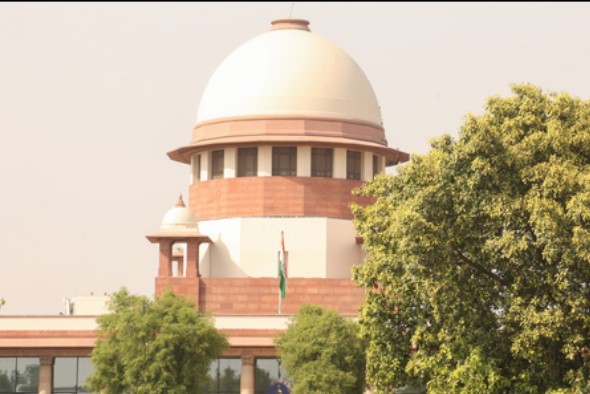
With the Supreme Court issuing notice on the plea of the Meghalaya government against Sonam Raghuvanshi’s bail, attention now shifts from the interim order to the legal and trial roadmap ahead. The next hearing, witness examination and the court’s eventual ruling could shape both the murder trial and future criminal procedure cases.
Agartala/Shillong: The Supreme Court’s decision to issue notice on the Meghalaya government’s challenge to Sonam Raghuvanshi’s bail has opened a new legal chapter in the sensational Raja Raghuvanshi honeymoon murder case. While the apex court declined to suspend the bail because Sonam has already walked out of custody, the litigation is far from over.
| Earlier Report: Raja Raghuvanshi Murder Case Timeline: From Honeymoon Trip to SC Battle |
The focus now shifts to what happens next—both inside the Supreme Court and in the trial court, where prosecutors continue to build their case in one of the country’s most closely watched murder trials.
Supreme Court to examine legality of the bail order
Enewstime Desk in Agartala has gathered information from IANS inputs and sources in Shillong. It is obvious that the immediate milestone will come next week when the Supreme Court takes up the Meghalaya government’s appeal for further hearing.
A Bench of Justices M.M. Sundresh and Sheel Nagu has asked Sonam Raghuvanshi to file her counter-affidavit responding to the state’s challenge. The Meghalaya government will then have an opportunity to reply before the court considers whether the High Court correctly upheld the grant of bail.
Although the Supreme Court refused to stay the bail order at this stage, the judges made it clear that they have prima facie reservations about the High Court’s reasoning. Those observations suggest that the legal issues surrounding the arrest procedure will receive detailed scrutiny during the upcoming hearings.
Bail remains in force for now
For the moment, Sonam Raghuvanshi will continue to remain on bail.
The Supreme Court chose not to interfere because the bail order has already taken effect. Courts generally exercise caution before cancelling bail once an accused has secured release, unless compelling circumstances emerge.
However, the final outcome of the appeal remains open. If the Supreme Court eventually finds merit in the Meghalaya government’s arguments, it may set aside the High Court’s judgment and issue appropriate directions. Conversely, if it upholds the High Court’s reasoning, the bail will continue while the criminal trial proceeds.
Trial expected to gather pace
The murder trial itself will continue independently of the bail proceedings.
During Friday’s hearing, Solicitor General Tushar Mehta informed the Supreme Court that the prosecution has already begun presenting its case and that more than 90 witnesses are yet to testify.
That indicates the trial remains in its early stages despite the completion of the police investigation and filing of the chargesheet.
Over the coming months, prosecutors will likely present forensic experts, investigating officers, independent witnesses and other individuals whose testimony forms part of the evidence collected during the investigation.
The defence, meanwhile, will have opportunities to cross-examine prosecution witnesses and challenge the evidence before leading its own defence.
Arrest procedure likely to remain central issue
The legal battle before the Supreme Court centres on whether procedural errors during Sonam Raghuvanshi’s arrest justified the grant of bail.
The Shillong trial court found that investigating officers repeatedly cited the wrong provision of the Bharatiya Nyaya Sanhita in arrest-related documents. Instead of mentioning Section 103(1), which deals with murder, officials referred to Section 403(1) across several documents.
The trial court concluded that these repeated mistakes meant the accused had not received proper information about the grounds of her arrest. The Meghalaya High Court later agreed with that reasoning while refusing to cancel the bail.
The state government, however, argues that the documentation error caused no actual prejudice to the accused. It maintains that the courts below overlooked important facts and incorrectly treated the mistake as a fatal procedural defect.
The Supreme Court’s eventual ruling could therefore clarify how courts should assess similar procedural lapses in future criminal investigations.
Case continues to draw national attention
The case stems from the death of Indore businessman Raja Raghuvanshi, who travelled to Meghalaya with his wife Sonam shortly after their marriage in May 2025.
Investigators later recovered Raja’s body from a gorge near Weisawdong Falls. Police subsequently alleged that Sonam conspired with her alleged lover and hired assailants to murder her husband during the honeymoon.
Those allegations form the foundation of the prosecution’s case, which the trial court will now examine through witness testimony and documentary evidence.
Multiple legal questions remain unresolved
Beyond the murder allegations, the case now raises wider questions about criminal procedure and constitutional safeguards during arrest.
The Meghalaya government has warned that allowing the High Court judgment to stand could influence future bail cases involving procedural irregularities. Defence lawyers, on the other hand, may argue that strict compliance with arrest procedures protects the constitutional rights of every accused person, regardless of the seriousness of the offence.
| Related News: Meghalaya Earthquake: Mild Tremor Hits West Khasi Hills, No Damage Reported |
As the Supreme Court prepares for the next hearing, both issues—the legality of Sonam Raghuvanshi’s bail and the progress of the murder trial—will continue to unfold simultaneously.
For now, the prosecution will press ahead with examining witnesses in the trial court, while the apex court determines whether the legal reasoning that secured Sonam’s release can withstand judicial scrutiny. The outcome of those parallel proceedings could shape not only the future of the Raja Raghuvanshi murder case but also the interpretation of procedural safeguards in criminal investigations across India.
