

Rooftop solar adoption in Tripura is creating a new opportunity for households to reduce electricity expenses and earn financial returns through surplus power generation. Under the PM Surya Ghar: Muft Bijli Yojana, net metering is helping families supply excess solar electricity to the grid while transforming rooftops across the state into small renewable energy units.
Key Takeaways
- Tripura’s rooftop solar capacity under the PM Surya Ghar scheme has crossed 15.3 MW.
- 4,460 households across the state have already installed rooftop solar systems.
- 1,679 consumers achieved zero electricity bills between April and June 2026.
- Consumers became eligible to receive ₹5.79 lakh for supplying surplus solar power to the grid.
- 3,853 beneficiaries have received subsidies exceeding ₹32.52 crore under the scheme.
Agartala: A new energy model is taking shape in Tripura, where households are gradually moving beyond the traditional role of electricity consumers. With rooftop solar systems and net metering facilities, families are now generating their own electricity and getting financial benefits by sharing surplus power with the grid.
The shift is being driven by the PM Surya Ghar: Muft Bijli Yojana, which encourages households to install rooftop solar systems. The scheme allows consumers to use solar electricity for their own requirements while sending excess generation to the power network.
For many households in Tripura, rooftops are no longer just unused spaces. They are becoming sources of clean energy, savings and potential additional income.
Net Metering Creates Financial Opportunity from Surplus Solar Power
Net metering has emerged as a key factor behind the growing interest in rooftop solar systems.
Under this arrangement, solar electricity generated by a household is first used to meet domestic power requirements. When generation exceeds consumption, the additional electricity flows back into the grid.
This surplus electricity creates a financial opportunity for consumers. Instead of allowing excess solar power to remain unused, households can contribute it to the electricity system and receive monetary benefits.
The mechanism is changing the economics of rooftop solar adoption. Families are not only investing in clean energy but are also gaining the possibility of long-term savings and additional returns.
Tripura’s Rooftop Solar Capacity Crosses 15 MW
The growing popularity of rooftop solar has helped Tripura achieve a major renewable energy milestone.
According to data available up to July 27, 2026, a total of 17,330 applications have been registered under the PM Surya Ghar scheme in the state.
Among these applications, 7,846 have been submitted, representing a proposed rooftop solar capacity of 24,733 kWp.
The state has already completed installations in 4,460 households. These systems together have created a cumulative installed capacity of 15,300 kWp or 15.3 MW.
The achievement highlights the increasing participation of households in Tripura’s renewable energy transition.
Solar Generation Helps Consumers Cut Electricity Bills
The financial impact of rooftop solar is becoming visible among households that have adopted the technology.
Between April and June 2026, as many as 1,679 consumers reduced their electricity bills to zero after meeting their energy needs through rooftop solar generation.
These consumers also became eligible to receive a combined ₹5.79 lakh for supplying surplus electricity to the grid.
The development demonstrates how rooftop solar can provide both immediate savings and additional financial benefits through effective utilisation of generated power.
Households Become Partners in Renewable Energy Growth
The rise of rooftop solar is changing the relationship between consumers and the electricity system.
Traditionally, households depended entirely on electricity supplied through conventional networks. With solar panels installed on rooftops, consumers are becoming active participants in electricity generation.
A household solar system can reduce dependence on purchased electricity and help families manage energy costs more effectively. At the same time, surplus generation supports the wider electricity network.
This decentralised approach also strengthens the state’s renewable energy ecosystem by adding thousands of small generation units across residential areas.
Government Pushes Wider Rooftop Solar Adoption in Tripura
The expansion of rooftop solar installations is being supported by the Tripura State Electricity Corporation Limited (TSECL).
TSECL Managing Director Biswajit Basu is overseeing efforts to increase participation under the rooftop solar programme.
The initiative is being advanced under the guidance of Power Minister Ratan Lal Nath and Power Secretary Abhishek Singh.
The focus remains on encouraging more households to adopt solar energy and integrate them into the state’s growing renewable power network.
Rooftops Emerge as Decentralised Power Generation Units
The success of net metering is creating a decentralised electricity generation model in Tripura.
Instead of relying only on large power projects, the state is gradually building a network of household-level solar generators. Each rooftop system contributes renewable electricity to the overall power ecosystem.
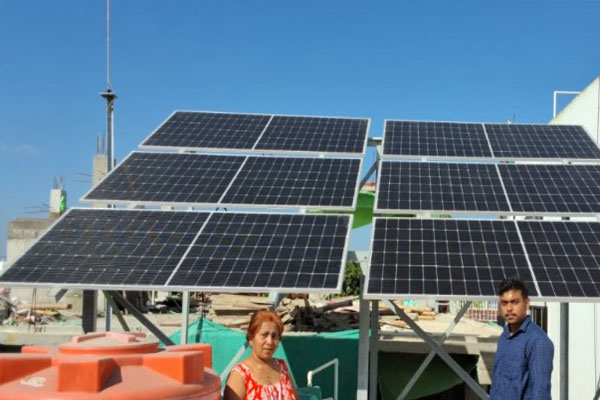
As more families adopt rooftop solar, these individual installations can collectively strengthen clean energy production and reduce dependence on conventional sources.
The model also gives citizens a direct role in supporting renewable energy development.
Future of Household Solar Income in Tripura
The crossing of the 15 MW rooftop solar capacity mark signals a new phase in Tripura’s clean energy journey.
With thousands of applications already registered, rooftop solar adoption is expected to expand further across the state. As more households connect with net metering facilities, the opportunity to generate savings and earn from surplus electricity could encourage wider participation.
| From Archive : PM Surya Ghar Muft Bijli Yojana Lights Up 266 Homes in Tripura |
Tripura’s rooftops are gradually transforming into productive energy assets. Through solar generation and net metering, households are moving towards lower electricity costs, greater energy independence and a new model of citizen-led renewable energy growth.
