

A debate over food habits during Durga Puja has taken a political turn in West Bengal, with BJP leaders seeking to balance personal freedom with religious practices. Dilip Ghosh has backed Samik Bhattacharya’s defence of individual choice while insisting that Bengal’s distinct cultural traditions cannot be overlooked.
Key Takeaways
- Dilip Ghosh backed Samik Bhattacharya’s view that food choices are personal.
- Ghosh said Bengal’s tradition of offering fish to deities must be respected.
- He also supported regulation of intoxicants and conduct at large religious gatherings.
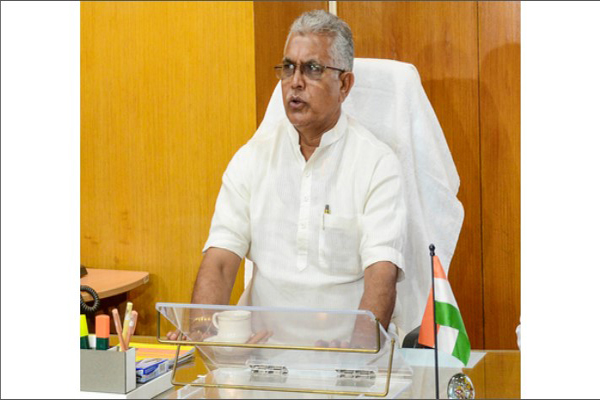
West Bengal Minister Dilip Ghosh has backed state BJP president Samik Bhattacharya in the growing debate over food choices during religious festivals. Ghosh said people have the right to decide what they eat. At the same time, he stressed that Bengal’s traditional customs deserve respect.
The issue has gained political attention after religious preacher Dhirendra Krishna Shastri, popularly known as Bageshwar Baba, appealed to people to avoid non-vegetarian food during Durga Puja. Bhattacharya rejected the idea that any religious leader or political figure should dictate the dietary choices of Bengalis.
Dilip Ghosh Backs Personal Food Choices
Ghosh said religious observance and everyday dietary choices should not be treated as identical matters.
He referred to the emphasis on non-violence within Sanatan Dharma. According to him, worship and religious rituals should create a peaceful and spiritual environment. He said devotees are often advised to follow a sattvic lifestyle while performing religious activities.
However, Ghosh also highlighted Bengal’s distinct traditions.
He pointed to the practice of offering fish to deities in parts of Bengal. Such customs have continued across generations. They form part of the region’s wider religious and cultural identity.
Ghosh argued that these traditions should not be dismissed simply because religious practices elsewhere may follow different norms.
His remarks effectively supported Bhattacharya’s broader argument that food habits cannot be dictated uniformly across a culturally diverse society.
Samik Bhattacharya Rejects Food Restrictions
Bhattacharya had spoken on the issue a day earlier.
The Bengal BJP chief said food and clothing are matters of personal choice. He maintained that individuals should have the freedom to decide what they eat and wear.
He also underlined Bengal’s diverse food culture. Fish and meat have long been part of Bengali cuisine. Bhattacharya questioned whether Bengalis could be expected to abandon such established food habits because of instructions from an outside religious figure.
He also referred to Swami Vivekananda while defending his position.
Bhattacharya said religious leaders and politicians can express their views. But they should not impose those views on society.
His remarks came after Shastri urged Bengalis to stay away from non-vegetarian food during Durga Puja. The comments triggered a wider discussion over religion, food habits and regional culture.
Bengal’s Food Culture at Centre of Debate
The controversy has brought Bengal’s food traditions into sharper political focus.
Fish has a deep cultural association with Bengali cuisine. Meat also features in traditional meals and festive practices. Bhattacharya specifically pointed to customary food practices associated with Durga Puja.
The BJP leader’s response also sought to draw a line between religious advice and political policy. He argued that an individual religious leader’s preference for vegetarianism should not become a prescription for the entire state.
The debate has also raised questions about how the BJP’s Bengal unit intends to handle cultural issues ahead of major political contests.
For the state party leadership, the issue carries particular sensitivity. Any perceived attempt to alter established Bengali customs could have wider political consequences.
Ghosh Calls for Regulation at Religious Gatherings
Ghosh, however, said personal freedom should not prevent organisers from imposing reasonable rules at religious events.
He argued that intoxicants should not be part of the environment surrounding worship. Alcohol and other intoxicants, he said, can create difficulties when large crowds gather.
He also linked restrictions to public safety and crowd management.
Large religious gatherings require coordination between organisers and police. Ghosh said unrestricted consumption of intoxicants could make crowd control more difficult.
He therefore supported some form of regulation during religious programmes. But he again stressed that Bengal’s own traditions should receive due consideration.
His position reflects a distinction between personal dietary freedom and rules governing conduct at religious venues. People can retain their individual food preferences, while organisers can maintain discipline within festival premises.
BJP Eyes Nandigram, Rejinagar Bypolls
Ghosh also turned his attention to the upcoming Assembly bypolls in Nandigram and Rejinagar.
The bypolls are scheduled for October 6. The former Bengal BJP president expressed strong confidence in the party’s prospects.
Ghosh claimed that voters had extended significant support to the BJP. He also praised the government’s performance and said its coordination with the Centre had helped strengthen its work.
| More National News Here |
According to Ghosh, public satisfaction with the government will translate into electoral support for the BJP.
He predicted that the party would win both constituencies by a substantial margin.
The food-choice controversy and the bypoll campaign now place the Bengal BJP in a politically sensitive phase. While its leaders seek to defend individual freedom, they are also stressing regional traditions and the importance of maintaining order during religious events.