

The Centre has clarified that the new UPI Merchant Discount Rate framework will not affect consumers, while selected high-value merchant payments will carry MDR to support the digital payments ecosystem.
Key Takeaways:
- UPI users will continue to make P2P and P2M payments without transaction charges.
- A 0.4 per cent MDR will apply to P2M transactions above Rs 2,000, with merchants bearing the cost.
- Essential sectors will face a flat Rs 5 MDR on eligible transactions above Rs 2,000.
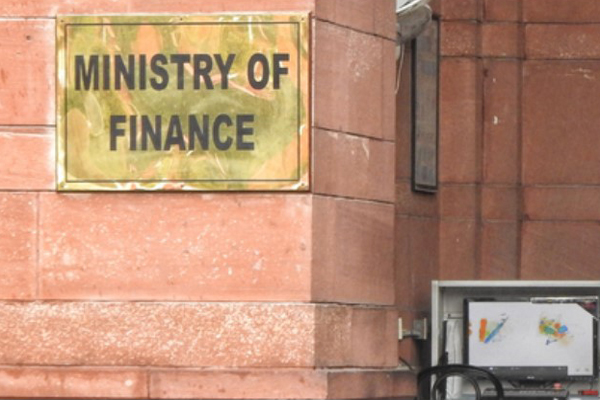
UPI users will continue to make digital payments without transaction charges under the new Merchant Discount Rate (MDR) framework, the Finance Ministry said.
The clarification comes amid changes to MDR on large-value merchant transactions. The government said the revised structure will not affect person-to-person payments. It will also keep most small-value merchant transactions outside the MDR net.
The Reserve Bank of India (RBI) has backed the framework. It said MDR on large-value UPI transactions can help strengthen the long-term sustainability of India’s digital payments ecosystem.
UPI users will not pay transaction charges
The new framework keeps all person-to-person (P2P) UPI transfers free. The amount does not matter.
People can continue to send money to friends and family without paying a transaction fee. They can also pay shops through UPI or scan QR codes without a direct charge.
Person-to-merchant (P2M) payments will also remain free for consumers. The Finance Ministry said the new MDR will not create a transaction cost for users.
The government has also protected small merchants from MDR. Vendors earning up to Rs 1 lakh a month through UPI QR-code payments will continue to pay zero MDR.
More than 95 per cent of merchant payments are below Rs 2,000, according to the Finance Ministry. These transactions will continue to remain free for merchants.
MDR applies only to selected high-value merchant transactions
The new framework introduces an MDR of 0.4 per cent on P2M transactions above Rs 2,000.
Merchants will bear this charge. Customers will not have to pay it.
The Finance Ministry has also clarified that MDR is not a tax. Neither the government nor the National Payments Corporation of India (NPCI) will collect it as a government charge.
Instead, payment ecosystem participants will share the MDR. These include banks, payment service providers and UPI application providers.
The mechanism aims to provide resources for the operation and expansion of the UPI network. It can also support investment in technology, infrastructure and payment acceptance networks.
For transactions of Rs 75,000 and above, the MDR will have a maximum limit of Rs 300 per transaction.
The government said the 0.4 per cent rate remains lower than charges linked to credit cards and other payment networks.
Essential sectors get a separate MDR structure
The new framework creates a separate arrangement for several essential and thin-margin sectors.
Transactions above Rs 2,000 in railways, fuel, telecommunications, insurance and agricultural inputs will attract a flat MDR of Rs 5 per transaction.
The government said the fixed charge will give businesses and public services greater certainty over payment costs. This matters particularly for sectors that operate on narrow margins.
Mutual fund and securities transactions will attract MDR at 0.02 per cent. The charge will have a ceiling of Rs 300.
The Finance Ministry said the revised system will use resources from higher-value merchant transactions to strengthen the wider digital payments ecosystem.
RBI links MDR to UPI’s long-term sustainability
The RBI has said the introduction of MDR on large-value UPI transactions can support the system’s long-term sustainability.
The central bank said an appropriate distribution of MDR among payment ecosystem participants can encourage continued investment.
Such investment can strengthen technology, infrastructure and acceptance networks. It can also help expand UPI acceptance and increase the customer base.
The RBI said the framework can support sustained growth in UPI transaction volumes while keeping the system safe, seamless, affordable and accessible.
The government has highlighted the scale of UPI while explaining the need for a sustainable framework. UPI processed 24.5 billion transactions in August 2026 alone.
The Finance Ministry said resources from higher-value merchant transactions will also support infrastructure and cybersecurity.
The government plans to use the mechanism to support small businesses in Tier III to Tier VI towns and rural areas. It also cited awareness programmes and incentives aimed at expanding UPI adoption.
Merchants cannot pass MDR costs to customers
The Finance Ministry has made clear that merchants cannot transfer MDR costs to customers.
UPI applications also cannot impose separate platform charges on users.
This means consumers will continue to use UPI without direct transaction charges even as the system applies MDR to selected high-value merchant payments.
The government said the framework seeks to balance affordability for users with the need to create a sustainable financial structure for India’s rapidly expanding digital payments ecosystem.
The RBI has similarly stressed the need to maintain UPI’s affordability and accessibility while supporting investment and future expansion. (Edited by Enewstime Desk)