

The Tripura government has amended its 2021 advertisement policy to establish clearer eligibility criteria for print newspapers, television channels and web portals, using revised benchmarks for circulation, staffing, operational history and audience reach to regulate government advertisement distribution.
Key Takeaways
-
Tripura’s amended advertisement policy introduces Large, Medium and Small categories for print, television and web media.
-
The revised rules set specific benchmarks for circulation, staffing, publication history, audience reach and news output.
-
The state will retain the existing policy until a new categorisation committee begins implementing the amended framework.
Media Ad Policy; New Criteria for Media Categorisation
The Tripura Cabinet has approved the second amendment to the Tripura Advertisement Policy, 2021, introducing revised criteria for categorising print media, television channels and web portals.
The amended policy aims to establish more rational and realistic parameters for media categorisation, fresh enlistment, re-categorisation, advertisement rates and the distribution of government advertisements.
The Tripura Advertisement Policy was first published on May 20, 2021, followed by an amendment in July that year. In 2024, the state government formed a Media Advisory Committee under the chairmanship of the Chief Minister, with senior and veteran journalists as members. Based on the committee’s recommendations, separate subcommittees examined accreditation, journalist welfare and advertisement policy.
Under the earlier policy, a single empowered committee dealt with these matters. The revised framework introduces a more specialised approach, with separate criteria for different media categories.
Three Categories for Print Media
The amended policy replaces the earlier four-tier classification of A1, A, B and C with three categories: Large, Medium and Small.
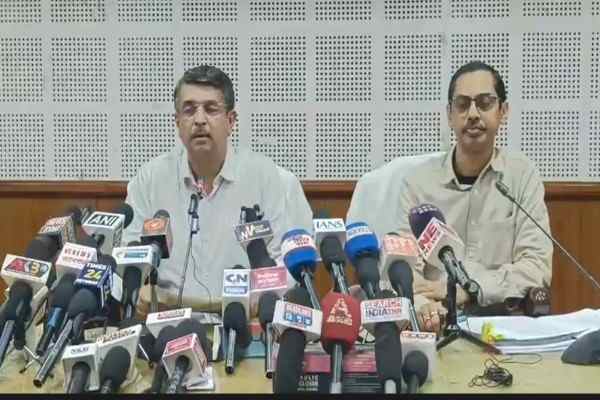
The government has revised the eligibility requirements to reflect Tripura’s media landscape. According to the official briefing, the state has 133 local media outlets, including 74 print publications, 27 television channels and 32 web media organisations.
For print media, the revised policy specifies requirements related to publication history, circulation, distribution networks, staffing, infrastructure, newspaper size and page count.
To qualify for the Large category, a newspaper must have a publication history of at least five years, sales points in all districts, one designated editor, 12 journalists, a minimum of 10 pages and circulation of at least 20,000 copies.
The Medium category requires at least three years of publication, sales points across all districts, eight journalists, a minimum of eight pages and circulation of 10,000 to 20,000 copies.
For the Small category, a newspaper must have at least one year of publication, sales points in four districts, four journalists, a minimum of four pages and circulation of 5,000 to 10,000 copies.
The government has also reduced the minimum publication period for the highest print-media category from 10 years under the earlier framework to five years. The circulation threshold cited for the top category has been reduced from 50,000 to 20,000 copies.
Daily newspapers, weekly publications and tabloids will not all follow the same classification structure. According to the briefing, weekly newspapers and tabloids will have a single category rather than three separate categories.
Revised Criteria for Television Channels
The new policy also introduces three categories for electronic media: Large, Medium and Small, replacing the earlier A1, A, B and C classification.
The criteria cover operational history, geographical reach, designated personnel, reporters, video editors, anchors, telecast crews and daily live news programming.
For the Large category, a television channel must have operated for at least four years and telecast its programmes across all districts. It must have one designated chief, three video editors, nine reporters, anchors and telecast crew members, and broadcast eight live news programmes daily.
The Medium category requires at least two years of operation and telecast coverage in a minimum of five districts. It must have two video editors, six reporters, anchors and telecast crew members, along with five daily live news programmes.
The Small category requires at least one year of operation, telecast coverage in at least two districts, four personnel across reporting, anchoring and telecast functions, and three daily live programmes.
The government says the more specific requirements will help media organisations understand the eligibility conditions before applying for enlistment or recategorisation.
Web Portals to Follow Visitor and Content Benchmarks
Web media organisations will also be classified into Large, Medium and Small categories. The amended policy reduces the minimum operational period for the highest category from five years to four years and lowers the minimum visitor threshold cited for that category from 30,000 to 20,000.
The policy also specifies requirements for technical staff, reporters and editors, alongside content publication benchmarks.
A web media organisation seeking the Large category must publish nine local news items, four national news items and two international news items daily.
The government has indicated that visitor figures will help determine eligibility. Google Analytics data will serve as the basis for preferential consideration of web media organisations with higher visitor numbers.
The briefing cited average visitor benchmarks of 20,000 for the Large category, 15,000 for Medium and 10,000 for Small.
Special Consideration for Certified Media Outlets
The amended policy provides for preferential consideration for media organisations holding recognised national-level certifications or demonstrating established reach.
For print publications, the government cited Audit Bureau of Circulations (ABC) certification as a basis for special consideration in the Large category.
For web portals, verified Google Analytics figures will help establish eligibility for preferential treatment. For television channels, the government will consider available TRP ratings and other ratings applicable in the state.
The objective, according to the briefing, is to balance transparent and measurable eligibility criteria with recognition of established media organisations.
The government has also sought to make the requirements more realistic for Tripura, where the size and resources of media organisations vary considerably.
New Policy Gazetted, but Existing Rules Continue for Now
The government said it had published the amended policy in the official Gazette and would make it available on its website and share copies with media representatives.
However, the revised classification will not take effect immediately. The government will assign the implementation work to a categorisation committee, which will assess applications for fresh enlistment and recategorisation under the new criteria.
Until that process begins and the revised system becomes operational, the existing advertisement policy will continue to apply.
The government said it had considered suggestions received both within and outside the administration after an earlier Cabinet discussion in December 2025. The second amendment is intended to bring the recommendations together in a single framework.
Government Advertisement Budget Rises to ₹19 Crore
The government cited the growth in its advertisement budget as another reason for revising the policy.
The state’s annual advertisement budget stood at ₹3 crore in 2017–18. It has now risen to approximately ₹19 crore, representing an increase of more than six times.
The government said the revised policy would help manage this spending through clearer eligibility criteria and a more systematic process for distributing advertisements among media organisations.
Journalist Pension and Accreditation Measures
The briefing also covered journalist welfare and accreditation.
The Tripura Journalist Pension Scheme underwent changes in 2025. The government referred to an increase in the monthly pension from ₹1,000 under the earlier arrangement to ₹10,000. It also said 12 journalists receive the Tripura Journalist Samman Pension, while eligible family members receive a family pension of ₹5,000.
The government has also amended the Tripura Media Representative Accreditation Policy. It notified an accreditation committee on August 30 and plans to resume work on pending applications.
According to the briefing, the state has accredited 320 journalists, while around 100 applications remain pending.
Officials said the revised accreditation framework distinguishes between veteran, senior, regular and junior journalists. They acknowledged concerns about cases in which journalists previously recognised as editors or senior professionals received a different classification during the renewal process. The government said it would review specific cases against the applicable guidelines and consider work experience where necessary.
The government also announced plans to provide new press jackets to working journalists. The Information and Cultural Affairs Department will discuss the arrangements with the media fraternity.
A journalists’ workshop is scheduled for the last week of October at the Agartala Press Club.
New Guidelines Planned for Press Stickers
The government is preparing new guidelines for press vehicle stickers following concerns about misuse by people who are not journalists.
The Information and Cultural Affairs Department will coordinate with the Transport Department and the police to develop the system. Officials said the proposed stickers would be scannable, allowing police and other authorities to verify them.
The government said it was still drafting the policy and had not finalised all operational details.
Government Examines Social Media Misuse
During the briefing, the government also acknowledged growing concerns about the misuse of Facebook pages, YouTube channels and other social media platforms.
Officials said state-level intervention remained limited under the existing Information Technology Act framework. However, the government is working on guidelines or a policy to address emerging concerns.
The second amendment to the advertisement policy, alongside the planned measures on accreditation, press stickers and journalist welfare, forms part of the government’s broader effort to establish clearer rules for the state’s media sector.
