

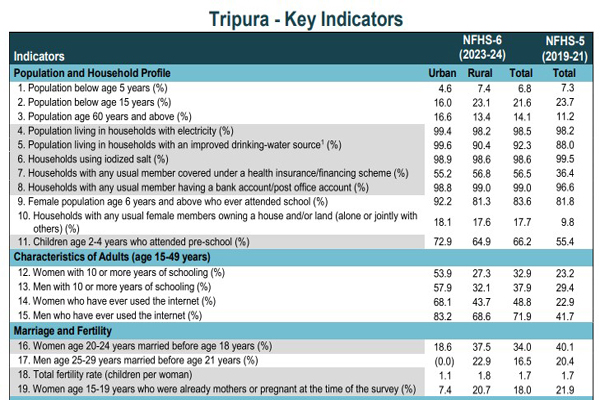
Between 2019-21 and 2023-24, Tripura recorded a 6.1-percentage-point decline in child marriage among women aged 20-24, with the latest NFHS-6 survey placing the figure at 34%, although it remains substantially above the national average of 20.1%, highlighting the continuing challenge of protecting girls from early marriage.
At A Glance:
-
Child marriage among women aged 20-24 in Tripura declined from 40.1% to 34% between NFHS-5 and NFHS-6.
-
Tripura’s latest rate remains significantly higher than the national average of 20.1%.
-
JRC and its partner organisations have helped prevent 5,772 child marriages across eight districts over three years.
Child marriage in Tripura has declined over the past three years, but the state continues to face a significant challenge in protecting underage girls from early marriage. According to the National Family Health Survey (NFHS-6), 34% of women aged 20-24 in Tripura were married before turning 18. Although this marks an improvement from the previous survey, the figure remains considerably higher than the national average of 20.1%.
The latest figures highlight the gap between Tripura and the national progress in eliminating child marriage. They also underline the need for sustained awareness campaigns, community participation and stronger grassroots interventions to prevent the practice.
Child Marriage Rate Falls from 40.1% to 34% in Tripura
The NFHS-6 data for 2023-24 shows that 34% of women aged 20-24 in Tripura entered marriage before reaching the legal age of 18.
The corresponding figure stood at 40.1% in NFHS-5, conducted during 2019-21. The latest data therefore indicates a decline of 6.1 percentage points over the two survey periods.
This reduction reflects progress in efforts to discourage child marriage across the state. Awareness programmes and community-level initiatives have played an important role in bringing the issue into public discussion.
However, the figures also reveal the scale of the remaining challenge. More than one-third of women in the surveyed age group in Tripura were married before turning 18. The state still needs sustained intervention to bring the rate closer to the national level.
Tripura Remains Well Above National Average
The national figures show a lower prevalence of child marriage compared with Tripura.
According to NFHS-6, 20.1% of women aged 20-24 across India were married before the age of 18. This represents a decline from 23.3% recorded in NFHS-5.
While the country recorded a reduction of 3.2 percentage points, Tripura registered a larger decline of 6.1 percentage points between the two surveys.
Despite the faster reduction, the state’s current figure remains 13.9 percentage points above the national average.
This difference highlights the need to intensify efforts in Tripura. The decline indicates that interventions are producing results, but the high prevalence shows that the state has considerable ground to cover.
5,772 Child Marriages Prevented Across Eight Districts
Grassroots organisations have been working to prevent child marriages through awareness programmes and community mobilisation.
Just Rights for Children (JRC), India’s largest civil society network working for child protection, has helped prevent more than 6.5 lakh child marriages nationwide over the past three years. The organisation has achieved this through its network of more than 300 NGO partners operating across all 782 districts.
In Tripura, JRC has worked with four partner organisations across eight districts. Together, they have helped prevent 5,772 child marriages during the same period.
The organisation’s intervention also includes campaigns to involve women leaders, survivors and local communities in preventing early marriages.
During the nationwide mobilisation marking the International Day for the Elimination of Child, Early and Forced Marriage on November 27, 1,829 women leaders led campaigns across 700 villages in Tripura.
These initiatives encouraged 1,52,429 people to pledge against child marriage. The programmes included awareness drives, torchlight processions, candle marches, morning rallies and pledge-taking events.
The participation of women leaders and survivors has emerged as an important part of the campaign. Their involvement helps bring the issue directly to families and communities.
Community Participation and Government Campaigns
The nationwide campaign also sought to involve people and groups associated with wedding ceremonies.
Religious leaders from different faiths took collective pledges against child marriage. Confectioners, cooks, decorators, band operators, tent service providers and printing press owners also promised not to participate in underage marriages.
These groups further pledged to inform the authorities if they received information about any planned child marriage.
The campaign also introduced Bal Vivah Mukti Raths to spread awareness across different areas through slogans and public messages.
Just Rights for Children conducted these programmes in collaboration with central and state governments, district administrations and other agencies. Elected representatives and senior district officials, including MPs, MLAs, district magistrates and superintendents of police, attended the events.
2030 Global Target Remains a Major Challenge
The international commitment to eliminate child marriage by 2030 is linked to Target 5.3 of Sustainable Development Goal 5, which focuses on gender equality.
The target calls for an end to harmful practices, including child, early and forced marriage.
India’s recognition of November 27 as the International Day for the Elimination of Child, Early and Forced Marriage marks an important step in building global awareness and collective action.
For Tripura, the latest NFHS figures present a mixed picture. The decline from 40.1% to 34% indicates progress, while the substantial gap with the national average points to the need for further action.
Sustained community participation, effective awareness campaigns and continued grassroots intervention will remain crucial to reducing child marriage in the state and achieving the 2030 target.
