

For some people caught in the Nepal floods, survival depended on recognising danger before it was too late. Warnings from neighbours, visible signs of flooding and quick decisions helped several people reach higher ground, while others were swept away despite desperate efforts to escape.
Key Takeaways:
- Several survivors escaped after receiving warnings or noticing signs of approaching danger.
- Neighbourhood alerts played a crucial role in at least one documented escape.
- The experiences raise questions about the effectiveness and reach of formal disaster-warning systems.
The devastating floods in Nepal have produced stories of death, destruction and loss. They have also revealed how warnings, awareness and quick decisions can determine who reaches safety and who remains trapped.
Several accounts from the disaster zone show people escaping after receiving warnings or noticing signs of danger. In some cases, neighbours raised the alarm. In others, workers saw floodwaters approaching and moved to higher ground.
These accounts raise an important question: how much did formal disaster-warning systems contribute to survival during the Nepal floods?
The available accounts also show the importance of informal warnings and personal judgment. For several survivors, the difference between life and death came down to recognising danger and acting quickly.
Survivors Acted on Early Signs
Bikash Tharu, an electrical technician at the Bhote Koshi hydropower station, survived because he and his colleagues were late for work after a demanding day.
The delay gave them valuable time. They noticed the approaching flood and immediately fled uphill.
The group then spent nights in the open before Nepal Army helicopters evacuated them.
They later discovered that the floodwaters had swept away the dam they had been working to build.
Their experience highlights the importance of having enough time to identify a threat and reach a safer location. Even a short delay in the arrival of floodwaters can provide a critical opportunity for escape.
Neighbours Became the Warning System
For elderly couple Jari and Bhakta Bardewa, the warning came directly from their neighbours.
The couple was at home in Trishuli Bazaar when nearby residents began shouting, “Aayo, aayo (It is coming, coming).”
The warning prompted them to flee towards higher ground.
Their escape was not easy. Water and mud reached the septuagenarian husband while they were attempting to move to safety.
Despite the danger, he managed to climb to higher ground with his wife.
Their story shows how local communities can become an immediate source of lifesaving information during a disaster.
The incident also raises a broader issue. When floodwaters arrive quickly, people need warnings that reach them directly and give them enough time to act.
Not Every Warning Came Through Technology
Another survival account involved Indian engineer Ananay Sharma.
He reportedly escaped after responding to a call to leave a building following a loud sound and signs of seepage on the walls.
The decision to leave came after people noticed physical indications that something was wrong.
The episode reinforces the importance of awareness at the individual level. A warning can take many forms during a rapidly developing emergency.
It can come through a formal alert. It can come from another person. It can also come from visible changes in the surrounding environment.
A Tunnel Offered Another Escape
Buddha Tamang, another worker associated with dam operations, survived because he was inside a tunnel when the flood struck.
He remained stranded for around 24 hours.
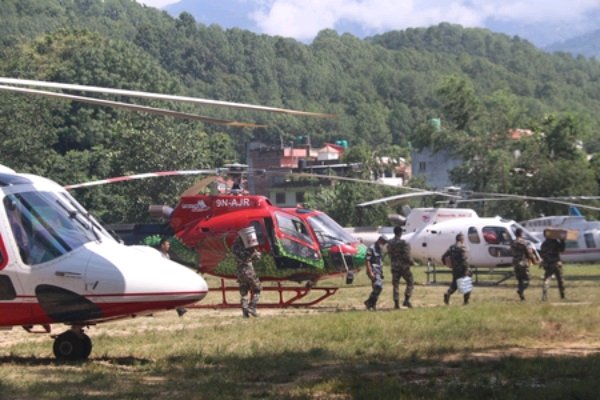
Tamang eventually emerged and was airlifted to safety.
His survival was linked to the protection provided by the tunnel rather than an organised evacuation before the flood arrived.
The account adds another dimension to the question of disaster preparedness. People working in high-risk locations need safe places to shelter as well as reliable warnings and evacuation procedures.
Some Families Had No Time to Escape
The survival stories stand in stark contrast to accounts of people who could not get away.
Sangke Dolma Tamang managed to climb uphill with other family members. Her husband, however, was swept away despite the family’s desperate attempts to save him.
Other families also lost wives, husbands and children as water and mud engulfed villages.
These losses demonstrate the limits of individual action when a disaster moves too quickly or when people lack sufficient time and access to safe routes.
A warning has little value if people cannot reach a secure location before floodwaters arrive.
Pilgrims Faced Different Outcomes
The floods also affected pilgrims travelling towards Kailash-Mansarovar through the Rasuwagadhi border route into the Tibet region.
Some pilgrims escaped by climbing hills in time. Others were swept away.
Sivaranjani Muthunathan was among 56 pilgrims from Tamil Nadu caught in the disaster. She managed to reach safety with some other travellers.
From higher ground, they watched vehicles being carried away by the floodwaters.
Another pilgrim, Poonguzhali Ponmambadan, used her sari as a makeshift rope to help elderly people climb to safety.
These incidents again highlight the importance of immediate action. They also show how people relied on one another when confronting danger.
Rescue Teams Became the Final Safety Net
When warnings and individual efforts were not enough, rescue teams became the final line of protection.
Nepal Armed Police Force personnel reportedly heard a six-year-old girl crying beneath debris in Timure.
The rescuers dug through collapsed structures and found her alive.
They stabilised the child at the site because bad weather prevented an immediate evacuation.
The Nepal Army’s elite Ranger Battalion also rescued workers trapped inside intake tunnels buried under slurry.
The rescuers had to navigate extremely difficult terrain. Flooding had erased familiar landmarks and made the operation even more challenging.
Helicopter pilots also played a critical role by carrying survivors from inaccessible valleys despite dangerous weather.
Medical teams and volunteers worked at camps in Nuwakot and Bidur. These camps provided medical assistance and trauma counselling to people affected by the disaster.
The Larger Warning Question
The survival accounts provide more than stories of courage. They offer clues about the role of warnings during a major disaster.
Some people received direct warnings from neighbours. Others noticed physical signs of danger. Some escaped because they happened to be delayed or were already in locations that provided protection.
At the same time, many others did not survive.
That contrast raises important questions about the reach and effectiveness of formal disaster-warning systems.
Did warnings reach people before floodwaters arrived? Did those warnings provide enough time to evacuate? Were workers, residents and pilgrims aware of safe escape routes?
The available accounts do not provide complete answers.
They do, however, show that early awareness can be critical.
Enewstime Desk Perspective: Disaster Preparedness
The Nepal floods have therefore created a need to look beyond a disaster and the immediate rescue effort.
The experiences of survivors suggest that warning systems must ultimately connect information with action.
People need to know when danger is approaching. They also need enough time and a safe route to escape.
The stories from the disaster zone show that neighbours, workers, volunteers and rescue teams all played important roles.
Formal systems may provide warnings, but community response can determine what happens next.
The central question after the immediate crisis is not only who survived. It is also whether more lives could have been saved if warnings had reached more people earlier and if those people had clearer opportunities to move to safety.
The answer could shape how Nepal prepares for the next disaster.
