

Former Bangladesh Prime Minister Sheikh Hasina has vowed to return to her country despite the risk of arrest or violence, urging the United States to support democratic institutions, inclusive elections and political reconciliation amid continuing political tensions.
Key Takeaways:
-
Sheikh Hasina has vowed to return to Bangladesh despite the risk of arrest, imprisonment or violence.
-
She urged the United States to support democracy, inclusive elections and political pluralism rather than any particular leader or party.
-
Hasina called for judicial independence, minority protection and national reconciliation while acknowledging questions surrounding her government and the 2024 protests.
Sheikh Hasina has declared that threats to her safety will not prevent her from returning to Bangladesh. Speaking virtually at a press conference in Washington on October 20, the former Prime Minister said she could not remain abroad while her supporters and ordinary citizens continued to suffer. She also called on the United States to defend democracy and ensure that Bangladesh’s political future reflects the will of its people.
Hasina Says Threats Will Not Stop Her Return
Hasina left Bangladesh in August 2024 after her government collapsed. She has since been living in India.
Addressing the Washington-based press conference virtually, she said the possibility of arrest, torture or death would not deter her from returning home.
“I do not care how risky it is. I have to return,” Hasina said.
She acknowledged the dangers surrounding her return. However, she argued that her political responsibilities required her to stand alongside her supporters during the country’s continuing political turmoil.
The former Prime Minister also expressed gratitude to the Indian government and its people for providing her refuge after her removal from power.
Hasina recalled the support she received following the political upheaval, drawing a parallel with the period after the assassination of her father, Sheikh Mujibur Rahman, and other family members in 1975.
She also cited earlier instances when she returned to Bangladesh despite threats to her safety.
In 1981, Hasina returned after spending years abroad following the assassination of her father and several other family members. She also recalled her return during the political emergency in 2007, when she faced criminal allegations.
Son Says No Return Date Has Been Fixed
Hasina did not announce a specific return date to Bangladesh.
Her son, Sajeeb Wazed Joy, later told journalists that no date had been finalised. He said the family would announce it closer to the time.
Meanwhile, Hasina accused the current political leadership of Bangladesh for using criminal proceedings against her and members of the Awami League to suppress opposition voices.
She challenged the legitimacy of the cases and called for allegations against political leaders to be resolved through fair judicial proceedings.
Sheikh Hasina maintained that legal action against any individual should follow transparent and impartial procedures.
Hasina Urges US to Support Democracy
The ex-Bangladesh Prime Minister, Sheikh Hasina appealed to Washington to prioritise democratic institutions and political pluralism in Bangladesh. She urged the United States not to favour any particular leader or political party.
“My message to Washington is that I am not asking the US to choose Sheikh Hasina or Romani. I am asking it to choose democracy,” she said, according to the conference transcript.
She stressed that Bangladesh’s citizens must determine their government’s future through free and inclusive political processes.
“I ask that Bangladeshis determine their government through free inclusive political process,” Hasina said.
Her remarks placed democratic participation at the centre of her appeal to the United States. She argued that Bangladesh’s political future should reflect the people’s choices rather than the preferences of external powers.
Calls for Independent Courts and Minority Protection
Hasina also called for independent courts, freedom of expression and association, protection of minorities and respect for due process.
She warned that excluding political parties from democratic participation could deepen political divisions and weaken efforts to achieve national reconciliation.
The former Prime Minister said the rights of her political opponents must also receive protection.
“Equally, those who oppose my government are citizens whose rights must be respected. The future of Bangladesh must be built on reconciliation, not revenge,” she said.
Her remarks highlighted the need to protect political rights across party lines. She argued that reconciliation, rather than retaliation, should guide the country’s future.
Hasina also acknowledged questions surrounding her own administration and the events that unfolded during the 2024 protests.
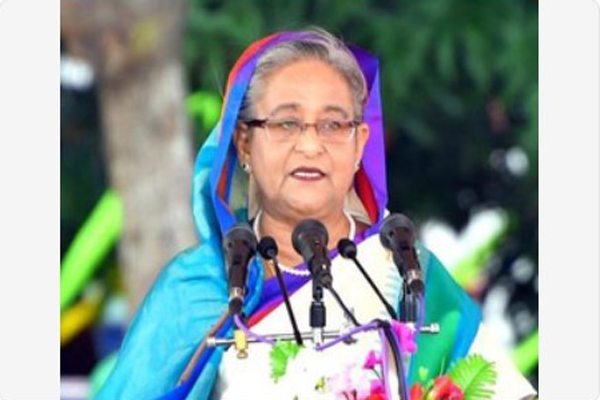
“I acknowledge the difficult questions surrounding my government, the events of 2024 and their aftermath,” she said.
She maintained that allegations against anyone, including herself, should be addressed through transparent and impartial legal proceedings.
Bangladesh Must Avoid Rivalry Among Major Powers
Hasina also addressed Bangladesh’s international relations. She called for constructive ties with neighbouring countries and major global partners, including the United States, China and Japan.
She cautioned against allowing Bangladesh to become a battleground for competition among major powers.
The former Prime Minister also backed stronger economic engagement with Washington. She identified American investment, education, technology and security cooperation as areas for closer ties.
Her appeal combined calls for democratic participation at home with stronger international partnerships. She maintained that Bangladesh should protect its democratic institutions while pursuing constructive relations with major global powers. (Edited by Enewstime Desk)