

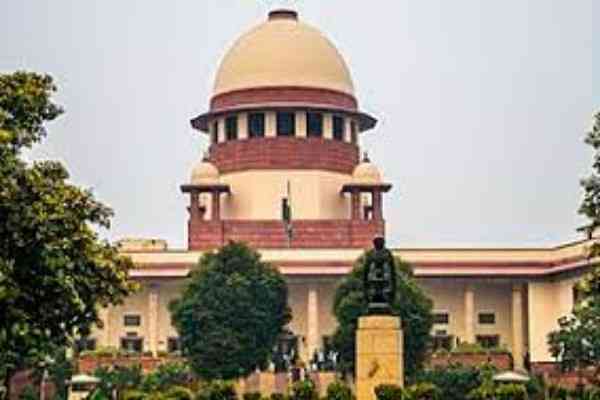
The Supreme Court upheld the Special Intensive Revision (SIR) exercise of electoral rolls conducted by the Election Commission of India (ECI). The verdict came in New Delhi after multiple petitions challenged the exercise. The apex court ruled that the ECI acted within constitutional limits and said the revision process supports transparent and fair elections across the country.
Key Takeaways
- The Supreme Court upheld the ECI’s Special Intensive Revision of electoral rolls.
- The court ruled that the exercise falls within the constitutional powers of the poll body.
- Judges said accurate voter lists are essential for free and fair elections.
- The apex court clarified that citizenship inquiries during voter verification are limited to electoral purposes only.
Supreme Court Backs ECI’s Electoral Roll Revision
Agartala: The Supreme Court on Wednesday upheld the Election Commission of India’s decision to conduct a Special Intensive Revision (SIR) of electoral rolls. The court observed that the exercise falls within the constitutional and statutory authority of the poll panel.
A Bench led by Chief Justice of India Surya Kant and Justice Joymalya Bagchi stated that the revision process aims to protect the integrity and credibility of elections. The judges also ruled that the exercise does not violate the provisions of the Representation of the People Act, 1950.
The apex court clarified that the Election Commission can conduct such a revision under Article 324 of the Constitution along with Section 21(3) of the Representation of the People Act.
Court Examined Three Major Questions
While hearing the batch of petitions, the Supreme Court framed three central issues for consideration.
First, the Bench examined whether the Election Commission had the legal authority to carry out the SIR exercise. Second, it assessed whether the exercise served a legitimate purpose and satisfied the principle of proportionality. Third, it reviewed whether the procedure violated the statutory framework governing electoral rolls.
After detailed hearings, the court answered all three questions in favour of the Election Commission.
“Exercise Does Not Replace Existing Law”
The Bench observed that the SIR process does not replace or override the statutory framework governing electoral roll revisions.
The judgment stated that the law itself permits special revisions whenever required. Therefore, the court said the exercise cannot become invalid simply because it differs from routine revision procedures.
The judges further noted that the Election Commission acted within the limits prescribed by law. According to the ruling, the SIR exercise strengthens the constitutional mandate under Article 324 while remaining within the framework of the Representation of the People Act.
Electoral Integrity Central to Democracy
The Supreme Court stressed that free and fair elections depend heavily on accurate voter lists.
The Bench said elections involve much more than the polling process itself. Clean and reliable electoral rolls form the foundation of democracy. Therefore, ensuring accuracy in voter lists directly supports the constitutional goal of free and fair elections.
The court also referred to the Election Commission’s reasons for initiating the exercise. It noted that more than four decades had passed since the last intensive revision of electoral rolls.
According to the judgment, rapid urbanisation, migration and large-scale additions and deletions in voter lists increased the possibility of duplication and inaccuracies.
The Bench said the court could not accept the argument that the exercise served only administrative convenience. Instead, it concluded that the SIR exercise advances democratic principles.
Supreme Court Finds Process Proportionate
The apex court also ruled that the revision process meets constitutional standards of proportionality.
The judges observed that the measures adopted by the Election Commission maintain a reasonable connection with the intended objective. They also said the process does not appear excessive and includes adequate safeguards against arbitrary exclusion of voters.
The court highlighted that procedural protections introduced by the Election Commission, along with interim directions issued earlier by the Supreme Court, ensured opportunities for participation, correction and grievance redressal.
Court Upholds Documentation Framework
The Bench rejected objections against the documentation requirements prescribed by the Election Commission.
According to the judgment, any verification exercise requires a structured system of documents to maintain administrative consistency and evidentiary reliability.
The court also upheld the classification of acceptable documents. This included the exclusion of certain document categories apart from Aadhaar, which the court had earlier directed to be included through interim orders issued in September 2025.
Limited Citizenship Inquiry Allowed
In a crucial observation, the Supreme Court ruled that the Election Commission can conduct a limited inquiry into citizenship during electoral roll preparation or revision.
The Bench said the Commission has the authority to examine issues linked to citizenship under Section 16 of the Representation of the People Act while preparing voter lists.
However, the court clarified that such scrutiny does not amount to a final declaration on citizenship status.
The judgment stated that the inquiry remains limited to electoral purposes only. If the Commission remains unconvinced about eligibility for electoral purposes, it cannot treat the finding as a final determination of citizenship.
Directions for Deleted Voters
The apex court issued further directions regarding individuals whose names were removed from voter lists due to doubtful citizenship status.
The Bench instructed the Election Commission to refer such cases within four weeks to the competent authority under the Citizenship Act, 1955.
The court also directed authorities to complete the adjudication process before the next Vidhan Sabha or local body elections, whichever occurs earlier.
Additionally, authorities must issue notices and provide affected individuals an opportunity to be heard.
The Supreme Court further ordered that if the competent authority confirms an individual’s citizenship, the person’s name must return to the electoral roll.
Petitioners Raised Concerns Over Disenfranchisement
The judgment came after several petitions challenged the Special Intensive Revision exercise initiated first in Bihar and later extended to states and Union Territories such as West Bengal, Kerala and Tamil Nadu.
Petitioners argued that the exercise exceeded the powers granted to the Election Commission under Article 326 of the Constitution and the Representation of the People Act.
They also claimed that the process could disenfranchise genuine voters, especially migrant and marginalised communities that may struggle to produce documentary proof linked to earlier electoral rolls.
However, the Election Commission defended the exercise by saying it was necessary to maintain the purity and integrity of voter lists and to prevent duplication or inclusion of ineligible voters.
The Supreme Court had reserved its verdict on January 29 after extensive hearings on the matter.
