

Eastern Nagaland could receive a significantly larger development push if the Centre accepts Nagaland Chief Minister Neiphiu Rio’s proposal to raise the special development grant for the region to at least ₹10,000 crore. The demand forms a key part of the state’s plan to establish the Frontier Nagaland Territorial Authority (FNTA).
Key Takeaways:
- Nagaland CM Neiphiu Rio has sought at least ₹10,000 crore in special development funding for Eastern Nagaland.
- The proposed grant would support infrastructure, economic growth and overall development across six eastern districts.
- Rio said the FNTA would promote faster, inclusive and equitable development while protecting Article 371(A) safeguards.
Nagaland Chief Minister Neiphiu Rio has called for a substantial increase in the proposed special development grant for Eastern Nagaland, seeking at least ₹10,000 crore to tackle longstanding infrastructure and economic gaps in the region.
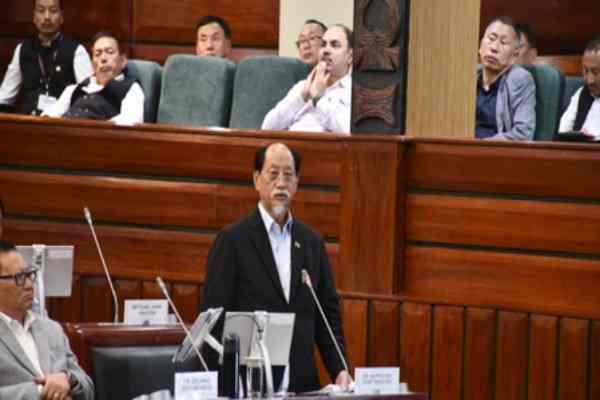
Rio made the demand while concluding the discussion on the Frontier Nagaland Territorial Authority (FNTA) Bill, 2026, during the ninth session of the 14th Nagaland Legislative Assembly.
The proposed increase would double the earlier allocation of ₹5,000 crore. Rio said the larger financial package would help accelerate infrastructure development, strengthen economic activity and support broader growth across Eastern Nagaland.
Rio Seeks Doubling of Special Development Grant
The Chief Minister said the state government had requested the Centre to raise the proposed special development grant from ₹5,000 crore to a minimum of ₹10,000 crore.
The demand comes as the state moves towards creating the FNTA for six districts in eastern Nagaland. These are Tuensang, Mon, Longleng, Kiphire, Noklak and Shamator.
Rio said the region faced persistent development deficits because of historical and geographical challenges. He argued that a stronger financial commitment was necessary to close the gap and speed up development.
The proposed funding would focus on infrastructure and economic growth. It would also support the region’s overall progress under the new territorial authority.
Centre and State to Fund FNTA
Rio said both the state and Central governments would have financial responsibilities under the proposed framework.
The Nagaland government would allocate funds to the FNTA based on population and geographical size. The Centre, meanwhile, would provide the required support through Special Development Grants.
The funding would take into account the specific development needs of Eastern Nagaland, he said.
The FNTA would also prepare its own annual plans. It would formulate development programmes based on requirements identified at the grassroots level.
This approach is intended to give the eastern districts a greater role in determining their development priorities.
Six Districts at the Centre of Development Push
The proposed FNTA covers six districts that have long faced development challenges.
These districts are Tuensang, Mon, Longleng, Kiphire, Noklak and Shamator.
Rio said the government had worked with the Centre, the Eastern Nagaland Peoples’ Organisation (ENPO) and other stakeholders to address legal and constitutional concerns surrounding the FNTA Bill.
He also stressed that the constitutional safeguards under Article 371(A) would remain protected.
The government sees the FNTA as a mechanism to promote decentralised governance while addressing the specific social and economic needs of Eastern Nagaland.
FNTA Linked to Longstanding Regional Demand
The proposed financial package is part of a broader framework linked to a longstanding demand from organisations representing Eastern Nagaland.
The ENPO and other Naga organisations have sought either a separate Frontier Nagaland Territory or full statehood for the six eastern districts since 2010.
The region is home to seven tribes: Chang, Khiamniungan, Konyak, Phom, Tikhir, Sangtam and Yimkhiung.
The official framework for the FNTA would devolve powers over 46 subjects to the new authority. This would give the proposed body a wider role in local development and administration.
Rio Calls FNTA More Than an Administrative Arrangement
Rio said the proposed authority should not be viewed simply as an administrative restructuring.
According to him, the FNTA represents a broader commitment to equitable development and inclusive growth across Nagaland.
He said its creation would help address the aspirations of people in Eastern Nagaland while maintaining the state’s unity.
The Chief Minister described the proposed authority as a unique self-governing territorial institution. He said it would seek to meet the region’s social, economic, educational, cultural and linguistic aspirations.
The combination of greater local decision-making and enhanced financial support, the government believes, could provide a stronger foundation for development in the six eastern districts. (With inputs from IANS)
