

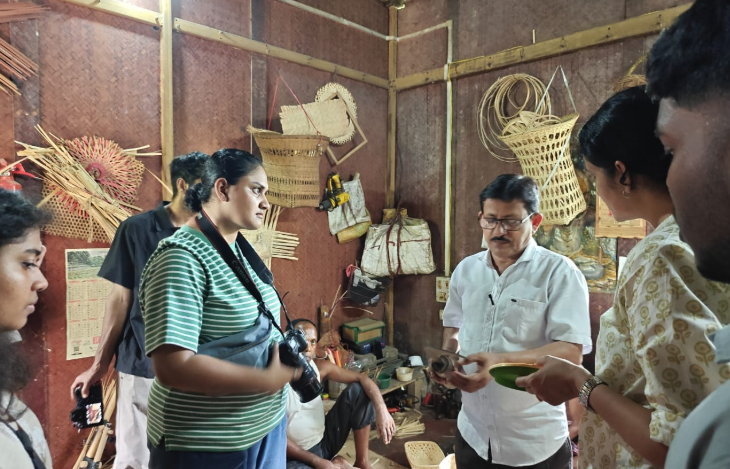
A faculty and student delegation from the College of Architecture, Trivandrum, Kerala, has arrived in Tripura for bamboo research and design collaboration. The team is visiting Tripura Bamboo Mission units, studying bamboo-based manufacturing, sustainable practices, and exploring new opportunities for handicraft innovation across the northeastern state.
Quick Glance
- College of Architecture, Trivandrum team begins bamboo research visit in Tripura.
- Delegation studies bamboo manufacturing units and nurseries under Tripura Bamboo Mission.
- Research focuses on sustainable designs, handicrafts, and modern bamboo applications.
- Tripura’s 19 bamboo species and forest resources support green industry growth.
Agartala : A new academic partnership is opening fresh possibilities for Tripura’s bamboo sector. A delegation of faculty members and students from the College of Architecture, Trivandrum, Kerala, has visited Tripura to study bamboo resources and explore sustainable design solutions.
The team is conducting a detailed field visit across bamboo-based manufacturing units and advanced nurseries managed under the Tripura Bamboo Mission (TBM). The visit aims to connect traditional bamboo craftsmanship with modern architectural ideas.
Tripura has long been recognised as one of India’s important bamboo-producing regions. The state has a strong tradition of bamboo craftsmanship. Local artisans create a wide range of handmade products using indigenous bamboo varieties.
The visiting team is focusing on product research and development. It is studying how bamboo can be transformed into innovative products for the handicraft and lifestyle markets.
Academic Collaboration Focuses on Bamboo-Based Innovation
The collaboration between the Kerala-based architecture institution and Tripura’s bamboo ecosystem focuses on developing modern applications of bamboo.
The major objectives include:
| Focus Area | Research Objective |
|---|---|
| Innovative Material Applications | Exploring bamboo use in modern products, construction designs, and eco-friendly packaging |
| Sustainable Production Practices | Studying zero-waste manufacturing and scientific cultivation methods |
| Handicraft Sector Development | Creating design-based solutions to improve artisan income and market opportunities |
The researchers are examining different bamboo species available in Tripura. They are also exploring ways to improve product quality through better design techniques.
The initiative aims to introduce contemporary design concepts into traditional bamboo crafts. It will help artisans develop products that match changing consumer preferences.
Tripura Bamboo Mission Supports Green Industry Growth
The Tripura Bamboo Mission (TBM) plays a key role in promoting bamboo cultivation, processing, and entrepreneurship in the state.
According to available data, Tripura has a rich bamboo ecosystem supported by multiple species and extensive forest areas.
| Resource | Details |
| Bamboo Species in Tripura | 19 varieties |
| Forest-bearing Area | Around 3,246 square kilometres |
| Major Sector | Bamboo cultivation and handicrafts |
| Key Organisation | Tripura Bamboo Mission |
This natural advantage makes Tripura a suitable location for bamboo-based research, structural innovation, and product development.
The state’s bamboo resources provide opportunities for creating sustainable alternatives to traditional materials. Bamboo is often described as “green steel” because of its strength, flexibility, and environmental benefits.
Design Intervention to Improve Artisan Products
The visiting faculty members and students are working directly with local production centres and nurseries. This approach will help researchers understand ground-level challenges faced by bamboo artisans.
The project aims to introduce:
- Modern product designs
- Better geometric accuracy
- Improved finishing techniques
- Advanced preservation methods
These improvements can help rural artisans produce high-quality bamboo items. As a result, Tripura’s bamboo products may gain stronger acceptance in national and international markets.
The lifestyle, interior decoration, and sustainable product industries are growing globally. Therefore, improved bamboo designs can create new business opportunities for local communities.
Tripura Strengthens Its Sustainable MSME Vision
The academic exchange supports Tripura’s broader plan to develop a green economy. The state government has been promoting sustainable entrepreneurship through various initiatives, including the ELEMENT project.
These programmes focus on strengthening micro, small, and medium enterprises (MSMEs). They also encourage innovation, local production, and environmentally responsible business models.
By bringing together researchers, designers, and artisans, the initiative can create stronger links between academic institutions and local industries.
The partnership may also support new bamboo-based startups and encourage young entrepreneurs to explore green business opportunities.
Future Roadmap: Joint Workshops and Research Framework
The ongoing collaboration between the College of Architecture, Trivandrum, and Tripura’s artisan communities is expected to develop into a long-term partnership.
Future plans include joint design workshops, research activities, and knowledge-sharing programmes. These efforts can create a stronger foundation for bamboo innovation in Tripura.
The initiative represents a combination of traditional knowledge and modern technology. It highlights how sustainable materials can support economic growth while protecting the environment.
Tripura’s bamboo sector may gain a new identity through such collaborations. With improved designs, scientific approaches, and global market exposure, bamboo can emerge as a major contributor to the state’s green economy.
People Also Ask (FAQ)
Q1. Why is the College of Architecture, Trivandrum visiting Tripura?
The team is visiting Tripura to study bamboo resources, manufacturing processes, and sustainable design opportunities under the Tripura Bamboo Mission.
Q2. How many bamboo species are found in Tripura?
Tripura has 19 different bamboo species, supporting its strong bamboo cultivation and handicraft ecosystem.
Q3. How will this collaboration help Tripura artisans?
The partnership will introduce modern designs, improved production methods, and research-based solutions to enhance bamboo product quality and market reach.
