

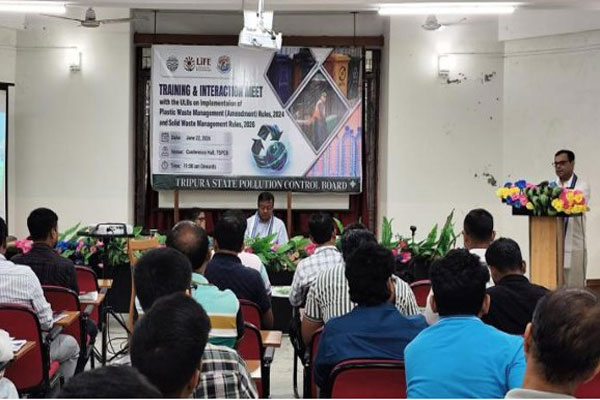
Tripura is strengthening its sustainable urban waste management system as the Tripura State Pollution Control Board (TSPCB) organized a training-cum-interaction meeting in Agartala on June 22, 2026. Officials from all 20 Urban Local Bodies participated to improve waste segregation, scientific disposal and digital compliance reporting.
Quick Glance: Key Takeaways
- TSPCB conducted a state-level waste management training programme in Agartala.
- Representatives from all 20 Urban Local Bodies of Tripura attended the session.
- Focus areas included solid waste rules, plastic waste compliance and online reporting.
- Officials discussed scientific disposal methods and sustainable urban sanitation.
Agartala: The TSPCB conducted a State-level training workshop paving the way for a stronger urban sanitation framework by improving waste handling systems across municipalities. The TSPCB initiative focused on building technical capacity among Urban Local Bodies.
According to the official statement issued by TSPCB, the training programme aimed to improve the implementation of the Solid Waste Management Rules and Plastic Waste Management Rules across the state.
The meeting brought together technical officials from all 20 Urban Local Bodies. Furthermore, the programme focused on practical challenges related to waste collection, segregation, transportation and disposal.
According to our on-the-ground report in Agartala, the discussion reflected growing emphasis on scientific waste management methods instead of traditional disposal practices.
The session was chaired by Dr. Bishu Karmakar, Member Secretary of TSPCB. He highlighted the need for coordinated action between urban authorities and environmental agencies.
Building Better Waste Systems Through Local Administration
Urban waste management depends heavily on local-level execution. Therefore, the role of municipalities remains critical in creating cleaner and healthier cities.
During the meeting, TSPCB officials explained how Urban Local Bodies can improve operational efficiency through better segregation practices.
Manas Mukherjee, Executive Engineer, TSPCB, explained regulatory requirements under existing environmental rules. He also discussed the responsibilities of ULBs in maintaining compliance.
Furthermore, officials highlighted the importance of timely reporting through the National Dashboard Portal.
An internal document reviewed by Enewstime highlights that digital reporting mechanisms are becoming an important part of environmental monitoring and accountability.
The discussions also focused on improving waste transportation systems. Efficient transportation helps reduce environmental risks and supports better municipal management.
Scientific Disposal and Source Segregation Become Priority Areas
Source segregation emerged as one of the major themes during the training programme.
Dr. Bishu Karmakar emphasized that separating waste at the initial stage can improve recycling efficiency. It can also reduce pressure on final disposal sites.
Consequently, municipalities are expected to strengthen collection systems and encourage responsible waste practices.
The meeting also addressed plastic waste management challenges. Officials discussed compliance requirements and the need for proper monitoring.
Furthermore, participants received guidance on statutory reporting procedures. The process aims to create a more transparent waste management ecosystem.
Speaking exclusively to Enewstime Desk, officials confirmed that regular reporting and compliance tracking will help authorities assess progress across urban areas.
Digital Monitoring to Improve Environmental Accountability
Technology is playing a growing role in environmental governance.
The National Dashboard Portal was highlighted as an important platform for maintaining waste management records.
Officials encouraged Urban Local Bodies to submit annual reports within the required timeline.
The digital system allows authorities to monitor compliance patterns and identify areas requiring improvement.
However, successful implementation will depend on regular updates from municipal bodies.
The training programme included detailed presentations by TSPCB technical experts. Junior Scientists Dipak Rudra Pal and Gautam Ghosh, along with Project Engineer Saptarshi Roy, explained reporting procedures and regulatory requirements.
The interactive session allowed participants to discuss operational issues and seek clarification from experts.
Tripura’s Sustainable Urban Future Depends on Waste Governance
Waste management has become an important part of urban development planning.
As cities expand, scientific disposal systems and responsible waste practices become increasingly necessary.
Tripura’s latest training initiative indicates a stronger focus on improving municipal capacity.
Furthermore, compliance with environmental directions issued by the Supreme Court of India and the National Green Tribunal remains a key responsibility for local authorities.
The programme concluded with a vote of thanks from Assistant Environmental Engineer Aparajita Das.
She appreciated the participation of officials and highlighted the importance of cooperation in strengthening environmental governance.
News Analysis: Sustainable Waste Management & Tripura’s Urban Development
How can better waste management transform Tripura’s cities?
From an urban development perspective, waste management is no longer limited to cleanliness. It directly affects public health, environmental protection and city planning.
Tripura’s focus on segregation, scientific disposal and digital monitoring shows a shift towards structured waste governance.
Why are Urban Local Bodies central to this transformation?
Municipal bodies manage the daily operations of waste collection and disposal. Therefore, their technical knowledge and reporting discipline directly influence outcomes.
Regular training programmes can help reduce implementation gaps.
What challenges may affect long-term sustainability?
The major challenges include maintaining consistent segregation practices, improving infrastructure and ensuring regular compliance reporting.
However, stronger coordination between TSPCB and ULBs can create a more efficient system.
What does the future indicate for Tripura’s waste management sector?
The latest initiative suggests that Tripura is preparing for a more scientific and technology-supported waste management model.
Furthermore, continuous training and monitoring can help urban areas move towards cleaner and more sustainable growth.