

Quick Glance
- TRLM and SHGs are helping rural women in Tripura become entrepreneurs and financially independent.
- Dali Sarkar built a successful cement manufacturing business after joining Sakhi SHG.
- Mangala Devi Chakma improved her family income through piggery and poultry farming under Project TRIPTI.
- Tripura Rural Livelihood Mission continues to strengthen women-led rural enterprises across the State.
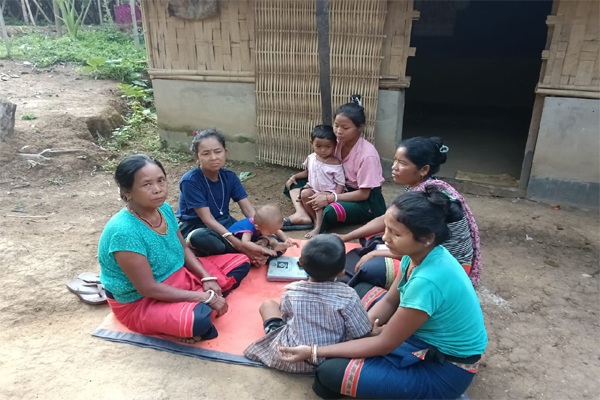
Agartala: The Tripura Rural Livelihood Mission (TRLM) is transforming the lives of rural women across Tripura through Self-Help Groups (SHGs), livelihood support, and financial inclusion initiatives. Women entrepreneurs like Dali Sarkar and Mangala Devi Chakma are now creating sustainable income sources and inspiring economic empowerment in rural communities.
TRLM Emerges as a Catalyst for Rural Women Empowerment
The Tripura Rural Livelihood Mission Society has become a key driver of women empowerment in the State. The Rural Development Department established the mission under the National Rural Livelihood Mission (NRLM) framework. Since then, TRLM has focused on improving the social and economic conditions of rural poor households.
The mission operates with a clear vision. It aims to improve the well-being of rural families by empowering women through community institutions and sustainable livelihood opportunities.
TRLM follows a two-pronged strategy. First, it strengthens social empowerment through Self-Help Groups and grassroots institutions. Second, it promotes economic empowerment through income-generating activities and skill-based employment.
Officials associated with the mission said thousands of women across Tripura have already benefited from SHG-based interventions. These initiatives include agriculture, livestock farming, handicrafts, transport services, food processing, and micro-enterprises.
Dali Sarkar Becomes a “Lakhpati Didi”
The story of Dali Sarkar reflects how rural women are reshaping their future through entrepreneurship and financial discipline.
Dali Sarkar joined Sakhi SHG in 2016 as a homemaker. Initially, she had limited financial resources. However, she gradually transformed her life after receiving support from the SHG ecosystem.
Over the years, she availed financial assistance of nearly ₹2.15 lakh. She invested the funds to expand her cement-based manufacturing business. Today, she manufactures cement filters, pillars, bowls, rings, ventilators, and tiles.
TRLM sources said, her business now generates a monthly income ranging between ₹60,000 and ₹1 lakh. Besides the manufacturing unit, her family also earns through transportation services using an auto-rickshaw and a goods carrier vehicle.
The additional income from transport activities further strengthened the family’s financial stability.
Income Growth of Dali Sarkar
| Source of Income | Estimated Monthly Earnings |
|---|---|
| Cement Manufacturing Unit | ₹60,000 – ₹1,00,000 |
| Auto-rickshaw Services | ₹15,000 |
| Goods Carrier Vehicle | ₹10,000 |
Due to her rising annual income and successful livelihood activities, Dali Sarkar earned recognition as a “Lakhpati Didi.” The title is given to women entrepreneurs who cross significant annual income milestones under rural livelihood missions.
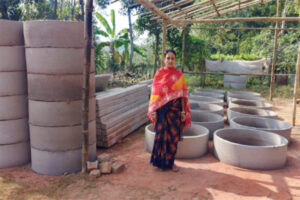
Now, she plans to expand her enterprise further by taking an individual business loan in the near future.
Her success story highlights how access to financial support, training, and SHG networks can create long-term economic transformation in rural Tripura.
Project TRIPTI Changes the Life of Mangala Devi Chakma
Another inspiring example comes from Murali Para village, where Mangala Devi Chakma rebuilt her family’s financial future through Project TRIPTI.
Mangala Devi lives with her husband Santirath Chakma and their family of four. Earlier, the household depended mainly on daily wage labour. As a result, financial uncertainty remained a constant challenge.
However, things changed after she joined Project TRIPTI in 2024 and became a member of a Self-Help Group.
Under the project, she received several social protection benefits. These included low-cost insurance coverage, Ayushman Bharat enrollment, and an ABHA health ID card. She also actively participated in SHG meetings and community discussions.
These interactions improved her awareness, confidence, and decision-making ability.
In June 2025, Mangala Devi received two piglets as her first livelihood support. She carefully followed recommended animal husbandry practices, including timely deworming and regular care.
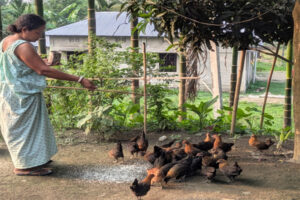
After eight months, she sold one male pig for ₹24,000. Importantly, she reinvested the amount to purchase additional piglets instead of spending it.
At present, she owns one pregnant pig and one male piglet. Alongside piggery, she also received backyard poultry support under the project.
The diversified livelihood activities have significantly improved her household income and financial security.
Livelihood Support Received by Mangala Devi Chakma
| Livelihood Assistance | Impact |
|---|---|
| Two Piglets | Generated ₹24,000 income after sale |
| Backyard Poultry | Created additional income source |
| Insurance & Health Coverage | Improved social security |
| SHG Participation | Increased awareness and confidence |
Local residents now consider Mangala Devi Chakma a role model. Her disciplined approach and efficient use of government support demonstrate how small livelihood interventions can bring major socio-economic change.
Binadini Tripura Diversifies Income Through Goatery and Ginger Cultivation
In Jatindra Para village under Chakma Para VC in Ganganagar, another inspiring entrepreneur is steadily strengthening her family’s future through hard work and careful planning.
Binadini Tripura, a member of Samphari SHG under Gulab VO and Samung CLF, has been actively participating in the TRIPTI programme to improve her family’s livelihood.
She initially opted for goatery support and received four goats under the programme. Through proper care and management, she gradually expanded the activity and started earning income from goat rearing.
She sold two goats for ₹6,000 and ₹7,200 respectively. The income helped her manage household expenses and improve financial stability. Despite the sales, she still owns two adult goats and two goat kids, allowing her to continue growing the enterprise.
Wanting to diversify her livelihood further, Binadini later started vegetable cultivation under the LSG-2 initiative. She also planted ginger as a long-term income source.
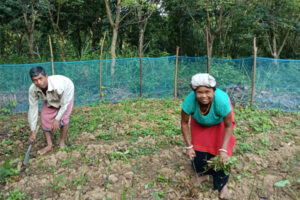
Every morning before leaving for their Jhum field, Binadini and her husband Hemananda spend time clearing grass around the ginger plants. Those quiet moments in the early morning mist reflect their dedication and shared dream of building a stable future for their family.
She hopes the ginger cultivation will generate sustainable income in the coming years and provide greater financial security.
Livelihood Activities of Binadini Tripura
| Activity | Current Status |
|---|---|
| Goatery | Owns two adult goats and two goat kids |
| Goat Sales | Earned ₹6,000 and ₹7,200 |
| Vegetable Cultivation | Ongoing under LSG-2 |
| Ginger Plantation | Expected long-term income source |
SHGs Become Engines of Rural Economic Growth
Self-Help Groups have emerged as powerful community institutions across Tripura. These groups not only provide financial assistance but also build confidence and leadership among women.
TRLM officials said women-led enterprises are contributing significantly to the rural economy. Many beneficiaries have moved from financial hardship to stable income generation within a few years.
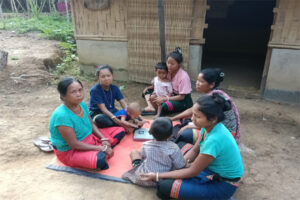
Moreover, several women entrepreneurs are now creating employment opportunities for others in their villages. This trend is gradually strengthening local economic activity in remote rural areas.
The growing success of women entrepreneurs also reflects the effectiveness of integrated rural development programmes in Tripura.
Experts believe sustained institutional support, access to affordable credit, skill development, and market linkages will play a crucial role in expanding women-led enterprises in the State.
As TRLM expands its outreach further, more rural women are expected to step into entrepreneurship and become active contributors to Tripura’s economic growth.
People Also Ask
What is the Tripura Rural Livelihood Mission (TRLM)?
TRLM is a mission under the Rural Development Department of Tripura that works to empower rural poor households, especially women, through Self-Help Groups and sustainable livelihood opportunities.
Who is known as a “Lakhpati Didi” in Tripura?
Women entrepreneurs who achieve significant annual income milestones through livelihood activities and SHG support are popularly called “Lakhpati Didi.”
How does Project TRIPTI help rural families?
Project TRIPTI supports rural families through livelihood assistance, healthcare benefits, insurance coverage, and Self-Help Group participation to improve economic and social security.
