

A 25-year-old woman battling severe paraquat poisoning has received an advanced life-support treatment at Agartala Government Medical College and GBP Hospital marking the first use of Extracorporeal Membrane Oxygenation, or ECMO, in Tripura and giving doctors additional time to support her failing lungs.
Key Takeaways
- GBP Hospital has performed Tripura first ECMO treatment on a critically ill paraquat poisoning patient.
- ECMO is supporting the 25-year-old patients lungs after severe respiratory failure.
- Doctors are also preparing dialysis as the poisoning has affected her kidney function.
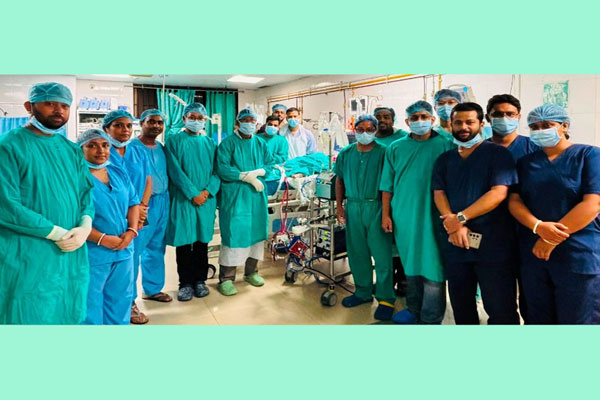
Doctors at Agartala Government Medical College and GBP Hospital have taken a major step in critical care medicine by using ECMO for the first time in Tripura. The procedure began on August 24 for a young woman whose lungs suffered severe damage after paraquat poisoning.
The rare intervention came after conventional ventilator support could no longer maintain adequate oxygen levels. A specialised team from the Cardiothoracic and Vascular Surgery (CTVS) Department started ECMO support after assessing the patients critical condition.
Paraquat Poisoning Causes Severe Lung Damage
The 25-year-old woman had consumed paraquat, a highly toxic herbicide. The substance can cause serious damage to several organs. The lungs and kidneys often face major complications in severe poisoning cases.
In this case, the patients lung function deteriorated rapidly. Her oxygen level reportedly fell to around 30 to 40 percent. Doctors said her respiratory condition had become comparable to that seen in patients with severe lung complications.
She was initially treated in the Medicine Ward. As her condition worsened, doctors shifted her to the CTVS Department for advanced intervention.
Ventilator support failed to provide sufficient respiratory assistance. The medical team then decided to use ECMO as an additional life-support measure.
ECMO Gives Damaged Lungs Time to Recover
ECMO can temporarily perform key functions of the lungs. The system circulates blood outside the body. It adds oxygen to the blood and removes carbon dioxide before returning the blood to the patient.
This process reduces the workload on severely damaged lungs. It can allow the lungs to rest while doctors treat the underlying condition.
The GBP Hospital team started the ECMO procedure on the night of August 24. Doctors and technical staff then continued close monitoring throughout the night.
The intervention does not guarantee recovery. However, doctors believe ECMO can provide valuable time for the lungs to regain function.
Kidney Failure Adds to the Challenge
The patient faces another major complication. Her kidneys are currently not functioning properly.
The hospital administration, principal, Nephrology Department and other medical teams are coordinating further treatment. Doctors are working to arrange dialysis to manage the kidney-related complications.
The case therefore requires a multidisciplinary approach. The CTVS team is managing ECMO support. The Nephrology team is handling the kidney complications. Blood transfusion support is also being provided.
Doctors said paraquat poisoning remains extremely difficult to treat. Severe cases can cause progressive damage to vital organs. The chances of survival can remain low when the poisoning causes major respiratory and kidney complications.
Specialist Team Leads First ECMO Procedure
CTVS surgeon Dr Kanaknarayan Bhattacharya led the team that performed the ECMO procedure.
The team included Dr Rimjhim Chakma, perfusionists Sujan Sahu and Saurav Tripura, and cardiac OT technologists Ratan Mandal, Sudipta Mandal, Minhaj Uddin, Abhijit Das, Arpita Sarkar, Mousumi Debnath, Saurav Sheel, Anna Bahadur Jamatia, Tanmoy Ghosh, Sagar Debnath and Ankita Chakraborty, among others.
Dr Manas Gop and Dr Reshmi Das, along with the Nephrology team, are managing the patients kidney-related treatment. Dr Sanjana Goswami is overseeing blood transfusion support.
The medical team is continuing round-the-clock monitoring as the patients condition remains critical.
First ECMO Case Marks New Milestone for Tripura
The procedure represents a major development for advanced critical care in Tripura. ECMO requires specialised equipment, trained medical professionals and coordinated support from several departments.
The successful initiation of ECMO at GBP Hospital means critically ill patients with severe respiratory failure can potentially receive this form of advanced support within the state.
The current patient also highlights the importance of rapid intervention in severe poisoning cases. Doctors moved to ECMO after standard respiratory support proved inadequate.
The hospital has provided the treatment completely free of cost. Similar ECMO treatment in a private hospital can cost around Rs 20 lakh or more, depending on the duration and complexity of treatment.
For the young patient, ECMO has provided a rare lifeline at a critical stage. Doctors are now focusing on supporting her lungs, managing kidney failure and preventing further complications. Her recovery will depend on how her organs respond to continued treatment in the coming days.
