

Road and rail network in Tripura faced major disruptions for nearly two days as surrendered militants blocked key transport routes, leaving buses, trucks and trains affected across the state. The agitation ended on Saturday evening after senior police and civil officials held prolonged talks with the protesters.
Key Takeaways
- A 72-hour blockade by surrendered NLFT and ATTF cadres disrupted road and rail connectivity across Tripura.
- National Highway-8 was blocked at three locations, affecting passenger and goods movement.
- NFR cancelled, rescheduled or short-terminated 10 trains before the protesters withdrew the blockade after talks with officials.
The 72-hour blockade launched by surrendered militants in Tripura caused widespread disruption to road and rail services before it was withdrawn on Saturday evening following negotiations with senior government officials.
The agitation began on Friday. Members of different factions of the National Liberation Front of Tripura (NLFT) and All Tripura Tiger Force (ATTF) blocked highways and railway lines.
The protest affected the movement of both passengers and goods. Several parts of the state faced disruptions as transport services came to a halt.
NH-8 Hit at Three Locations
National Highway-8 bore the brunt of the road blockade.
The highway serves as Tripura’s key surface connectivity route. Protesters blocked it at three locations across West Tripura and Khowai districts.
The obstruction prevented vehicles from moving normally. Passenger buses could not operate on affected routes. Goods-laden trucks also remained stranded.
The disruption created difficulties for people travelling between different parts of the state. It also affected the movement of commercial vehicles carrying essential and other goods.
With the blockade continuing from Friday, the transport disruption extended into Saturday.
Rail Services Also Disrupted
The agitation also affected Tripura’s railway network.
The Northeast Frontier Railway (NFR) took several measures after railway lines came under the blockade. It cancelled, rescheduled or short-terminated 10 express and local trains.
Several important long-distance services figured among the affected trains.
These included the Anand Vihar Terminal-Agartala, Bengaluru-Agartala, Agartala-Bengaluru and Sealdah-Agartala services.
The changes disrupted rail travel for passengers entering or leaving the state.
The simultaneous impact on highways and railway lines added to the transportation difficulties faced by residents.
Around 400 Protesters Took Part
According to police officials, around 400 surrendered extremists participated in the blockade.
The group included women and members associated with different factions of the NLFT and ATTF.
The protesters launched the agitation over allegations that key provisions of a tripartite rehabilitation agreement had not been implemented.
The agreement was signed between the Centre, the Tripura government and the former insurgents on September 4, 2024.
Security Deployment Increased
Authorities deployed a large number of security personnel around the blockade locations.
Personnel from the Tripura State Rifles (TSR) were among those deployed. Senior police officials supervised the security arrangements.
The deployment aimed to maintain law and order during the agitation and prevent the situation from escalating.
The prolonged blockade also prompted senior officials to engage directly with the protesters.
Talks Lead to Withdrawal
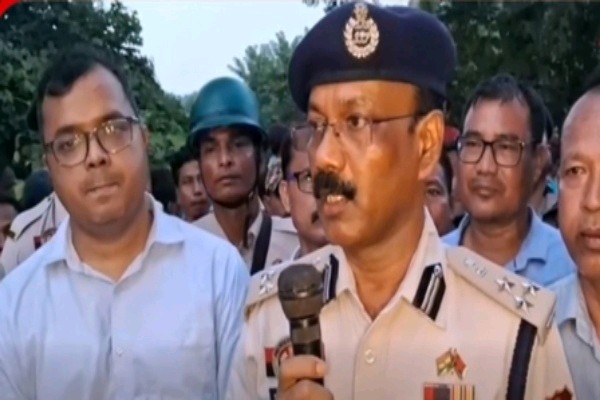
Deputy Inspector General of Police (Northern Range) Ratiranjan Debnath, West Tripura District Magistrate and Collector Vishal Kumar, Superintendent of Police Namit Pathak and other officials held discussions with representatives of the agitating former militants.
Officials had also met the protesters on Friday. However, those discussions ended without a breakthrough.
The protesters remained determined to continue the blockade at that stage.
Further negotiations on Saturday eventually changed the situation.
After prolonged persuasion and discussions, the surrendered militants agreed to withdraw the blockade, according to a police official.
The withdrawal brought an end to the immediate disruption of highway and railway services.
Protesters Had Warned of Further Agitation
The blockade was linked to demands for economic rehabilitation and livelihood support.
Jibonjoy Reang, a spokesperson for the surrendered militants, had said many former cadres continued to face serious hardships. He claimed that some remained homeless and lacked the livelihood opportunities they had been promised.
Reang also warned that the protesters could launch an indefinite agitation across Tripura if their demands remained unaddressed.
The latest blockade therefore ended after negotiations, but the underlying rehabilitation-related demands remained central to the dispute.
For commuters, however, the immediate concern was the restoration of normal transport movement after nearly two days of disruption to Tripura’s highways and railway services.
