

Professor Tej Chingtham, CEO of the Atal Incubation Center at Sikkim Manipal University, has pointed out opportunities for Startup growth in the Northeast region, focusing on the climate challenges, biodiversity, traditional knowledge and strategic strengths to create jobs and take locally developed solutions to wider markets.
Key Takeaways:
- Northeast India’s climate challenges and biodiversity can become a base for innovative startups and employment.
- Traditional knowledge can combine with modern technology to create solutions for local and global markets.
- Tourism, organic farming and historical storytelling offer opportunities to retain wealth and create jobs within the region.
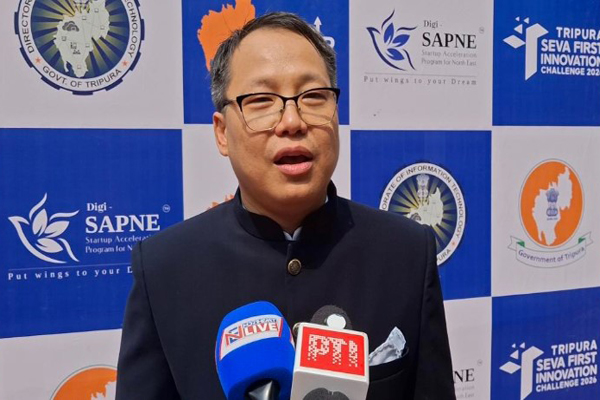
Professor Tej Chingtham, CEO of the Atal Incubation Center at Sikkim Manipal University, has called for entrepreneurship built around the Northeast’s climate, biodiversity, traditional knowledge and strategic strengths to create jobs and take locally developed solutions to wider markets. Speaking on the sidelines of the inauguration programme of Seva First Innovation Challenge 2026, Mukhyamantri Yuba Yogayog Yojana and Digi-SAPNE 3.0 in Agartala on October 1, Prof Chingtham also emphasized working on unique and largely unknown stories of the region boosting tourism.
Challenges Can Become Startup Opportunities
The Northeast can turn many of its long-standing challenges and distinctive characteristics into opportunities for startups, innovation and employment generation, Professor Tej Chingtham, CEO of the Atal Incubation Center at Sikkim Manipal University, said.
He said startups have a crucial role in addressing the growing employment needs of the region as more young people complete their education and enter the workforce.
The region, he said, needs innovative businesses that can create jobs, generate wealth and ensure that a larger share of the economic benefits stays within the Northeast.
Turning Isolation Into an Advantage
Prof Chingtham said the perception that the Northeast remains different and isolated from mainland India should no longer be viewed only as a constraint.
Instead, the region can use its distinct characteristics to develop products, services and innovative ideas for markets beyond the Northeast.
Its biodiversity and traditional knowledge offer a strong foundation for such innovation, he said.
Traditional practices and knowledge passed down through generations can be combined with modern technology to develop solutions for local challenges.
Such innovations need not remain confined to the region. They can find applications elsewhere in India and potentially in global markets.
Climate Challenges Offer Scope for Innovation
Climate-related challenges represent another important area for startup development, according to Prof Chingtham.
He cited flood management as an example. A solution developed in Tripura to address the drinking water problem in flood-hit areas could have applications beyond the state and the Northeast if it can address similar challenges elsewhere.
Startups can also work on reducing carbon footprints and developing responses to climate-related problems.
The Northeast itself provides a useful environment for developing and testing such innovations because of its diverse climatic conditions.
This approach can allow entrepreneurs to develop solutions around real challenges while exploring wider markets for those products and services.
Sikkim’s Organic Farming Model
Organic farming is another area where the Northeast has a distinctive advantage, Prof Chingtham said.
He pointed to Sikkim as an example. Entrepreneurs interested in organic farming can build businesses in an environment where the state has already established an organic farming framework.
The region can use such existing strengths to encourage innovative businesses and take products, services and ideas to markets outside the Northeast.
The approach can connect local advantages with entrepreneurship while creating opportunities for employment and wealth generation.
Tourism Can Take Northeast Stories to the World
Tourism offers another major opportunity for young entrepreneurs across the region.
Prof Chingtham urged young people to explore the Northeast’s stories, heritage and unique experiences and present them to wider audiences through innovative tourism ventures.
He particularly highlighted the region’s historical narratives.
The Battle of Imphal and the Battle of Kohima were fought in the Northeast, he noted, but many people outside the region remain unaware of their significance.
Such historical stories can become part of tourism initiatives and new forms of storytelling, creating opportunities for entrepreneurs to present the region’s heritage to wider audiences.
Creating Jobs While Retaining Economic Value
For Prof Chingtham, the broader objective goes beyond creating individual startups. The region needs businesses that generate employment and ensure that economic value created in the Northeast remains within the region.
Entrepreneurship, technology, traditional knowledge, climate solutions and tourism can work together to build such enterprises.
The approach can allow startups to address local problems while developing products and services for markets beyond the region.
The Northeast’s challenges, therefore, can also serve as starting points for innovation. By building businesses around its climate, environment, knowledge, agriculture, tourism and heritage, the region can create employment, generate wealth and protect its natural strengths.
