

Women in rural Tripura are taking up transport services, bamboo crafts and protected farming as the state expands its livelihood strategy. The initiatives form part of a larger plan to help 3.50 lakh women achieve Lakhpati Didi status by the financial year 2028-29.
The state government plans to support 3.50 lakh Lakhpati Didis by 2028-29. The strategy will bring together different schemes and programmes of the Tripura government.
Key Takeaways
- Tripura targets 3.50 lakh Lakhpati Didis by the financial year 2028-29 through multiple government schemes and livelihood programmes.
- Women are entering diverse rural enterprises, including transport services, bamboo crafts and protected cultivation.
- TRLM is strengthening SHG institutions through training, governance support, financial management and technical assistance.
Push to Create More Lakhpati Didis
Tripura has set a target of creating 3.50 lakh Lakhpati Didis by 2028-29. According to an IANS report published on August 28, 2025, number of registered Lakhpati Didis stood at 1,08,281 (One lakh 08 thousand 281).
The Rural Development Department is using Self-Help Groups (SHGs), community institutions and convergence between government schemes to expand income opportunities for women across the state.
The roadmap was discussed at a State Level Lakhpati Didi Steering Committee meeting chaired by the Secretary of the Rural Development Department. The Chief Executive Officer of Tripura Rural Livelihood Mission (TRLM), TRLM officials and representatives of different government departments attended the meeting.
The steering committee meets every quarter. It reviews progress and plans new measures to improve the Lakhpati Didi programme.
3.50 Lakh Women in Focus
The state government plans to support 3.50 lakh Lakhpati Didis by 2028-29. The strategy will bring together different schemes and programmes of the Tripura government.
The focus extends beyond one form of livelihood. Women can take up agriculture, transport, handicrafts and other rural enterprises based on local resources and market opportunities.
The approach also seeks to strengthen the institutions that support SHG members. Stronger Village Organisations and Cluster Level Federations can help women access training, finance, markets and government programmes.
Women Get Support for Rural Transport
The Ajeevika Grameen Express Yojana (AGEY) is creating another avenue for women-led enterprise.
Vehicle keys were handed over on August 21 to women SHG members from different Cluster Level Federations under the Bamutia Block Mission Management Unit.
The initiative aims to provide sustainable livelihood opportunities while improving rural transportation and last-mile connectivity.
Women can use the vehicles to operate rural transport services and generate income. The model also links women empowerment with better mobility in villages.
The initiative can support household income while addressing transportation gaps in rural areas.
Bamboo Turns Into a Rural Enterprise
Women SHG members under North Ganganagar Gram Panchayat in Jubaraj Nagar block of North Tripura are using bamboo to create new livelihood opportunities.
The women make a variety of bamboo products and bamboo jewellery. They combine locally available bamboo with creativity and practical skills.
The activity shows how local resources can support small rural enterprises. It also gives women an opportunity to build income streams from products that have cultural and commercial value.
The initiative reflects the wider Lakhpati Didi approach. It seeks to move SHG members beyond group participation towards sustainable and income-generating enterprises.
Protected Farming Targets Higher Income
TRLM is also promoting protected cultivation among women farmers.
Naturally ventilated polyhouses are being constructed at Brajendranagar Gram Panchayat under Satchand Rural Development Block.
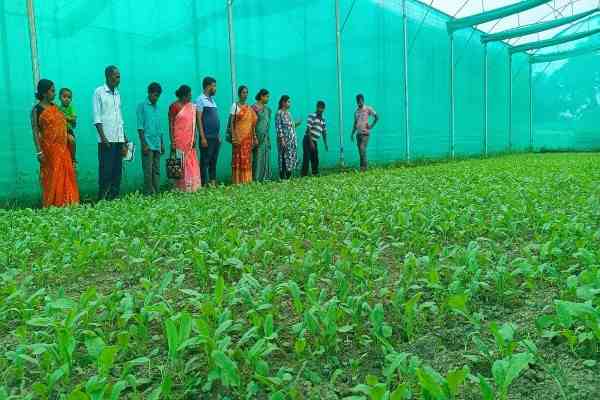
The project covers 10 women farmers who are SHG members of Srimoyee Village Organisation.
The polyhouses will support the cultivation of high-value crops in a controlled environment. They can help farmers reduce risks linked to adverse weather and improve crop quality.
The project also aims to support year-round cultivation. Higher productivity and better crop management could increase household income.
Cultivation has not started yet. TRLM has already provided technical training to all 10 beneficiaries. The training involved a Horticulture Subject Matter Specialist from Krishi Vigyan Kendra and the South Tripura district administration.
Stronger SHGs Remain a Key Priority
Tripura is also focusing on the governance and financial management of community institutions.
Officials from the National Mission Management Unit and the state team visited Nalchar Cluster Level Federation and Shreekrishna SHG on August 21.
The team assessed the functioning, performance and governance of the organisations. State Anchor Anita interacted with executive committee members and reviewed books of records, official files, registers and financial statements.
The officials also reviewed different activities of the CLF and SHG.
The members received guidance on documentation, record keeping, governance and financial management. Such interventions can improve transparency and accountability within rural community institutions.
Convergence to Drive Lakhpati Didi Target
The different initiatives point to a common strategy. Tripura is seeking to create multiple income sources for rural women instead of relying on a single livelihood model.
Transport services can create service-based enterprises. Bamboo crafts can turn local resources into marketable products. Protected cultivation can support high-value agriculture. Stronger SHG institutions can provide the organisational foundation for these activities.
The state plans to use convergence between government departments and programmes to expand such opportunities.
The quarterly steering committee reviews will remain important for tracking progress. They can also help identify gaps in training, finance, technology, market access and institutional support.
Women-Led Growth at the Centre
The Lakhpati Didi initiative places higher household income at the centre of rural women empowerment efforts.
For Tripura, the target of 3.50 lakh Lakhpati Didis represents a large-scale livelihood challenge. Its success will depend on sustained support, effective coordination and access to markets.
The recent activities show the programme moving across several sectors. From rural transport to bamboo products and protected agriculture, women SHG members are getting opportunities to build independent sources of income.
If the planned convergence works effectively, the initiative could strengthen rural livelihoods while giving more women a direct role in local economic growth.
